ADAD
ADAD
Updating your news feed...
NEWS EXPRESS is Nigeria’s leading online newspaper. Published by Africa’s international award-winning journalist, Mr. Isaac Umunna, NEWS EXPRESS is Nigeria’s first truly professional online daily newspaper. It is published from Lagos, Nigeria’s economic and media hub, and has a provision for occasional special print editions. Thanks to our vast network of sources and dedicated team of professional journalists and contributors spread across Nigeria and overseas, NEWS EXPRESS has become synonymous with newsbreaks and exclusive stories from around the world.




Loading banners
Loading banners...

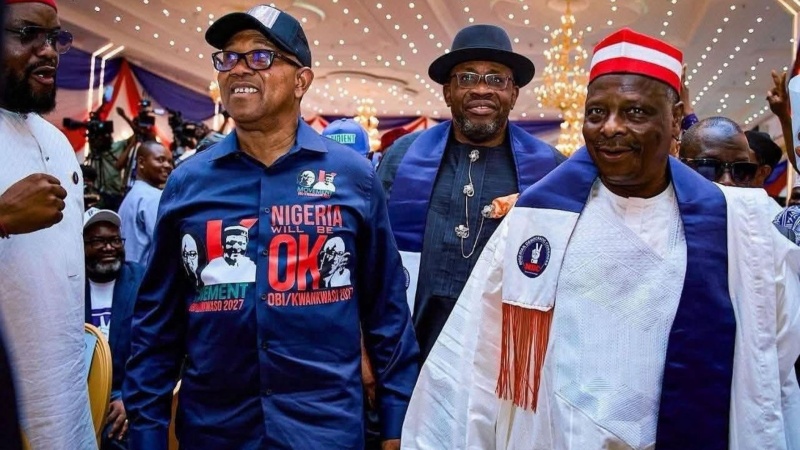
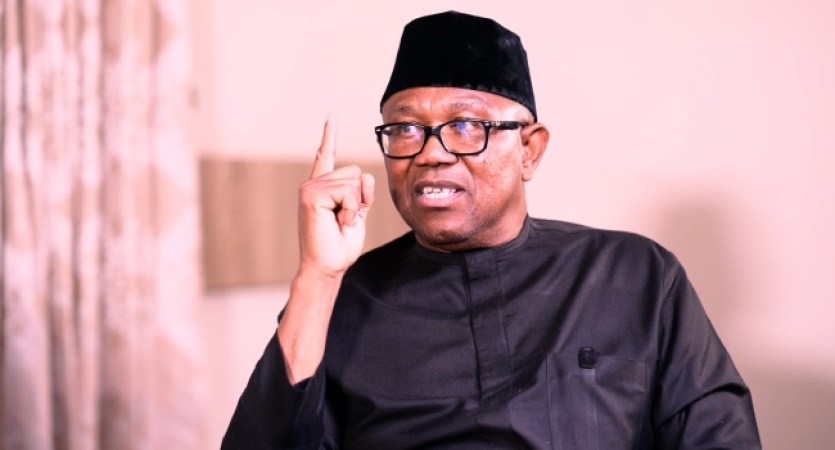
Former Kano State governor, Senator Rabiu Musa Kwankwaso, has said that his growing political alliance with former Labour Party presidential candidate Peter Obi is driven by a shared commitment to fixing Nigeria rather than ethnic or religious considerations ahead of the 2027 elections.
Kwankwaso, who spoke in an exclusive interview with Trust TV’s Sunday Politics, said both camps had discovered during discussions that they shared similar political goals centred on improving education, security, job opportunities and governance for Nigerians, especially young people. He said contrary to attempts by some political actors to frame the alliance around regional or religious sentiments, Nigerians were now more interested in competent leadership and solutions to economic hardship.
The former governor also dismissed allegations that his political moves were designed to help President Bola Ahmed Tinubu secure re-election in 2027, insisting that the newly formed Nigeria Democratic Congress (NDC) was focused on offering Nigerians an alternative platform.
Speaking on Kano politics, the leader of the Kwankwasiyya Movement described the split between him and Kano State Governor Abba Kabir Yusuf as a “big mistake” for the governor, saying political betrayal had never ended well for politicians in the state. He maintained that the Kwankwasiyya movement remained strong despite recent defections involving some key political figures and elected officials. According to him, the movement’s strength lies in its grassroots support rather than individual office holders, noting that it had survived previous political setbacks even when it lacked control of the Government House or federal power.
Kwankwaso also spoke on the return of some former political rivals, including Senator Kabiru Gaya and former APC governorship candidate Nasiru Gawuna, saying the movement remained open to people willing to accept its culture of loyalty and internal discipline. On speculations surrounding the 2027 Kano governorship ticket, he said consultations were ongoing and insisted that competence, rather than senatorial calculations, would determine who eventually emerges as the candidate of the NDC in the state.
Below are excerpts from the interview:
Your growing political relationship with Peter Obi has generated huge national interest because many Nigerians see it as potentially the strongest opposition alliance ahead of 2027. What exactly is the nature of this alliance?
In the last couple of weeks, we tried to understand what the Obidient Movement stands for politically and what they want for Nigeria. When we compared their movement with ours, we discovered that our goals are largely the same.
In summary, both sides want to make Nigeria a better place, especially for young men and women who need the attention of government. People are asking for basic things; quality education, job opportunities, security and other necessities.
We also agreed that experts from both sides should study our blueprints and compare them. That process has gone very far already. Based on our discussions so far, I believe we share one common objective: making Nigeria a better place for everyone.
Is the Obi-Kwankwaso a settled matter on the platform of the NDC in 2027?
Well, I believe so. From my discussions with the party leadership, I think that is the general mindset. Even before the party zoned its presidential ticket to the South, supporters of the Obidient Movement were already chanting “OK”, while our own supporters in the Kwankwasiyya movement were saying “KO”. But that issue has now been resolved and people are willing to make sacrifices.
The reality is that Nigerians are looking for a way out because the current situation in the country is not good enough. That is why many people are working voluntarily and independently to support this movement. We are happy about that because that is how politics should be.
Politics in this country should not be left in the hands of moneybags; people who exploit citizens for four years, take public resources and then use money to influence voters during elections. I believe Nigerians will come out strongly in the next election to defend both their interests and the interest of the country.
The National Chairman of the PRP recently alleged that you and Peter Obi demanded automatic presidential and vice-presidential tickets as a condition for joining the party. Did you seek guarantees before entering coalition talks?
When it became clear that the ADC was facing serious issues, not just myself and Obi, but many others within the party began considering alternative platforms. At that time, the PRP and the NDC came to mind, alongside a few other political parties as possible options.
After the Supreme Court judgment, we asked our lawyers to study the situation and advise us. Their advice was that we should seriously consider an alternative platform. That was when we began discussions with different parties.
Yes, we met with the PRP National Chairman. He is my friend and brother. The discussions were fruitful, but they were only preliminary talks. We informed him that we were also speaking with other political parties and that our committees would eventually review all the options before making recommendations.
At the end of the process, our committees advised that the NDC was the better platform for us. I personally called him to thank him for receiving us and listening to our position. There was never a stage where we demanded tickets or conditions. We were not even at that point in the discussions.
There is a growing perception in parts of the opposition that despite your public criticisms of President Bola Tinubu’s administration, you may still be working behind the scenes in ways that could benefit the President politically ahead of 2027. How do you respond to that allegation?
In this country, many people make all sorts of claims and insinuations in politics. If what we are doing in the NDC today is somehow being interpreted as supporting Bola Tinubu, then so be it. But the reality on the ground is different. The NDC is currently one of the fastest-growing political parties in the country. Within a few weeks, millions of Nigerians have shown interest in the movement. We are preparing for our convention at the end of the month, where the party will take major decisions, including the emergence of candidates.
So, allegations will always exist in politics. But I believe Nigerians are serious-minded people. They know those who are committed and focused. We remain determined in what we are doing, and people are free to judge us by our actions.
There have been reports dating back to early 2026 that part of the opposition coalition discussions involving you, Peter Obi and former President Olusegun Obasanjo was aimed at building a new political platform capable of stopping both the APC and former Vice President Atiku Abubakar. Looking at your eventual movement into the NDC alongside Obi, some analysts believe that original strategy is still unfolding. Is that the case?
Many people like to speculate and make all sorts of claims in politics. But for me, I have always been very clear about my political journey and my intentions.
When I contested in 2023, I was fully committed to winning the election. I did not enter the race to reduce anybody’s votes or to stop another candidate. Anybody who says so is simply underrating us and misunderstanding what we stand for politically.
Under the circumstances at the time, I did my best and I believe our performance showed the strength of our movement despite the challenges we faced, including issues within political parties, leadership problems and the quality of candidates available.
So, this idea that our role in politics is simply to weaken another politician is not correct. We are serious about what we are doing.
Former Vice President Atiku Abubakar recently suggested that your political strength is largely limited to Kano and that even your influence there is no longer what it used to be. How do you respond to that assessment?
I remain who I am politically, and I always respect people who are bold enough to express their opinions, whether in politics, governance or other areas.
But many people either forget history or choose to ignore it. I have a long political history in this country, and anybody who wants to dismiss that is free to do so.
Some people may say I no longer have influence or that I cannot achieve anything politically. That is their opinion. But those who understand Nigerian politics and our political history know the role we have played over the years.
Some analysts argue that an Obi-Kwankwaso alliance may still face challenges in parts of Northern Nigeria because of religious and regional sentiments. If Peter Obi eventually emerges as the presidential candidate with you as running mate, how do you intend to sell that ticket in the North?
If you follow discussions on social media and elsewhere, you will see that some people are deliberately trying to create division around religion, ethnicity and regional identity. But I believe Nigerians are wiser now.
People are facing serious economic hardship. They want security, education for their children, peace in their communities and opportunities to survive. Those are the real issues that matter to ordinary Nigerians today.
Historically, the North and the South-East have worked together politically. During the First and Second Republics, there were strong alliances between both regions. So, this idea that such cooperation is impossible today is not correct.
At different periods, the North also aligned politically with the South-West. But circumstances change and people begin to reassess what works best for them. Nigerians are now asking questions beyond ethnicity or religion.
People supported candidates in the past based on competence and trust. I remember during the June 12 era, even in Kano, we supported MKO Abiola against Bashir Tofa despite both political and regional considerations at the time.
What matters now is capacity and leadership. Yes, I am a Muslim and a Northerner, and everybody knows that. But we cannot do politics without Christians, without the South-East, South-South or South-West. Nigeria belongs to everyone.
Peter Obi today is very popular across many parts of the country, including sections of Northern Nigeria. The same thing applies to the Kwankwasiyya movement, which has support across different regions.
Most of our supporters are young people looking for solutions, not ethnic or religious sentiments. Nigerians have seen situations where they supported people from their own region or religion and still got disappointed. So what people are looking for now are leaders with competence, fairness and the ability to deliver.
Many analysts believe the NDC faces a different challenge from what the NNPP faced in 2023 because it is still relatively new and not yet deeply rooted across the country, particularly in the North. What is your strategy for building grassroots acceptance for the party ahead of 2027?
The party is barely three months old, but if you look at our registration portal and the number of people joining, you will be surprised.
We believe the NDC is currently one of the fastest-growing political parties in the country, and we still have enough time before campaigns fully begin. Between now and January, there are several months available for mobilisation and expansion.
What gives us confidence is that the party’s growth curve is rising steadily. And naturally, whenever one political platform is gaining momentum, others begin to lose ground.
I believe many Nigerians will be surprised by the level of growth the NDC will record before the end of the year. We are encouraging Nigerians to continue supporting the party.
Let’s talk about Kano politics where your relationship with Governor Abba Kabir Yusuf has long been seen as one of the strongest political mentorship alliances in Nigeria. But with the split in this relationship, how does this affect your political calculations ahead of 2027?
I believe he made a mistake; a very big mistake. Perhaps he did not study history carefully. I do not know anyone, especially in Kano politics, who succeeds after betraying those who helped build them politically. At some point, such a person eventually crashes politically.
People can look at what happened with Abdullahi Ganduje. We handed power to him because he was my deputy and a senior member of the Kwankwasiyya movement at the time. But from the first day, he began political fights against the movement. Today, even the same Abba PA you are talking about is reportedly moving around claiming leadership within the Kano APC, where Ganduje now belongs.
But anybody who thinks Kwankwasiyya cannot survive outside Government House does not understand our structure. Since 1999, the few periods we were not in power in Kano were due to unusual circumstances or mistakes. Even in 2019, the same Abba won the election before it was taken away. The same thing happened in 2003 when I lost. The people of Kano know what happened in those elections.
The important thing is that our support base remains intact. Most ordinary voters in Kano are consistent. Politicians may move from one party to another, but the people remain. Even in 2019 and 2023, we went into elections without a governor, president or local government structure, yet we still performed strongly.
Today, the over 1 million people who voted for us are angry because they made sacrifices for the movement. They rejected money, food items and inducements simply because they believed in us.
Some analysts would argue that your political strength in Kano may now be overstated because several influential figures who contributed to your 2023 success, including Senator Kawu Sumaila and some House of Representatives members, are now aligned with the governor. Are you concerned that this weakens your influence ahead of 2027?
What people must understand is that the Kwankwasiyya movement is bigger than individuals. Every politician within the movement is only one part of a much larger structure.
Of course, we are not happy whenever people leave. But many of them also made political mistakes. We produced 18 out of 24 House of Representatives members at a point, and 13 later left. But despite that, the movement remains standing because the people themselves have not changed.
Most of those who left did so because of money and political pressure. But the voters in Kano understand what the movement represents. The party structure may change, but the grassroots support remains.
But you also left the NNPP. And the same reason they gave was the same reason you eventually gave when you left. How is your own decision different from theirs?
It is completely different. Even when we won in 2023, we operated as a movement built around a political system and ideology. They are individuals in the system. That’s the difference. So I can tell you that they made huge mistakes.
How has this political split affected your personal relationship with Governor Abba Kabir Yusuf?
When Ganduje left the movement years ago, many people doubted whether our political structure could survive outside government. That was why in 2019 we deliberately tested the strength of the movement by supporting a relatively unknown candidate — my former personal assistant, Abba Kabir Yusuf.
Despite all the odds, he won the election in 2019 before it was taken away. He contested again in 2023 under a smaller party and still won. That showed clearly that the movement itself is strong, organised and trusted by the people.
What makes us happy today is that the politics of ideology, not money, is gradually expanding beyond Kano. That is also one reason we identify with the Obidient Movement. From my interactions with Peter Obi, I do not think he relies on money politics either. We seem to share many similar political values.
Many Nigerians are surprised that politicians who once fiercely opposed the Kwankwasiyya movement, including Senator Kabiru Gaya and former APC governorship candidate Nasiru Gawuna, are now aligning with you politically. Is this political reconciliation or political necessity?
Our political system is unique because many of these people already know us and understand how we operate. Once people join us, they must accept the culture and discipline of the movement.
The first principle is loyalty. People do not come into the movement with conditions. At the same time, we also ensure that those who join us are respected and protected politically. They may not immediately get everything they want, but patience usually pays off.
One thing about the Kwankwasiyya movement is that we do not abandon our people. Even individuals who worked with us decades ago are still remembered. Families of members who died while serving the movement are still supported in different ways, including through opportunities for their children. That is how our system operates.
There is already intense speculation over who may eventually emerge as the NDC governorship candidate in Kano, especially between Comrade Aminu Abdussalam Gwarzo and Nasiru Gawuna. How will your camp manage what could become a deeply divisive contest?
There is no conflict at all. We have not yet sat down formally to discuss those issues. Very soon, we will return to Kano, meet with stakeholders and listen to different opinions before taking decisions as a leadership.
I believe everyone involved understands the system, and we will work together moving forward.
Would regional calculations within Kano, particularly between Kano Central and Kano North, influence who eventually gets the governorship ticket?
Not necessarily. In our movement, candidates are selected mainly on competence and other important considerations, not simply on senatorial zones.
Once a governorship candidate emerges, the deputy governorship slot will always come from another district. Our supporters are spread across all parts of Kano and even outside the state. What matters to our members is the movement itself, not sectional identity.
You have repeatedly spoken about loyalty. Given the defections your movement has experienced in recent years, are there now measures being introduced to ensure that candidates elected under your platform do not later abandon the movement?
Yes, we are already considering measures to strengthen internal loyalty within the movement. But the challenge is that before elections, many politicians appear humble and committed. Once they secure power, some of them change completely.
This problem is not unique to our movement. It happens across different parties in Nigeria. Many politicians from the PDP, Labour Party and other parties have also defected after elections because of political pressure and financial inducement.
What we are witnessing today is a political system where many governors and elected officials rely heavily on federal backing to retain power, even when they lack grassroots support.
I believe the 2027 election will largely become a contest between ordinary Nigerians struggling with hardship and a political elite perceived to have benefited from the system. That is why I think the election will be very interesting. (Daily Trust)