ADAD
ADAD
Updating your news feed...
NEWS EXPRESS is Nigeria’s leading online newspaper. Published by Africa’s international award-winning journalist, Mr. Isaac Umunna, NEWS EXPRESS is Nigeria’s first truly professional online daily newspaper. It is published from Lagos, Nigeria’s economic and media hub, and has a provision for occasional special print editions. Thanks to our vast network of sources and dedicated team of professional journalists and contributors spread across Nigeria and overseas, NEWS EXPRESS has become synonymous with newsbreaks and exclusive stories from around the world.












Loading banners
Loading banners...

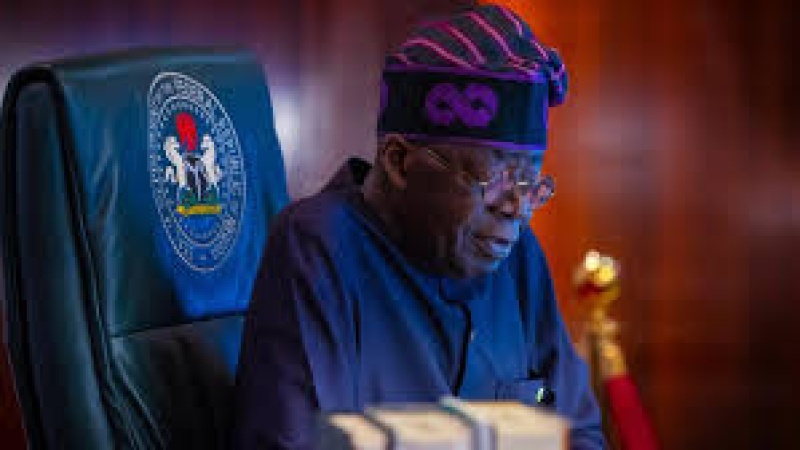
The battle for the 2027 presidential election is fast evolving into a fierce contest over regional influence, economic hardship and the survival of old political loyalties, as emerging opposition alliances begin to test President Bola Ahmed Tinubu’s dominance across key voting blocs.
From the South-West, where Oyo State Governor Seyi Makinde is positioning himself as a possible Yoruba alternative to Tinubu, to the South-East, where the Obi-Kwankwaso alliance is igniting fresh political enthusiasm under the Nigerian Democratic Congress (NDC), the country’s electoral map appears increasingly fluid ahead of the poll.
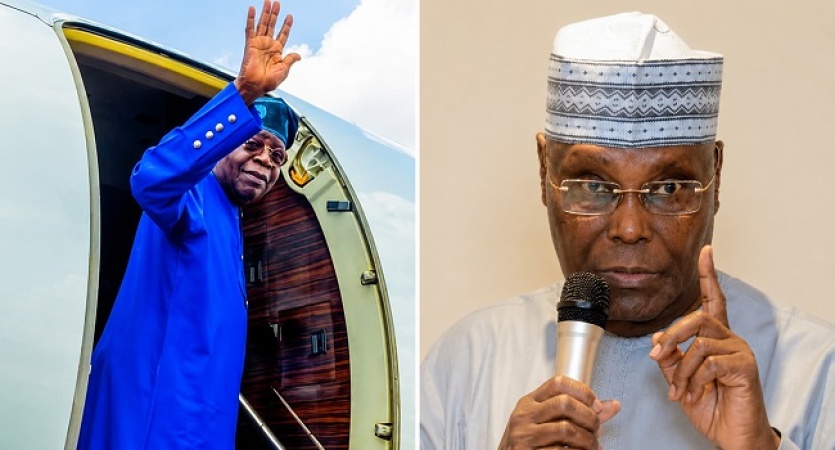
While former Vice President Atiku Abubakar and ex-Transportation Minister Rotimi Amaechi are exploring a North-East/South-South alliance on the platform of the African Democratic Congress (ADC), analysts believe the ticket may struggle against growing voter fatigue, regional zoning sentiments and declining influence in key strongholds.
The shifting alignments suggest that, unlike previous election cycles shaped largely by ethnic loyalty and entrenched party structures, the 2027 contest may be driven more by economic frustrations, coalition-building and the search for a credible national alternative to the ruling APC.
Going by the statement released by the Independent National Electoral Commission (INEC), the 22 recognised political parties expected to participate in next year’s general election have submitted their membership registers, as stipulated by the 2026 Electoral Act, as a precondition for candidate nomination through straw polls.
Out of the 22 political parties, The Guardian reports that only about 30 per cent are showing signs of mounting competitive presidential bids, including the African Democratic Congress, Allied Peoples Movement (APM), Nigeria Democratic Congress and Social Democratic Party (SDP).
The SDP emerged as the first political party to submit the name of its presidential standard bearer, Adewole Adebayo, to the electoral umpire, while the NDC effectively zoned its presidential ticket to the Southern part of the country, thereby brightening the chances of Peter Obi.
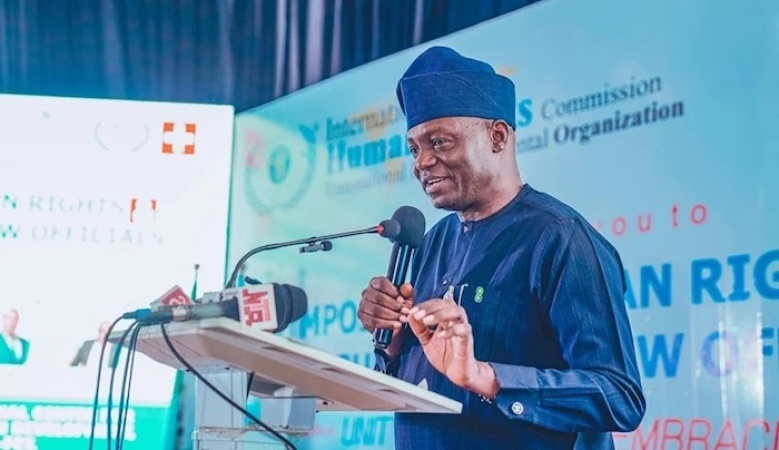
Last Friday, the outgoing governor of Oyo State, Seyi Makinde, announced his decision to contest the presidency on the platform of the new entrant, APM, explaining that his choice was predicated on the political accord with his faction of the embattled Peoples Democratic Party (PDP).
Former Vice President Atiku Abubakar, immediate past Minister of Transportation, Chibuike Rotimi Amaechi, and Mohammed Hayatu-Deen are the three heavyweights who purchased and returned the ADC’s presidential nomination forms. The party is expected to hold its straw poll in a few days.
Unless there is an upset that produces Amaechi as the ADC’s presidential standard bearer, pundits favour Atiku Abubakar to secure the party’s ticket for what could be his final contest for the country’s highest political office.
Conversely, if Amaechi settles for the position of running mate, the former Transportation Minister would become the second former presidential aspirant on the ballot as a vice-presidential candidate.
However, the former presidential candidate of the New Nigeria Peoples Party (NNPP), Rabiu Musa Kwankwaso, who is expected to deputise Obi, his former Labour Party (LP) counterpart, may head into the 2027 poll with brighter prospects than Amaechi, given that, win or lose, 2031 could still provide him with another opportunity.
While Amaechi would be acting against his avowed position that the presidency should remain in the South for the next four years if he accepts the running mate position, Governor Makinde’s decision to contest the presidency could challenge President Tinubu’s hold on South-West votes.
Spoiler or strategic contention?
Recall that in the 2023 election, Makinde was among the five PDP governors who resisted Atiku Abubakar’s insistence on contesting the presidential poll, arguing that it breached the power-sharing principle between Nigeria’s North and South.
It is believed that Makinde’s presidential ambition is aimed at sustaining that principled stance on zoning, as well as supporting the emergence of his preferred successor in the Oyo State governorship election.
However, Makinde’s declaration for the 2027 presidential race may trigger a major political realignment in the South-West and pose a significant regional challenge to President Tinubu’s vote tally in his traditional political base.
The South-West has remained the traditional stronghold of the Tinubu-led APC since 1999, and Makinde’s emergence could fracture the Yoruba political consensus that helped the party dominate the region in the 2023 presidential election.
Tinubu won four of the six South-West states during the 2023 poll, securing victories in Oyo, Ogun, Ondo and Ekiti states.
In total votes across the South-West, President Tinubu polled about 2.28 million votes, while Atiku Abubakar of the PDP secured about 941,000 votes and Peter Obi of the Labour Party polled about 849,000 votes.
The results showed that despite APC dominance in most South-West states, the Labour Party made strong inroads in urban areas, especially Lagos, while the PDP retained strength in Osun under the influence of Governor Ademola Adeleke.
However, the results also exposed growing cracks within the South-West political landscape. In Lagos, considered Tinubu’s political stronghold, Obi defeated Tinubu with 582,454 votes against Tinubu’s 572,606 votes.
Similarly, Atiku won Osun State with 354,366 votes, defeating Tinubu, who scored 343,945 votes. The outcome suggested that voters in the South-West were no longer voting strictly along ethnic or regional lines, but were becoming increasingly influenced by economic realities, governance issues and the appeal of individual candidates.
Makinde’s presidential ambition is therefore expected to test Tinubu’s influence in the region ahead of the next general election.
The Oyo governor remains one of the few opposition figures in the South-West with an established grassroots structure and growing national visibility. His rising profile within the PDP alliance with the APM, as well as his performance in Oyo State, has continued to fuel speculation that he could become a rallying point for opposition forces seeking to challenge President Tinubu in 2027. His candidacy could particularly resonate among urban youths, professionals and middle-class voters frustrated by the economic hardship that followed the removal of fuel subsidy and the floating of the naira.
Since the 2023 election, inflation, rising food prices and the worsening cost of living have increased public discontent across many parts of the country, including the South-West.
A core loyalist of Governor Makinde, Alhaji Bisi Olopoeyan, said the governor’s emergence could alter the region’s political calculations.
He said: “For the first time in many years, there is another influential Yoruba politician with a national outlook confronting Tinubu politically from within the South-West. That changes the equation completely.
“The 2023 election already showed signs that the region was no longer politically united. Lagos was lost by the APC to the Labour Party, while Osun went to the PDP. Therefore, the assumption that the South-West will automatically vote as one bloc in 2027 may no longer hold.”
He noted that Tinubu’s margins in some South-West states during the 2023 presidential election were not as overwhelming as in previous election cycles.
In Ogun State, Tinubu polled 341,554 votes, while he secured 369,924 votes in Ondo State and 201,494 votes in Ekiti State.
Although the APC still maintains strong political structures across the region, observers believe Makinde’s entry into the race could deepen divisions within the Yoruba political elite and reopen old rivalries between progressive and opposition blocs.
There are also indications that Makinde may attempt to build alliances beyond the PDP and APM as part of efforts to expand his political reach.
Some opposition leaders are already discussing the possibility of a broader coalition capable of confronting the APC in 2027.
As Eddy Olafeso predicted in an interview with The Guardian: “Multiple opposition groups are expected to join the PDP/APM train, which could further strengthen the forces against the APC.”
Another factor that may shape the 2027 contest is the growing debate over whether the South-West should retain power for two terms under Tinubu, in line with the country’s informal power-sharing arrangement.
While Tinubu’s supporters insist that the region should complete eight years in office, some opposition figures argue that performance and prevailing economic realities should determine voter decisions rather than ethnic solidarity.
Observers said Makinde’s declaration could further intensify that debate within the South-West. However, despite the growing attention surrounding his ambition, the Oyo governor still faces major political hurdles.
Apart from the internal crisis rocking the PDP, Makinde is yet to build a formidable political structure in the North, where presidential elections are often decided. Tinubu also retains the advantages of incumbency and a deeply entrenched political network across the country. Nevertheless, Makinde’s emergence has already altered the political conversation ahead of 2027.
Again, President Tinubu’s strength may weaken further in Osun beyond what occurred in 2023 if Governor Ademola Adeleke retains power in the August 8 governorship election in the state. Indeed, Makinde’s declaration has made the coming Osun governorship election increasingly critical for President Tinubu, as his electoral prospects in both Oyo and Osun could suffer significant setbacks.
For the first time in years, the South-West may witness a direct battle between two major Yoruba political power centres, a development that could reshape alliances, weaken old loyalties and redefine the region’s role in Nigeria’s next presidential election.
Atiku-Amaechi: Demographic twist
As a presidential running mate, Amaechi may not deliver substantial votes from his South-South base in an election being contested by four contenders, including the incumbent President.
The former minister, who has been pushing the campaign narrative of economic hardship, insecurity and public dissatisfaction, has positioned himself for a possible Atiku-Amaechi presidential ticket as a credible national alternative ahead of the 2027 general election.
The common refrain in the South-South is what many describe as “much talk without commensurate action” in denouncing the current administration. It is believed that a North-East/South-South alliance could gain some traction across key voting blocs.
However, with the seeming loss of interest in Atiku by the electorate and Amaechi’s tenuous control of political structures in his native Rivers State, unlike when he was governor, it is doubtful that the pairing would alter the electoral map.
Over and above that consideration, the continuing national debate over power rotation and regional balance may portray Amaechi as a saboteur of regional solidarity and national stability, thereby vitiating the viability of the proposed ADC joint ticket despite its political weight and strategic appeal.
The strength of an Atiku-Amaechi alliance would largely lie in its strategic North-South configuration, combining Atiku Abubakar’s established influence in the North-East with Amaechi’s political structure in Rivers State and parts of the South-South.
But, against the background of the vote tally recorded by the Atiku-Okowa ticket in 2023, the ticket may merely satisfy the basic requirements of a presidential ballot and nothing more.
Having served variously as Speaker of the Rivers State House of Assembly, two-term governor and former Minister of Transportation, Amaechi has some bragging rights, including his longstanding network within elite political circles and grassroots structures across the Niger Delta, which could provide the opposition with a formidable foothold in a region considered critical to national electoral success.
Consequently, Amaechi’s involvement may weaken the dominance of the ruling APC in Rivers State and parts of the oil-rich South-South, particularly amid lingering political tensions within the party in the region.
Within the South-South region, opinions are divided on the feasibility of an Atiku-Amaechi presidential pairing. While some stakeholders view the alliance as an opportunity for the region to retain national relevance and bargaining power, others insist that supporting a northern presidential candidate against a sitting southern president undermines the broader southern position on equity, fairness and rotational presidency.
A policy and political analyst and lecturer in the Department of Political Economy at Imo State University, Prof. Christian Onyegbule, said the 2027 presidential permutation is primarily shaping up as a referendum on the incumbent administration, driven by shifting party alliances, intense opposition coalitions and attempts to balance regional power dynamics.
“The recent denial by the South-South caucus of the ADC of the purported endorsement of Rotimi Amaechi clearly shows that he has no strong base or stronghold in the zone. Amaechi may struggle to secure 25 per cent of the votes in Rivers State, and that may be all.
“The ADC lost its relevance when Obi-Kwankwaso decamped to the NDC. The entire Northern states stand a better chance under the Obi-Kwankwaso ticket. Atiku will be floored across the North come 2027. The battle is between Tinubu and the Obi-Kwankwaso movement.”
Also, a rights activist and political analyst, Josiah Egbilika, reasoned that an Atiku-Amaechi ticket in 2027 would have been a powerful combination, but with the current political shift, it has become very difficult for the ticket to wield significant influence in the South-South and North-East regions.
“Atiku and Amaechi personally have considerable influence in these regions. They command supporters, especially Atiku in the North-East. But Atiku’s insistence on becoming the ADC presidential candidate will limit support from these regions because of the sentiment that the South should complete its tenure.
“However, their influence could amount to a major boost for the opposition if they align with what is seen as the popular choice of Obi-Kwankwaso from the opposition camp. Their alignment with the NDC will improve the opposition’s chances of sweeping the South-South and North-East. Anything short of that may have little or no effect, given the current shift in the political landscape,” he stated.
Obi-Kwankwaso: Sunshine for South-East politics
Whether driven by genuine support for the ticket or by the opportunity for politicians to win elections, as was the case in 2023 when Peter Obi ran on the Labour Party platform, one thing is clear: the Obi-Kwankwaso ticket on the platform of the Nigerian Democratic Congress is spreading across the South-East like harmattan fire ahead of the 2027 poll.
Based on the leadership crisis in the ADC, it was almost taken for granted that the APC was cruising to an easy victory in the region. However, the permutations have since changed with the emergence of the Obi-Kwankwaso presidential ticket on the NDC platform.
Overnight, buildings formerly emblazoned with ADC colours and flags began to display those of the NDC, even as people trooped to party offices to register as members, assuring politicians of their support.
The NDC became an alternative platform for politicians who felt short-changed in their former parties, as well as for those eager to see the realisation of an Obi-Kwankwaso presidency.
Several bigwigs of the APC and ADC, including elected representatives, have moved to the NDC either to seek re-election or to support the Obi-Kwankwaso ticket.
At one of the meetings he convened, the party’s aspirant for the Enugu West Senatorial District seat, Ogochukwu Onyema, a lawyer, told stakeholders from Enugu West that Obi had directed them to collapse their ADC structures in the region and join the NDC.
He stated, “We found solace in the ADC and groomed the party, but at the point of nominations for the 2027 elections, issues emerged again. We saw many landmines and calculated attempts to frustrate politicians and create a one-party system.”
Onyema disclosed that at a crucial meeting held on May 4, 2026, at the residence of the national leader of the NDC in Guzape District, Abuja, Obi reportedly directed members of the coalition to defect immediately to the NDC.
Explaining that the directive followed unresolved leadership disputes and litigations within the ADC, the legal practitioner stated: “The message to the press and supporters was that we should all move to the NDC and vacate the ADC because of the numerous factions and leadership issues that would not allow fruitful democratic engagement.”
Since Obi and Kwankwaso joined the NDC, however, one major challenge that has emerged is how to harmonise party membership with those who defected from the ADC. For instance, some ADC officials are allegedly attempting to supplant NDC officials because there were no properly elected leaders of the party in the region.
This development culminated in the rescheduling of the party’s ward, local government and state congresses in some states by the national leadership, with three South-East states — Enugu, Abia and Anambra — affected.
Another challenge has come from some politicians who moved with Obi to the ADC but refused to follow him and Kwankwaso to the NDC, even as the majority of supporters appear willing to look beyond the internal disputes within the party.
While attention is increasingly focused on delivering the region’s votes to the Obi-Kwankwaso ticket, observers say the 2027 poll in the South-East may become a straight contest between the APC and the NDC. It remains to be seen whether the NDC can replicate the momentum Obi generated on the Labour Party platform in 2023.
An official of the Obi-Kwankwaso Movement in Anambra State, Jerry Igwekaku, told The Guardian: “This ticket remains a source of relief for suffering Nigerians and we are not ready to toy with it. It is our life. It is everything to us. Our people love it because Kwankwaso remains a force in the North, while here in the South-East we love Obi. Their combination excites us.”
He contended that the Obi-Kwankwaso ticket was a sure bet that would deliver victory for the party and its candidates in the elections.
Although the party is yet to conduct its primaries, some stakeholders believe it was the Obi-Kwankwaso wave that forced the APC to review its strategy of ensuring that only those who purchased nomination forms through party leaders could emerge as candidates through its direct primaries.
Leader of the Njiko Igbo Forum (NIF), a socio-political organisation, Rev. Okechukwu Obioha, said the Obi-Kwankwaso ticket “is being embraced enthusiastically and will receive the same level of support it enjoyed in 2023”.
He said the region would reject “every other political party and their candidates in favour of the NDC”, adding that the one-term promise made by Obi remained sacrosanct. (The Guardian)