ADAD
ADAD
Updating your news feed...
NEWS EXPRESS is Nigeria’s leading online newspaper. Published by Africa’s international award-winning journalist, Mr. Isaac Umunna, NEWS EXPRESS is Nigeria’s first truly professional online daily newspaper. It is published from Lagos, Nigeria’s economic and media hub, and has a provision for occasional special print editions. Thanks to our vast network of sources and dedicated team of professional journalists and contributors spread across Nigeria and overseas, NEWS EXPRESS has become synonymous with newsbreaks and exclusive stories from around the world.
















Loading banners
Loading banners...

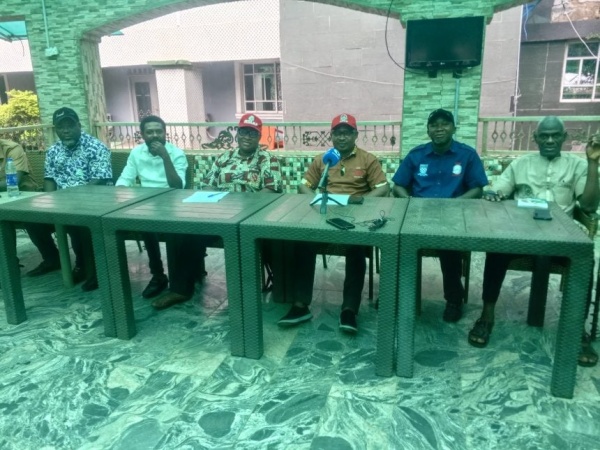
The Academic Staff Union of Universities (ASUU), Calabar Zone, on Monday raised the alarm over what it described as the Federal Government’s deliberate neglect of Nigeria’s university system, warning that another wave of industrial unrest may soon hit public campuses if urgent steps are not taken to implement the 2025 FGN/ASUU Agreement.
The Zonal Coordinator of ASUU Calabar Zone, Mr Ikechukwu Igwenyi, stated this while addressing journalists in Abakaliki.
Igwenyi noted that lecturers across universities in the zone had endured years of unpaid salaries, withheld allowances, unremitted deductions, and worsening poverty, despite the government’s public celebration of the agreement signed in December 2025.
The union accused the Federal and State Governments of “playing politics with education” and treating university lecturers like “daily-paid menial workers” through the continued application of the controversial “No Work, No Pay” policy.
ASUU Calabar Zone, comprising Abia State University (ABSU), Akwa Ibom State University (AKSU), Ebonyi State University (EBSU), Alex Ekwueme Federal University (FUNAI), University of Education and Entrepreneurship (UEE), University of Calabar (UNICAL), University of Cross River State (UNICROSS), and University of Uyo (UNIUYO), said the failure to fully implement the agreement had pushed university workers to the wall.
The union lamented that although the government announced the signing of the agreement with fanfare on January 14, 2026, implementation had remained partial, distorted, and largely abandoned.
According to ASUU, its greatest concern is the failure of the government to inaugurate the Implementation Monitoring Committee (IMC), which it said was designed to ensure the faithful execution of the agreement and prevent bureaucratic sabotage.
“Federal Government agents are implementing the agreement in an uncoordinated and distorted manner, while many state governments have simply turned their backs on the document,” the union stated.
ASUU also faulted the proposed National Research Council, alleging that the government was sidelining critical stakeholders while attempting to fund the initiative through foreign borrowing.
The union queried the rationale behind the Minister of Education’s announcement that 500 million dollars had been earmarked for the project.
“Why would a country whose currency is the naira denominate educational development in dollars?” it asked.
The lecturers further decried outstanding welfare issues affecting members, including unpaid salaries, arrears of the 25/35 per cent wage award, withheld 2022 salaries, unpaid Earned Academic Allowances (EAA), unpaid CATA, pension deductions, and salary shortfalls linked to the Integrated Personnel and Payroll Information System (IPPIS).
ASUU maintained that withholding salaries for work already done amounted to injustice, stressing that students had graduated and moved on while lecturers remained unpaid.
The union equally accused some university administrators and governing councils of financial recklessness, irregular appointments, and abuse of due process.
It alleged that questionable titles such as “Professors of Practice” and “Diaspora Professors” were being introduced without the approval of university senates and governing councils.
On the plight of retired academics, ASUU condemned what it called the abandonment of pensioners by several state governments, noting that some retirees receive no pensions despite official claims that they are under pension schemes.
The union said worsening inflation, fuel subsidy removal, and economic hardship had plunged university lecturers into “abject poverty and penury,” warning that the trend was accelerating brain drain in the education sector.
ASUU therefore issued what it described as a “final warning” to the government and demanded the immediate inauguration of the IMC, full implementation of the 2025 agreement, payment of all outstanding salaries and allowances, remittance of withheld third-party deductions, and an end to political interference in university administration.
It also called for a review of the National Research Council framework in line with the signed agreement.
“If the government chooses to remain deaf to these legitimate demands, it should be held responsible for any industrial disharmony that may erupt on our campuses,” the union warned.
ASUU added that the government should not wait for another strike before taking action, insisting that the future of Nigeria’s education system and national development was at stake. (TRIBUNE)