ADAD
ADAD
Updating your news feed...
NEWS EXPRESS is Nigeria’s leading online newspaper. Published by Africa’s international award-winning journalist, Mr. Isaac Umunna, NEWS EXPRESS is Nigeria’s first truly professional online daily newspaper. It is published from Lagos, Nigeria’s economic and media hub, and has a provision for occasional special print editions. Thanks to our vast network of sources and dedicated team of professional journalists and contributors spread across Nigeria and overseas, NEWS EXPRESS has become synonymous with newsbreaks and exclusive stories from around the world.
.webp)




.webp)







Loading banners
Loading banners...

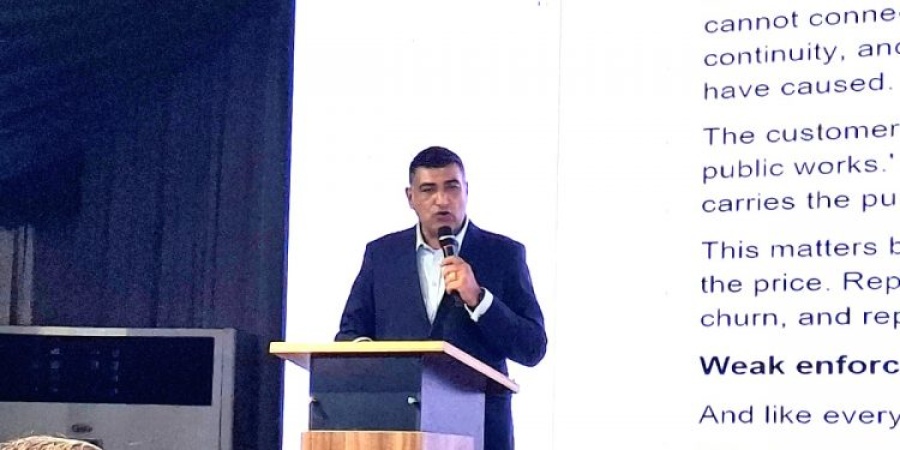
CEO of MegaMore Wireless Broadband Limited, Amin Dayekh
The Managing Director and Chief Executive Officer of MegaMore Wireless Broadband Limited, Amin Dayekh, has identified vandalism, road construction activities and inadequate infrastructure protection as major threats to Nigeria’s fibre broadband expansion.
Dayekh, in a statement by his spokesperson, Excel Osamwenyobo, spoke at the Association of Telecommunications Companies of Nigeria (ATCON) Critical Conversation Forum on Fibre-to-the-Home (FTTH) in Lagos.
He said deploying fibre infrastructure alone would not bridge Nigeria’s digital divide, stressing that long-term financing, infrastructure protection, fair competition and affordability are essential for sustainable broadband expansion.
He said FTTH projects continue to face challenges after deployment, including vandalism, damage from road construction, power instability, high operating costs, right-of-way constraints and slow returns on investment.
He said fibre remains the most effective technology for high-speed internet connectivity, but its success depends on investment, effective regulation, supportive access policies and affordable pricing that enables more Nigerians to connect.
Dayekh warned that expecting quick returns on fibre investments would limit deployment to commercially attractive areas and widen the digital divide.
He also lamented the frequent damage to fibre infrastructure caused by uncoordinated road construction and weak enforcement of existing regulations, noting that every fibre cut results in service disruptions, economic losses and higher operational costs that are eventually passed on to consumers.
He called for stronger collaboration among government agencies, regulators, road contractors, security agencies and infrastructure owners to protect fibre infrastructure and prevent avoidable damage.
Dayekh further urged policymakers to adopt a realistic broadband access strategy, noting that wireless Internet Service Providers (ISPs) remain critical to connecting underserved and semi-urban communities where fibre deployment is not yet commercially viable.
He added that Nigeria’s broadband progress should be measured by the reliability, affordability and financial sustainability of its networks, as well as their ability to connect homes, schools, hospitals, businesses and underserved communities. (Daily Trust)