ADAD
ADAD
Updating your news feed...
NEWS EXPRESS is Nigeria’s leading online newspaper. Published by Africa’s international award-winning journalist, Mr. Isaac Umunna, NEWS EXPRESS is Nigeria’s first truly professional online daily newspaper. It is published from Lagos, Nigeria’s economic and media hub, and has a provision for occasional special print editions. Thanks to our vast network of sources and dedicated team of professional journalists and contributors spread across Nigeria and overseas, NEWS EXPRESS has become synonymous with newsbreaks and exclusive stories from around the world.














Loading banners
Loading banners...

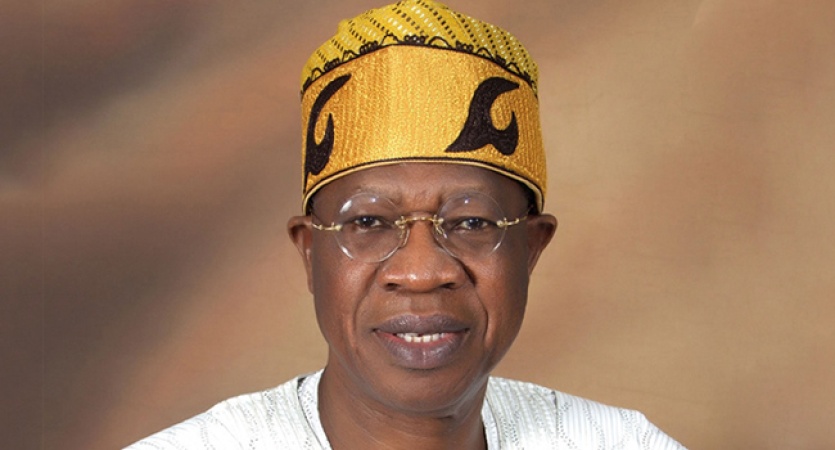
Former Minister of Information and Culture, Lai Mohammed
By FUNMILAYO ADEYEMI
Former Minister of Information and Culture, Alhaji Lai Mohammed has given an account of how disciplined, strategic communication can transform a fragmented opposition into a cohesive national movement.
Speaking at Abbey College, Cambridge, UK, on Wednesday, Mohammed said the method was deployed by the political oppositions in Nigeria to defeat the ruling party in 2015.
A statement on the former Minister’s speech at the institution was made available to newsmen on Wednesday in Abuja by Mr Nnamdi Atupulazi, Head of Strategic Communications in his media office.
Atupulazi said Mohammed is currently on a speaking tour of the UK, where he will be engaging audiences on leadership, governance and public communication.
According to the media aide, Mohammed traced the roots of the transformation of the opposition to the aftermath of Nigeria’s 2003 general elections, which he famously described as a “political tsunami.”
“That year, 2003, was the year of a political tsunami in Nigeria, the year the opposition suffered perhaps its worst disaster in the country’s political history.
”When Nigeria returned to democratic governance in 1999, the number of states controlled by the three major parties after the elections was fairly balanced.
“The emergent ruling Peoples Democratic Party (PDP) won 21 states, the main opposition All Peoples Party (APP) secured nine states, while the Alliance for Democracy (AD), which was my party at the time, won six,” he said.
Mohammed added: “Four years later, after the 2003 general elections, disaster struck. PDP gained seven more states to bring its total to 28.
“Five of those states were taken from my party’s six, leaving us with only one, Lagos.
“The APP, which had by then become the All Nigeria Peoples Party (ANPP), lost two states but remained the main opposition with seven states.”
The former Minister explained that the outcome of the election stripped the AD of power, structure and influence, compelling it to seek new alliances.
He said the efforts led to the formation of the Action Congress of Democrats (ACD), which later evolved into the Action Congress (AC) and eventually the Action Congress of Nigeria (ACN).
According to him, in spite of controlling only one state at the time, the ACN leveraged the power of communication to emerge as the most vocal opposition force in the country.
“In those days, communication was our greatest weapon. Every word mattered.
“Every message had to cut through the noise, because if it didn’t, we simply did not exist in the public consciousness,” Mohammed noted.
He explained that, through sustained public engagement, disciplined messaging and relentless advocacy, the opposition gradually rebuilt public trust and expanded its political footprint.
According to him, the ACN grew from one state to six, a development that enabled it to forge alliances with other parties to form the All Progressives Congress (APC) in 2013.
He noted that the APC immediately became the dominant opposition force and went on to defeat the ruling PDP in the 2015 general elections, marking the first time in Nigeria’s history that a ruling party was unseated at the national level.
“That journey taught me that communication is not just about speaking, it is about persistence, clarity and strategic positioning,” the former Minister added.
Reflecting on his time in government, Mohammed said his experience in opposition profoundly shaped his approach to governance when his party assumed power in 2015 and he was appointed the Minister of Information and Culture.
“It reinforced my belief that communication is not an accessory to politics or governance, it is a core instrument of both.” he said.
Atupulazi said Mohammed’s speaking tour of the UK is anchored on his new book, “Headlines and Soundbites: Media Moments That Defined an Administration”, which chronicles his tenure as Nigeria’s government spokesman from 2015 to 2023.
According to him, the former Minister is also scheduled to speak at the Leadership Speaker Series of the Cambridge International Education Conference at St John’s College, Cambridge, on Thursday.
He disclosed that Mohammed will, as well, speak at the London School of Economics later the same day. (NAN)