ADAD
ADAD
Updating your news feed...
NEWS EXPRESS is Nigeria’s leading online newspaper. Published by Africa’s international award-winning journalist, Mr. Isaac Umunna, NEWS EXPRESS is Nigeria’s first truly professional online daily newspaper. It is published from Lagos, Nigeria’s economic and media hub, and has a provision for occasional special print editions. Thanks to our vast network of sources and dedicated team of professional journalists and contributors spread across Nigeria and overseas, NEWS EXPRESS has become synonymous with newsbreaks and exclusive stories from around the world.



















Loading banners
Loading banners...

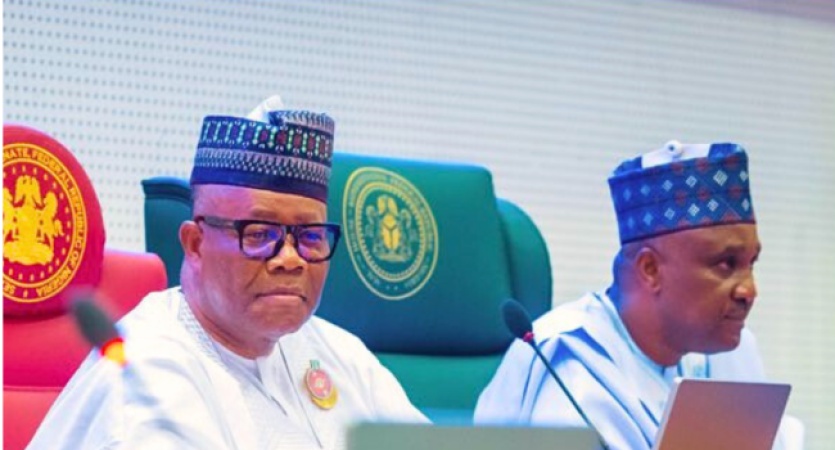
Senate President, Godswill Akpabio and Speaker of the House of Representatives, Tajudeen Abbas
By DOUGLAS OKORO
Stakeholders in Abakaliki have renewed calls for the inclusion of independent candidature in Nigeria’s electoral system.
They described its rejection by the National Assembly in recent constitutional amendments as a major setback to the nation’s democracy.
The stakeholders, who spoke in separate interviews with the News Agency of Nigeria (NAN) in Abakaliki on Wednesday, said allowing independent candidates to contest elections would deepen participatory democracy and widen political choices for citizens.
They argued that democracy should not be restricted to political parties alone, noting that many competent Nigerians were often denied opportunities due to alleged manipulation of party primaries by political elites.
Mr Chinedu Nwankwo, a political analyst and lecturer at Alex Ekwueme Federal University, Ndufu-Alike, said the refusal to accommodate independent candidature in the constitution had continued to weaken the democratic process.
According to him, democracy thrives when citizens are given unrestricted opportunities to participate in governance either through political parties or as independent candidates.
“The constitution guarantees freedom of association and political participation, but in practice, many politicians are denied fair opportunities through manipulated party primaries.
“Independent candidature would provide credible alternatives for aspirants, who may have genuine popularity among the electorate but are schemed out during party primaries.
“It will also reduce excessive control of the political space by a few influential party leaders,” he said.
Nwankwo noted that the current electoral act had made it difficult for aggrieved aspirants to seek alternative platforms after party primaries, thereby narrowing democratic options.
Also speaking, Mrs Ngozi Okorie, Coordinator of Women in Governance Initiative, said the absence of independent candidature had discouraged many capable Nigerians, especially women and youths, from active political participation.
She said many citizens with leadership potential lacked the financial strength and political networks required to survive within existing party structures.
“Most political parties in Nigeria are controlled by powerful individuals who determine who gets tickets.
“When aspirants are unfairly treated during primaries, they are left stranded because the law does not allow easy movement to another party after the primaries.
“If independent candidature is allowed, the people will have broader choices and democracy will become more inclusive,” Okorie said.
A legal practitioner, Mr Ifeanyi Eze, described independent candidature as a democratic necessity in modern political systems.
Eze argued that several democratic nations had successfully adopted the system to strengthen accountability and political competition.
He said the repeated rejection of constitutional amendments seeking to introduce independent candidature raised concerns about the sincerity of the political class toward democratic reforms.
“The fear among many politicians is that independent candidates may threaten the dominance of established political parties.
“But democracy should primarily serve the interests of the people and not political elites,” he stated.
Eze further said that credible independent candidates could help reduce voter apathy by inspiring confidence among citizens disillusioned with party politics.
On his part, Mr Peter Ogbodo, a civil society activist, said the development had continued to deprive voters of the opportunity to elect leaders based on competence and popularity.
He noted that many aspirants allegedly rigged out during party primaries often enjoyed massive grassroots support but had no constitutional alternatives to pursue their ambitions.
“The implication is that the electorate may eventually be forced to vote for candidates imposed by party structures rather than candidates preferred by the people; that is not the true essence of participatory democracy,” Ogbodo said.
The respondents therefore urged the national assembly to reconsider the issue during future constitutional amendments in the interest of democratic growth and political inclusion in the country. (NAN)