ADVERTISEMENT

ADVERTISEMENT

ADVERTISEMENT

ADVERTISEMENT
Updating your news feed...

NEWS EXPRESS is Nigeria’s leading online newspaper. Published by Africa’s international award-winning journalist, Mr. Isaac Umunna, NEWS EXPRESS is Nigeria’s first truly professional online daily newspaper. It is published from Lagos, Nigeria’s economic and media hub, and has a provision for occasional special print editions. Thanks to our vast network of sources and dedicated team of professional journalists and contributors spread across Nigeria and overseas, NEWS EXPRESS has become synonymous with newsbreaks and exclusive stories from around the world.
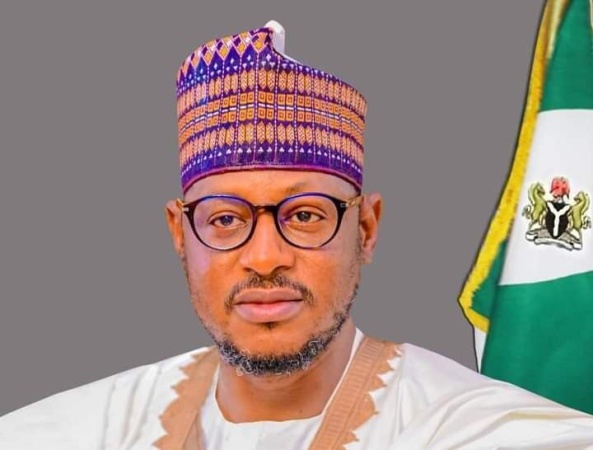
Gov Dikko Umaru Radda of Katsina
By OKEY AJAERO
Nigeria’s long fight with insecurity is too often seen only as a military problem. Troops are sent, raids happen, camps fall, suspects are taken. These steps are sometimes needed; no responsible government can ignore force when citizens face attack. But experience shows that force alone rarely brings lasting peace. It can quell violence for a while, but won’t fix the root causes: poverty, unemployment, alienation, weak state presence, broken trust, and failing local authority.
This context underscores the significance of Governor Dikko Umaru Radda’s non-kinetic security strategy in Katsina State. Moving beyond conventional tactics, the inauguration of the State Disarmament, Demobilisation and Reintegration, Peace and Security Committee is not merely another bureaucratic exercise. Instead, it represents a serious attempt to rethink security from the ground up. In a region battered by banditry, kidnapping, rural displacement and fear, Katsina is choosing a harder but more durable path: the pursuit of peace through dialogue, rehabilitation, community ownership and social repair.
The logic is simple. Guns repel attackers, not repair trust. Armoured vehicles patrol highways, not rebuild livelihoods. Military operations disrupt crime, but alone can’t stop new, angry, jobless, excluded youths from joining future violence. Lasting security must mix state force with community consent, cooperation, and confidence.
That is why the composition of Katsina’s DDR and Peace Committee matters. By bringing together security agencies, traditional rulers, religious leaders, civil society organisations, government officials and community actors, the Radda administration is acknowledging a central truth: peace is not manufactured in government offices; it is negotiated in communities. Traditional institutions understand local histories and grievances. Religious leaders shape moral attitudes. Civil society actors often know where the state is failing. Security agencies bring operational capacity. The government provides coordination, legitimacy and resources. When these forces align, peace becomes more than a policy; it becomes a social compact.
The DDR framework gives this vision structure. Disarmament seeks to remove weapons from circulation. Demobilisation breaks the group's identity, command structures, and the psychology of violence. Reintegration, the most delicate stage, helps former combatants return to society as productive citizens rather than recycled threats. This is where many peace efforts succeed or fail. A surrendered weapon is not the same as a transformed life. A young man who lays down arms but returns to hunger, stigma, idleness and hopelessness remains vulnerable to relapse.
Recognising these challenges, Katsina’s approach must go beyond symbolic reconciliation. Reintegration must be tied to skills training, education, rural livelihoods, psychosocial support, moral reorientation and credible economic opportunity. Peace cannot be reduced to a transaction in which a weapon is exchanged for a stipend. That would only reward violence while postponing the next crisis. The real test is whether former fighters can be moved from the economy of fear into the economy of work, responsibility and citizenship.
Global experience supports this direction while also warning against complacency. Sierra Leone’s post-war DDR process helped disarm tens of thousands of fighters and stabilise a country shattered by civil war. Colombia’s negotiations with the FARC showed that even entrenched insurgencies can be de-escalated through a combination of political will, negotiation and reintegration. Nigeria’s Niger Delta Amnesty Programme also demonstrated the value of non-kinetic tools in reducing attacks on oil infrastructure. Yet it also exposed the dangers of programmes that rely too heavily on payments without sufficiently transforming local economies. Peace must be funded, but it must never become dependent.
For Katsina, perhaps the most sensitive issue is justice. Communities devastated by banditry will not easily accept the reintegration of those they associate with terror, ransom, displacement and death. Victims have memories. Families have graves. Farmers have abandoned fields. Children have lost parents. Women carry invisible wounds. For such people, rehabilitation can sound like a reward unless it is carefully balanced with accountability, restitution and recognition of suffering.
Navigating this tension, Governor Radda’s strategy will therefore require moral balance. Mercy must not erase justice. Reconciliation must not silence victims. Reintegration must not appear to privilege perpetrators over law-abiding citizens. A credible peace process must create space for truth, remorse, compensation where possible, community healing, and firm consequences for those who reject peace. Forgiveness cannot be imposed by government proclamation. It must be earned through visible sincerity and social repair.
Still, the Katsina model's courage lies in its realism. It understands that insecurity is not defeated only by winning battles, but by reducing the reasons people join violent networks in the first place. It recognises that intelligence flows more easily when communities trust the state. It appreciates that traditional and religious authorities remain essential bridges between government and rural populations. Above all, it accepts that peace is not an event but a process.
Non-kinetic security is often mistaken for weakness. It is not. It often demands more courage than force. Launching an operation is easier than rebuilding trust. Condemning criminals is simpler than repairing social conditions. Speaking of victory is easier than doing the patient work of reconciliation and community engagement. Katsina’s path still needs firm action against those who continue the violence. The state must be strong enough to protect and deter. But strength without wisdom is exhaustion. Force without inclusion leads to a cycle. Peace needs both resolve and imagination.
Governor Radda’s non-kinetic strategy is therefore more than a Katsina initiative; it is a lesson for Nigeria. A country cannot shoot its way out of every crisis. Where violence has social roots, security must have social answers. It is now time for policymakers, leaders, and community stakeholders across Nigeria to actively study, adapt, and support such integrated approaches. If Katsina sustains this model with discipline, fairness and economic depth, it may offer the North-West something more valuable than temporary calm: a practical pathway from fear to trust, from violence to citizenship, and from fragile order to sustainable peace. Let us take the bold step to transform lessons into nationwide action, building bridges where there once were bullets.
•Okey Ajaero is a policy analyst.