ADAD
ADAD
Updating your news feed...
NEWS EXPRESS is Nigeria’s leading online newspaper. Published by Africa’s international award-winning journalist, Mr. Isaac Umunna, NEWS EXPRESS is Nigeria’s first truly professional online daily newspaper. It is published from Lagos, Nigeria’s economic and media hub, and has a provision for occasional special print editions. Thanks to our vast network of sources and dedicated team of professional journalists and contributors spread across Nigeria and overseas, NEWS EXPRESS has become synonymous with newsbreaks and exclusive stories from around the world.





Loading banners
Loading banners...

A new International Monetary Fund (IMF) report released yesterday warned that weak budget credibility is undermining macroeconomic stability across sub-Saharan Africa, eroding public trust and weakening long-term development outcomes.
The IMF warning comes on the heels of rising concerns over Nigeria’s persistent cycle of opaque budget administration, spurious benchmark, overlapping execution and revenue shortfalls, challenges that seek to undermine budgeting as a fiscal control tool.
At the federal level, the culture of budgeting as it was known is dying, giving way to unappropriated spending, multiple budget execution, undefined budgeting cycle, among others.
For one, the 2026 appropriation was only signed into law on April 17, over three months into a new fiscal year and over two into its supposed implementation.
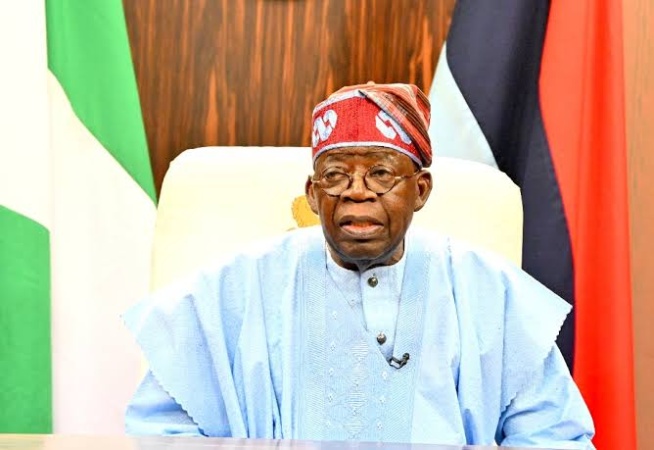
A statement by the President’s spokesperson, Bayo Onanuga, shortly after the budget was signed, said the spending guide had taken effect on April 1, raising questions on whether its implementation had commenced before the President’s signature – a necessary aspect of the lawmaking process.
The budget was passed by the two chambers of the National Assembly after the members hurriedly approved the add-on sent by President Bola Tinubu.
At the signing of the appropriation, the National Assembly extended the implementation of the capital component of the 2025 appropriation to June 30, 2026 – a strange fiscal practice invoked recently to manage the public uproar over weak capital budget performance, but which has grown into a budget governance culture.
The decision validated The Guardian’s earlier report on the government’s poor commitment to ending overlapping budget implementation. At the twilight of last year, Tinubu wrote to the parliament requesting the “re-enactment” of a harmonised 2024/2025 appropriation as part of the groundwork to end the history of overlapping budget implementation, which started in 2022 under the late President Muhammadu Buhari.
Since then, budget rollover has become a routine fiscal pathway, though capital expenditure performances have been kneecapped by poor revenue mobilisation to less than 70 per cent. When Tinubu promised the lawmakers an end to multiple budgeting, many analysts, who baulked at his commitment, have been justified by the handling of the 2025 public spending document.
And close to a month after the 2026 budget was signed into law, there is no official confirmation beyond Onanuga’s statement on whether its execution, at least the recurrent component, has commenced.
The IMF report, titled ‘Budget Credibility in Sub-Saharan Africa’, paints a troubling picture of how governments across the region routinely depart from approved fiscal plans, with deficits exceeding projections, current expenditures overshooting limits and capital projects repeatedly abandoned or implementation delayed midway.
The 2024 budget performance was the last of such reports. Then, the government projected a fiscal deficit of N9.17 trillion, which was overrun by N4.34 trillion or 47 per cent. Recent years mirror similar variance in fiscal deficit projection and actual deficit, a crisis fuelled by revenue underperformance or recurrent projection overrun or both.
Many African countries lack commercially viable frameworks that drive public-private partnership (PPP) elsewhere, thus making equity funding a key driver of public infrastructure delivery. With Nigeria’s yearly infrastructure estimated at $300 million by Moody’s in the face of a tattered PPP model, there are not many options for equity infrastructure spending.
The IMF paper studied 39 African countries between 2021 and 2024, with Nigeria featuring prominently in the institutional assessment and exemplifying many of the structural weaknesses highlighted in the report: optimistic revenue assumptions, weak expenditure discipline, fragmented fiscal management systems, poor transparency and recurrent reliance on supplementary or revised budgets that alter the original fiscal framework within months of legislative approval.
The treatment of the 2026 budget speaks expressly about the low attention African countries accord to the transparency canon. Almost a month after the budget was signed, the revised version has yet to be made public, which raises concerns about the government’s commitment to transparency.
The current administration has been accused of failing in fiscal transparency tests. Borrowed funds are spent without clearly articulated justifications. Budget implementation reports (BIRs), which were previously updated quarterly, are now delayed for as much as a year. Close to mid-year, the 2025 full-year BIR is yet to be made public; only the half-year is accessible.
Recently, The Guardian reported that the FG’s yearly audited financial statement was last transmitted to the National Assembly in 2023, a breach of a provision of the Fiscal Responsibility Act (FRA), a fiscal discipline document that has been abused on all fronts.
For the IMF report, Nigeria, Africa’s once largest economy, is grappling with elevated debt servicing costs, chronic revenue underperformance, ballooning recurrent expenditures, heavy dependence on borrowing, widening infrastructure deficit, as well as rising social spending demand amid a fragile macroeconomic environment.
The IMF warned that when governments consistently fail to deliver budgets as approved, fiscal policy loses credibility, investor confidence weakens, and economic uncertainty intensifies.
“Budgets are more than technical documents. They reflect the core policy commitments of a government: setting priorities, allocating scarce resources and signalling the fiscal stance. When these commitments are repeatedly missed, fiscal discipline weakens and macroeconomic uncertainty rises,” the report said.
Fiscal estimates, reality and outlook
The Federal Government’s revised 2026 budget, estimated at N68.32 trillion, was built on crude oil production of 1.84 million barrels per day (mbpd), an oil benchmark price of $75 per barrel and an exchange rate of N1,400/$1, an overshoot of the current dollar-naira exchange value.
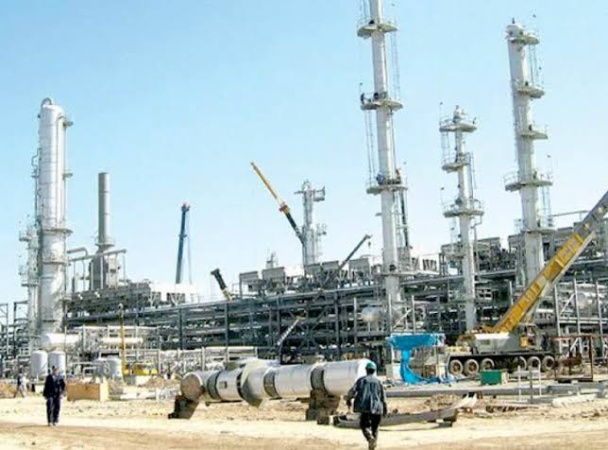
Last month, the country’s average production was 1.49mbpd, about 20 per cent short of the target and the highest since the beginning of the year. Shortfalls over the years have been fuelled by pipeline vandalism, oil theft and operational disruptions, divestment by international oil companies (IOC) and poor fresh investment – challenges the government is yet to find solutions to.
Following an upward revision of the budget, Nigeria’s 2026 fiscal deficit is projected at N29.2 trillion, while debt servicing alone is expected to consume over 20 per cent of the entire expenditure.
The IMF paper warned that poor budgeting could weaken not only fiscal planning but also governance and accountability structures.
“Credible budgets enable stronger accountability and reinforce the social contract by aligning the government’s stated objectives with its actions,” the report stated.
Nigeria’s recurring budget credibility problems have become more visible over the past decade as fiscal pressures intensified. Large fiscal deficits financed by borrowing, accompanied by weak revenue mobilisation, volatile oil earnings and rising debt service obligations.
Across sub-Saharan Africa, the IMF noted, fiscal deficits consistently exceed approved budget levels because governments tend to overestimate revenues while underestimating spending pressures, a pattern that closely reflects Nigeria’s experience.
Successive Nigerian budgets have repeatedly projected aggressive revenue growth based on overtly optimistic assumptions around crude oil production, exchange rates, tax proceeds and economic growth. Yet actuals often fall below projections.
The IMF found that current expenditures, including wages, transfers and operational spending, consistently exceeded budget ceilings across the region and were the single biggest contributor to fiscal overruns.
The report identified primary current expenditure overruns, rather than interest payments alone, as the major source of budget deviations.
The IMF warned that in many African countries, governments resort to cutting or postponing capital projects whenever revenues disappoint or financing conditions tighten.
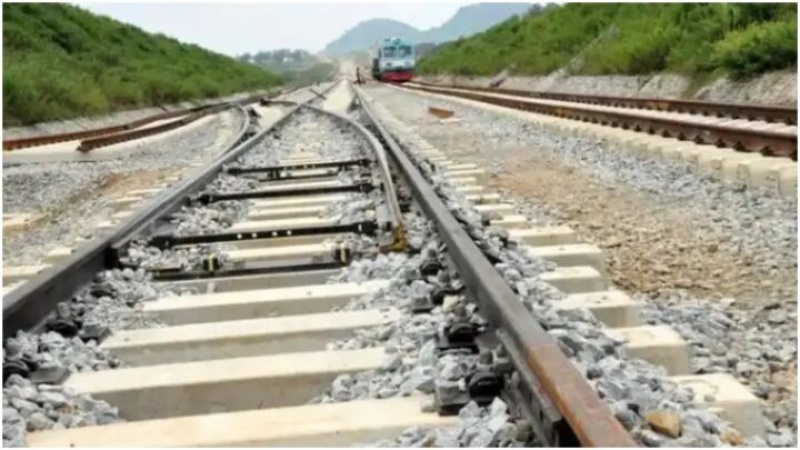
The consequences, the report noted, include unfinished roads, delayed infrastructure projects, weak healthcare delivery and underfunded education systems. It warned that this approach ultimately weakens long-term growth and development prospects.
The IMF paper also highlighted how weak expenditure controls and pro-cyclical fiscal behaviour worsen budget credibility problems.
It warned that fragmented cash management systems and weak oversight structures significantly undermine budget credibility across the region.
The report further stressed that weak digitalisation, poor data exchange systems and limited access to timely fiscal information undermine accountability across many African countries. (Guardian)