 ADAD
ADAD
Updating your news feed...
NEWS EXPRESS is Nigeria’s leading online newspaper. Published by Africa’s international award-winning journalist, Mr. Isaac Umunna, NEWS EXPRESS is Nigeria’s first truly professional online daily newspaper. It is published from Lagos, Nigeria’s economic and media hub, and has a provision for occasional special print editions. Thanks to our vast network of sources and dedicated team of professional journalists and contributors spread across Nigeria and overseas, NEWS EXPRESS has become synonymous with newsbreaks and exclusive stories from around the world.










Loading banners
Loading banners...

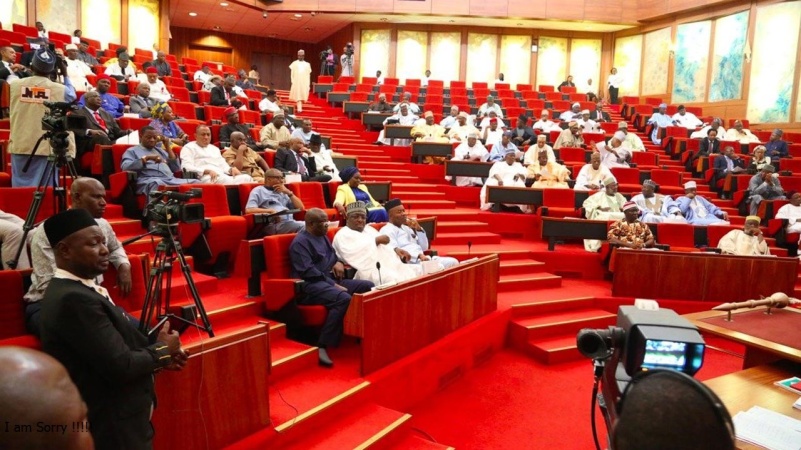
The Nigerian Senate
By NAOMI SHARANG
The Senate has advocated for a more strategic budgeting system that prioritises critical sectors.
Chairman, Senate Committee on Appropriations, Sen. Solomon Adeola, made the call at a public hearing on the 2026 Appropriation Bill organised by the committee on Monday in Abuja.
The News Agency of Nigeria (NAN) reports that the hearing was tagged “From Budget to Impact: Strengthening Macroeconomic Stability, Accelerating Infrastructure Delivery and Improving Security through Fiscal Discipline, Tax Reforms and Effective Implementation of the 2026 Budget”.
In his remarks, Adeola said that there was the need to improve on how budgets were designed and implemented.
“While other countries operate clearly-defined budgeting systems, Nigeria is still evolving in this regard.
“Government resources are limited, yet needs are enormous. For instance, the Ministry of Works may receive ₦500 billion when actual road infrastructure needs exceed ₦2 trillion.
“This mismatch makes effective planning extremely challenging.
“That is why we are advocating a more strategic budgeting system—one that prioritises critical sectors.
“Every ministry, department and agency seeks additional funding because genuine needs exist across the board.
“However, government must strike a balance to avoid opening the floodgates to unsustainable demands while still delivering dividends of democracy” he said.
The senator also noted that over the last two-and-a-half years, Nigeria had undertaken some of the most consequential economic reforms in recent history.
“These reforms were neither easy nor painless, but they were unavoidable if our economy was to break free from long-standing structural weaknesses and restore confidence among citizens, investors and development partners,” he said.
Adeola commended President Bola Tinubu for his administration’s political reforms, saying that the benefits of the reforms were now evident.
“Inflation has eased to about 15 per cent, foreign reserves exceed US$42 billion, the exchange rate has stabilised and the downstream petroleum sector is fully market-driven.
“These reforms have also freed up revenues, resulting in significantly improved FAAC allocations to states and local governments, enabling growth and development at sub-national levels,” he stated.
Declaring the hearing open, Senate President, Godswill Akpabio, said budget hearings were not mere rituals of governance but moments of national self-examination.
Akpabio, who was represented by the Deputy Senate President, Jibrin Barau, said: “Nigeria today stands at a decisive crossroads.
“We confront fiscal pressure, inflationary strain, gaps in infrastructure, anxieties of employment and security challenges that weigh heavily upon the confidence and livelihoods of our people.
“These are not abstractions. They are not theoretical projections. They are the daily realities felt in homes, markets, farms, factories and streets across our land”.
He further said that the task of the national assembly was not simply to spend more but to spend better.
“Not merely to allocate funds but to convert budgets into outcomes and appropriations into impact.
“We will continue to work with the executive and all stakeholders to ensure that the 2026 budget is not only passed on time, but implemented with fidelity and measurable results,” he added.
In his submission, Accountant-General of the Federation, Shamsedeen Ogunjimi, said that budget implementation must move beyond paperwork.
“Budget is not a spreadsheet; it is not a ritual of numbers; it is not merely an annual legal requirement.
“A budget is a moral document. It tells us clearly and without excuse, who we prioritise, what we value and how seriously we take the future of our people.
“For too long, Nigeria has been strong on budget formulation but weak on budget translation,” he said, adding that this was where legislative oversight must evolve.
Ogunjimi called on the committee to insist on clear performance indicators from ministries, departments and agencies (MDAs). (NAN)



