ADAD
ADAD
Updating your news feed...
NEWS EXPRESS is Nigeria’s leading online newspaper. Published by Africa’s international award-winning journalist, Mr. Isaac Umunna, NEWS EXPRESS is Nigeria’s first truly professional online daily newspaper. It is published from Lagos, Nigeria’s economic and media hub, and has a provision for occasional special print editions. Thanks to our vast network of sources and dedicated team of professional journalists and contributors spread across Nigeria and overseas, NEWS EXPRESS has become synonymous with newsbreaks and exclusive stories from around the world.









Loading banners
Loading banners...

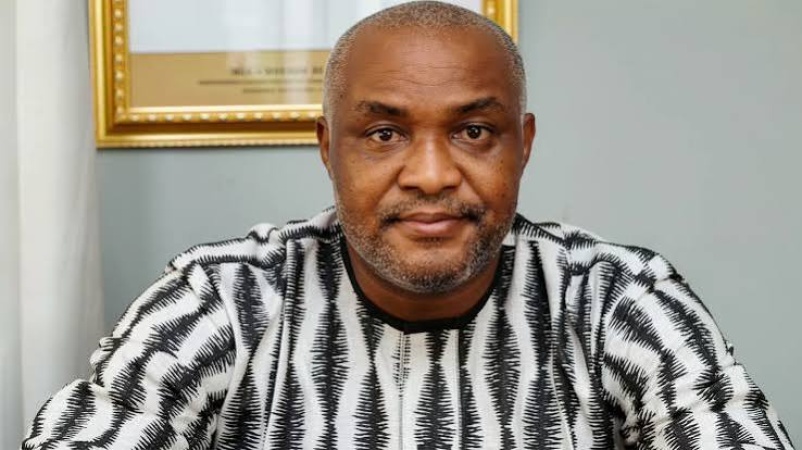
Chairman of the Nigeria Governors Forum and Governor of Kwara State, AbdulRahman AbdulRazaq
The proposed N100,000 minimum wage reportedly put forward by the Nigeria Governors’ Forum, NGF, has sparked widespread criticism from organised labour, with workers’ representatives describing the move as an illegal and insensitive attempt to determine workers’ welfare outside the provisions of the law.
The National Secretary of the Joint National Public Service Negotiating Council, JNPSNC, Trade Union Side, Olowoyo Gbenga, condemned the proposal. He insisted that the determination of a national minimum wage is strictly a constitutional and legislative matter that cannot be fixed by any group of governors.
Speaking with Vanguard, Olowoyo described the proposed wage as “a charade, a sham and a reflection of insensitivity on the part of the governors”.
According to him, “It is a surreptitious way of assuming a position that does not belong to the forum in an illegal attempt to fix national minimum wage for the entire workers of the country.”
Gbenga, who is also the General Secretary of the Nigeria Civil Service Union, stressed that minimum wage in Nigeria is determined through an Act of Parliament and follows an established legal process involving Organised Labour, private sector employers and government (tripartite committee).
He argued that any attempt by a group of individuals to unilaterally propose a national wage structure without due consultation and legislative backing should not be taken seriously.
“Nobody can pretend not to know about this process.
“Any group of people that wants to fix national minimum wage from their comfort zone without taking into cognisance the economic hardship the working class is passing through should be regarded as a group of comedians,” he said.
Gbenga noted that under the National Minimum Wage Act 2024, negotiations on a new minimum wage are expected every three years, with the next review due in early 2027.
He alleged that the governors’ proposal was merely an attempt to test the reaction of Nigerian workers to what he termed an “illegal crumb”.
He maintained that organised labour, comprising the Nigeria Labour Congress, NLC, the Trade Union Congress of Nigeria, TUC, and the JNPSNC, has consistently demanded more than a 350 per cent increase in salaries to cushion the effects of the prevailing economic hardship in the country.
He lamented that workers had continually been short-changed despite their critical role in national development.
“It is very disheartening that at every stage of Nigeria’s development workers have been unduly cheated and short-changed as if they are slaves. It is very unfortunate,” he stated.
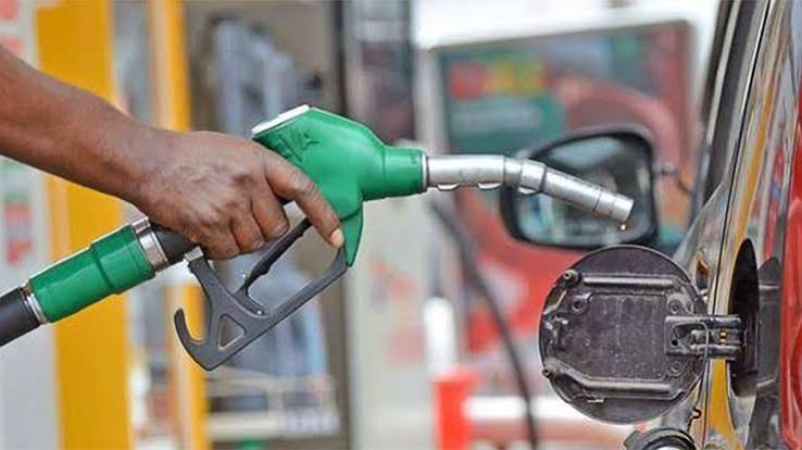
Gbenga pointed to rising inflation, increased electricity tariffs, higher fuel prices, declining purchasing power and the impact of new tax laws as compelling reasons for an urgent upward review of workers’ salaries across all levels of government.
He cautioned the governors not to confuse salary increases with national minimum wage, explaining that the national minimum wage is a uniform wage floor established by law through an Act of Parliament, and cannot be determined by fiat by any individual or group.
According to him, the determination of a national minimum wage must follow the due process prescribed by law.
He noted that Nigeria’s current national minimum wage stands at N70,000, although some states pay above the statutory minimum.
He, however, clarified that salary reviews are different from the national minimum wage and may involve increases in allowances and other financial incentives designed to cushion the effects of prevailing economic challenges.
Such measures, he said, could serve as social safety nets to mitigate the impact of inflation, rising living costs and other adverse economic conditions currently affecting Nigerian workers.
Gbenga urged the Federal Government and state governments to recognise the strategic role of the public service in policy formulation and implementation, stressing that improving workers’ welfare remains essential to national development and social stability.
Corroborating this position, NLC spokesperson, Benson Upah, recently argued that prevailing economic realities justify a substantial salary adjustment for workers.
According to Upah, “The realities around the exchange rate, inflation, raised tariffs, the surge in the pump price of petrol and associated costs, the decline in the purchasing power of the average worker, and the effects of the new tax regime on our cost of living, the realistic figure, subject to status quo maintenance, would be N1 million.”
He further contended that government revenues had improved significantly, citing increased allocations from the Federation Account Allocation Committee, FAAC, and additional earnings from recent global oil market developments.
“In the light of the earnings by governments, this should not be a big issue. Check what is being shared at FAAC. The windfall from the Middle East war has put over N5 trillion in the treasury.
“Even though this is temporary, it is nonetheless very good for governments,” Upah said.
Both labour leaders insisted that workers remain the most critical asset of any nation, and must be adequately remunerated to drive productivity, efficiency and economic growth. (Vanguard)