ADVERTISEMENT

ADVERTISEMENT

ADVERTISEMENT

ADVERTISEMENT

Updating your news feed...
NEWS EXPRESS is Nigeria’s leading online newspaper. Published by Africa’s international award-winning journalist, Mr. Isaac Umunna, NEWS EXPRESS is Nigeria’s first truly professional online daily newspaper. It is published from Lagos, Nigeria’s economic and media hub, and has a provision for occasional special print editions. Thanks to our vast network of sources and dedicated team of professional journalists and contributors spread across Nigeria and overseas, NEWS EXPRESS has become synonymous with newsbreaks and exclusive stories from around the world.


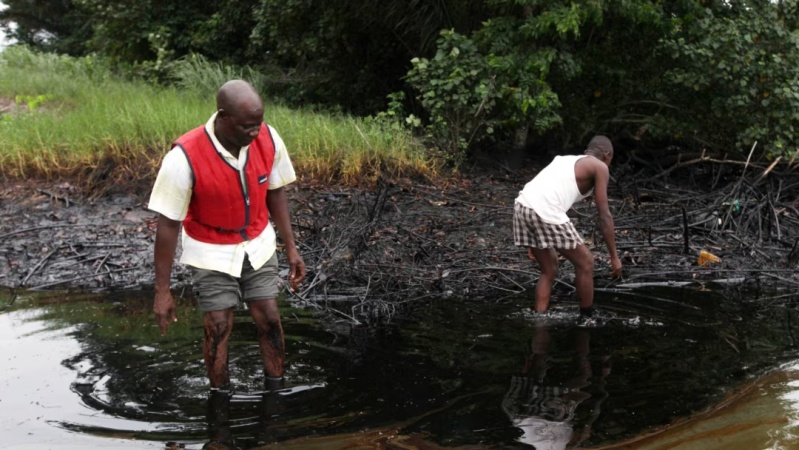
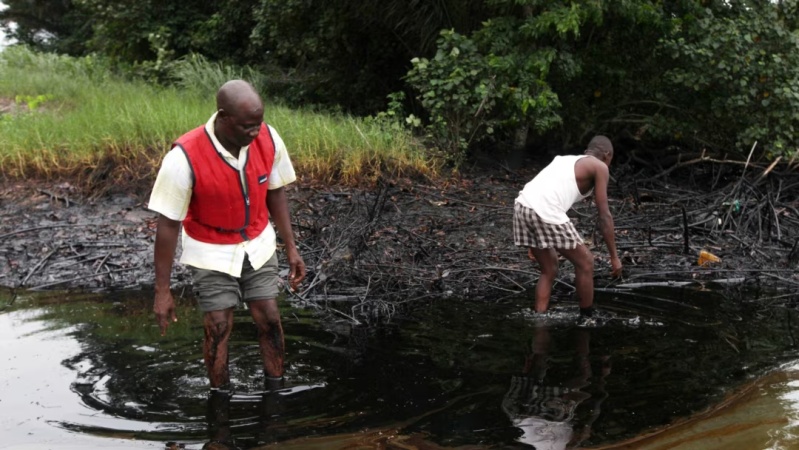
Distressing image from the oil-rich Niger Delta
In theory, oil wealth should have built Nigeria’s infrastructure. Instead, many public systems got weaker while a few people got very rich. The danger is that suffering starts to feel normal. Kids growing up near gas flares think polluted air is normal. Families budgeting for constant blackouts think darkness is normal. People paying high transport fares think hardship is normal. Everyone in the Nigeria has an opinion, ODIMEGWU ONWUMERE examines in this report. The government blames global oil prices. Oil companies blame theft and insecurity. Politicians blame the last administration. However, the article traces that – but nobody wants to answer the real question: how does a country with this much oil and gas end up with some of the worst energy poverty in the world?
At 4:17 a.m., the generators started up again in Port Harcourt. The first call to prayer hadn’t even gone out yet.
The power was gone. Again.
In a small compound off Aba Road, Blessing Eke wrapped her two-year-old son in an old Arsenal blanket and stepped outside. The air was thick and hot. It smelled of diesel and smoke. Across the street, one generator coughed to life. Then another. Soon the whole street sounded like a workshop.
Her landlord had raised the rent twice in one year. Fuel was the reason both times. Transport to the market had doubled. A bag of rice that used to cost less than N30,000 was now over N70,000. Cooking gas got too expensive for most people, so families went back to charcoal and firewood.
Less than 40 kilometres from where Blessing stood, crude oil was moving through pipelines worth billions in surrounding areas such as Oyigbo, Umuebulu, Omoku and Ogoni. Tankers waited offshore. Gas flares burned into the sky, nonstop.
Nigeria was selling oil while its own people sat in the dark.
Oil money, no light
Nigeria has been one of Africa’s biggest oil producers since crude was found in Oloibiri in 1956. The country has made hundreds of billions of dollars from oil exports. On paper, that made Nigeria rich. The money built political careers, funded elections, made a few people who one “oil well” very wealthy, and turned some villages into militarized zones.
But in the Niger Delta, where most of the oil comes from, many communities still don’t have clean water, good hospitals, steady electricity, or decent roads.
People joke about it now, but it’s not funny.
An oil giant that can’t keep fuel in the tank.
A gas-rich country cooking with firewood.
Africa’s energy powerhouse stuck in darkness.
When the world’s problems hit home
In 2022, when Russia invaded Ukraine, oil prices shot up. Europe rushed to replace Russian gas. Oil companies posted record profits. Traders celebrated. Governments signed new gas deals across Africa.
In Nigeria, life got harder.
Transport fares went up. Food got more expensive. Small shops couldn’t keep up with diesel costs. Hospitals struggled to keep the lights on. Even though Nigeria produces crude, the country faced fuel shortages and higher electricity tariffs.
It became clear this wasn’t just about bad leadership or broken equipment. The system had been built over decades to reward a few people, while everyone else paid the price.
At Creek Road Market in Port Harcourt, Ngozi Chukwu sells frozen fish from a shop she shares with three other women. Before the last fuel hike, they spent about N35,000 a week on petrol for their generator. After the hike, it was nearly double.
Sometimes they turn the generator off for hours to save money.
“When there’s no light, the fish starts to spoil,” she said. “If you raise your price, customers complain. If you don’t, you lose money.”
Everyone in the market had an opinion. The government blamed global oil prices. Oil companies blamed theft and insecurity. Politicians blamed the last administration. But nobody wanted to answer the real question: how does a country with this much oil and gas end up with some of the worst energy poverty in the world?
A river that stopped giving
In the creeks of Rivers State, older fishermen still remember when the water was clean enough to drink.
Tamuno George is 72. He sat by a blackened shoreline in Bodo and pointed to the river where he used to fish as a teenager.
“There used to be life here,” he said.
The mangroves around him looked damaged. Oil coated parts of the water. Kids played nearby, even though people know it’s not safe.
Years ago, big oil spills ruined this area. There were lawsuits. Companies promised cleanup and compensation. But many people here say nothing really changed.
The fish left. Farming got harder. More people got sick.
“You can smell crude oil when it rains,” George said.
The Niger Delta has had thousands of oil spills over the years. Environmental groups say companies have been slow to clean up and often downplay the damage. The companies say most spills come from sabotage and oil theft. Communities say old pipes and weak oversight are also to blame.
Nobody trusts anyone anymore. In many villages, people don’t see a difference between the government and the oil companies. Both show up with promises. Both leave with money. Neither stays to fix what’s broken.
Gas that burns for nothing
At night, gas flares light up parts of the Delta like fake suns. Some communities live right next to them. People complain about the heat, the noise, breathing problems, acid rain, and ruined farmland.
Nigeria promised years ago to stop routine gas flaring. Deadlines came and went. Fines were set. Targets moved. But the flames are still there.
From the air, parts of the Delta look like a war zone.
What’s burning is more than gas. It’s money. Nigeria has some of the largest gas reserves in Africa. If the gas was captured and used, it could help fix the country’s power problem. Instead, it’s burned off while millions go without electricity.
The country wastes energy and tells people to manage with candles.
Reforms that hurt first
In Abuja, the conversations about energy are all about numbers: production targets, subsidy costs, foreign investment, exchange rates. The human side doesn’t get the same attention.
When President Bola Tinubu removed the fuel subsidy in 2023, many economists said it was the right move. The subsidy had cost the government billions, and investigations had found a lot of fraud. Nigeria was spending huge amounts to keep petrol cheap while schools and hospitals struggled.
But the removal hit people fast. Fuel prices jumped. Transport costs went up. Inflation got worse. Workers asked for higher pay. Many families slipped deeper into poverty overnight.
The government said the pain was necessary to save the economy. People asked why it was always the poor who had to sacrifice first.
An economy built around imports
For years, Nigeria had one of the strangest oil economies in the world. Even though it exports crude, it imports most of its refined fuel because the state refineries barely work.
That created a massive import business worth billions. Fuel marketers made money. Middlemen made money. Politically connected companies made money. Smugglers made money.
Meanwhile, people queued for petrol in an oil-producing country.
Too many powerful people were making money from the system. Fixing it would mean cutting off their income.
Former officials, analysts, and anti-corruption groups have called the oil sector one of the most secretive parts of Nigeria’s economy. Oil block allocations, subsidy payments, security contracts, and crude sales often happened behind closed doors.
Audits have found billions missing. Committees were set up. Reports came out. The headlines came and went. Then things went back to normal.
The global crisis made It worse
When global energy prices rose after the war in Ukraine, Nigeria’s problems became even clearer. Europe needed new gas suppliers, and African countries suddenly looked important again. Nigeria talked about exporting more gas. International companies talked about new investments.
But in Nigerian homes, the power was still off. Businesses still ran on generators. Universities had blackouts. Hospitals spent fortunes on diesel.
The money moved fast. The benefits didn’t.
At a private hospital in Yenagoa, administrator Stella Dike kept a notebook of diesel costs. Before fuel prices went up, the hospital spent about N400,000 a week on generators. At one point, it was over ?1.2 million.
“Machines can’t stop because there’s no electricity,” she said. “People can die.”
Some patients delayed surgery because it got too expensive. Others stopped coming altogether.
Where the money went
In theory, oil wealth should have built Nigeria’s infrastructure. Instead, many public systems got weaker while a few people got very rich.
Over the years, investigations have linked billions of dollars from the oil sector to offshore accounts, shell companies, luxury houses abroad, and foreign banks. Some cases ended in court. Most didn’t.
The oil business created a culture where public money often became private money.
Foreign companies also played a role. Multinationals have worked in Nigeria for decades, pulling out huge amounts of crude while dealing with weak rules, instability, and corruption. They say they provide jobs, investment, and tax revenue. Critics say they’ve caused environmental damage and put profits ahead of people.
Both things can be true.
In some Delta communities, oil facilities sit next to villages without working schools or clinics. People watch pipelines carry wealth through areas where unemployment is high. That creates anger. And sometimes, conflict.
When crisis becomes business
Over the years, armed groups in the Niger Delta attacked pipelines, kidnapped workers, and sabotaged facilities. Some said they were fighting exploitation. Others became criminal gangs making money from oil theft.
The region turned into a mess of militants, soldiers, politicians, companies, and local power brokers. Everyone said they were protecting the people. Many got rich from the chaos.
Crude theft reached massive levels. Illegal refineries spread through the creeks. Security contracts worth millions went to politically connected people, including former militant leaders.
Again, crisis became a business.
At one illegal refining site outside Degema, thick smoke rose from drums cooking stolen crude. Young men worked in the heat with no protection. Explosions happen. The pollution is bad. Police raids happen too. But there are no jobs.
“We survive from this,” one worker said. He wouldn’t give his name.
It’s painful. Communities damaged by oil extraction are now surviving by stealing and refining the same oil.
Profits abroad, pain at home
While this was happening, international oil companies announced strong earnings. Shareholders got dividends. Executives got bonuses. Investors were happy.
Back in Nigeria, families were cutting meals.
For most people, energy problems don’t come with a warning. They show up quietly.
A student can’t study because the light is off.
A mother buys less food because transport costs went up.
A baker shuts down because diesel is too expensive.
A clinic turns patients away.
A fisherman looks at polluted water and has nothing to catch.
A child coughs near a gas flare.
These moments don’t make it into global energy reports. But this is where the cost is paid.
A system that keeps itself going
In 2024, inflation pushed millions deeper into hardship. Food prices rose across the country. Electricity tariffs went up for some people. The naira lost value. Many households spent most of their income just trying to get by.
Yet Nigeria remained one of the world’s major oil producers.
Economists call this the “resource curse.” Countries with lots of natural resources often end up with more corruption, conflict, and poor governance. But to most Nigerians, that sounds too academic.
It doesn’t feel like a curse. It feels like choices made by people in power.
Political choices. Corporate choices. Global financial choices. And those choices have consequences for real people.
In Eleme, near major petrochemical plants, residents complain about pollution and health problems while trucks rumble past broken roads. At a roadside pharmacy, pharmacist Chima Nwosu said more people were coming in with breathing problems.
“People are breathing things they can’t even name,” he said.
Researchers have warned for years about the health effects of oil pollution and gas flaring. But enforcement is weak. Many communities can’t get independent health studies or legal help. Most people just stay and manage the best they can.
A history that set the pattern
This didn’t start recently. Colonial economic systems were built to take raw materials out of Africa for foreign benefit. After independence, Nigeria inherited a system designed for export, not local development.
Oil made that worse. Nigeria became dependent on crude exports for government revenue and foreign exchange. Other sectors suffered. Farming declined. Manufacturing struggled. Politics became a fight over who controls oil money.
The state Itself became tied to extraction. That made reform hard.
Any drop in oil prices shook the whole economy. Any attempt to fight corruption threatened powerful people. And because so much government money came from oil, leaders focused on keeping production going instead of fixing local problems.
Communities learned that their suffering mattered less than keeping oil flowing.
In some villages, people joke that pipelines get fixed faster than people do.
Caught between the past and the future
Climate activists around the world criticize oil companies for pollution and for slowing down the shift to clean energy. But African countries have a different problem. Many leaders say Africa still needs to use fossil fuels to develop, just like rich countries did.
Nigeria is right in the middle of this. The country needs development, electricity, jobs, and infrastructure. But dependence on oil has also produced decades of corruption and inequality.
The shift away from oil will come eventually. But people in the Niger Delta worry they’ll be left behind again.
Used first. Forgotten later.
At a University in Rivers State, economics lecturer Dr. Emmanuel Briggs put it simply: “You can’t separate what’s happening in Nigeria from global energy politics. A war in Europe changes fuel prices here overnight. Decisions in London, Houston, Moscow, or Riyadh affect markets in Port Harcourt and Kano.”
When global prices went up, multinational companies made huge profits. Many developing countries faced inflation and currency problems because fuel got expensive.
In Nigeria, fuel costs affect transport, farming, electricity, and food. So when prices rise, everything rises.
For many people, just getting through the day became exhausting.
In a crowded apartment in Lagos, civil servant Amina Yusuf explained how her family adjusted after the subsidy was removed. They stopped using air conditioning. Ate less meat. Cut down on transport. Shared school pickups with neighbors. Sometimes they slept outside because they couldn’t afford to run the generator all night.
“We’re always calculating now,” she said.
Calculating fuel. Calculating food. Calculating transport. Calculating which bills can wait.
Millions of Nigerians do the same thing every day while oil money moves through global markets.
That gap creates anger. And hopelessness.
Some people no longer believe things can change because too many powerful people benefit from how things are now.
But journalists, activists, environmental groups, and whistleblowers keep pushing. Reporters who investigate oil theft and corruption have faced threats. Activists in the Niger Delta have been harassed and arrested.
The stakes are high because oil money touches politics at every level. Governors depend on federal money from oil. Campaigns need huge amounts of cash. Security firms profit from protecting pipelines. Contractors profit from instability. Middlemen profit from fuel imports. Foreign companies profit from extraction. Even some communities survive through informal oil theft.
Entire systems now run on petroleum money. Changing that means confronting the people who built their wealth on it.
When nothing changes
In other countries, investigative journalism works because documents expose hidden truths. In Nigeria’s oil sector, the truths are often public, but nothing happens.
Audit reports show missing money. Environmental damage is photographed over and over. Communities protest. Committees release findings. But accountability rarely reaches the people at the top.
Scandals come and go. Outrage fades. Then the next crisis arrives.
The danger is that suffering starts to feel normal. Kids growing up near gas flares think polluted air is normal. Families budgeting for constant blackouts think darkness is normal. People paying high transport fares think hardship is normal.
But it isn’t. It’s the result of years of bad policy, corruption, weak institutions, global inequality, and an economy built on extraction instead of people.
Nigeria’s oil story is usually told with production numbers and revenue charts. Less is said about the exhaustion. About mothers staying awake during blackouts. About workers spending half their salary on transport. About communities watching wealth leave through pipelines while poverty stays behind.
One evening near Bonny Island, residents gathered by the water. Industrial lights reflected on the surface. Some worked for oil companies. Others fished. Most had mixed feelings.
Oil brought roads to some places. Jobs to some families. Business to some communities. But it also brought pollution, conflict, corruption, and inequality on a huge scale.
“Oil is both a blessing and a problem,” one resident said.
That’s Nigeria today. The country can’t easily leave oil behind because the whole economy depends on it. But if nothing changes, the instability and injustice will continue.
Global demand for energy still drives extraction. Foreign governments still want reliable suppliers. Companies still want profit. And Nigerians still wait for the wealth under their soil to make life better.
Back to the darkness
As dawn came to Port Harcourt, the generators slowly went quiet. Electricity had returned, briefly.
For a few hours, the city relaxed. Fans turned. Phones charged. Streetlights flickered.
Then the power went off again.
The generators started up. The smoke came back.
And somewhere offshore, another ship carried Nigerian crude out to sea, worth billions of naira.
The people left behind stayed in the dark, living on top of one of the richest energy reserves on earth.
That’s the real problem with Nigeria’s oil story. Not just that corruption exists. Not just that companies make profit. Not just that governments fail.
It’s that after decades of extraction, after billions earned, after countless promises of reform, millions of people living closest to the wealth still struggle every day for basic energy.
The world debates oil prices, energy transitions, and corporate earnings.
In Nigeria, many people are still asking a simpler question.
How can a country this rich stay this poor?
•Onwumere is Chairman, Advocacy Network On Religious And Cultural Coexistence (ANORACC).