Updating your news feed...
NEWS EXPRESS is Nigeria’s leading online newspaper. Published by Africa’s international award-winning journalist, Mr. Isaac Umunna, NEWS EXPRESS is Nigeria’s first truly professional online daily newspaper. It is published from Lagos, Nigeria’s economic and media hub, and has a provision for occasional special print editions. Thanks to our vast network of sources and dedicated team of professional journalists and contributors spread across Nigeria and overseas, NEWS EXPRESS has become synonymous with newsbreaks and exclusive stories from around the world.






















Loading banners
Loading banners...

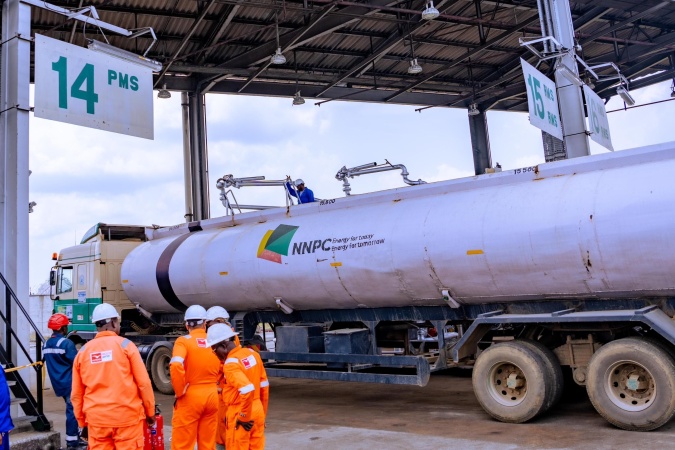
NNPLC Refinery
Fresh anxieties are building across Nigeria’s downstream petroleum sector, raising urgent questions about fuel supply security, consumer pricing, and the independence of the country’s midstream and downstream regulator, as stakeholders yesterday expressed concerns over new legal battles in the downstream petroleum industry.
This comes as Dangote Refinery, in a suit no: FHC/L/CS/857/2026 at the Federal High Court in Lagos, obtained an order halting petroleum product import licence activities pending the determination of a suit filed by Dangote Petroleum Refinery and Petrochemicals FZE against the Attorney General of the Federation.
The crisis may also worsen as the Oil and Gas Free Zone Authority is at loggerheads with the Nigerian Midstream Downstream Regulatory Authority (NMDPRA) on regulatory authority over the importation of feedstocks and intermediate feedstocks into, and the export of petroleum products from the Dangote Refinery.
Multiple industry stakeholders, who spoke with The Guardian yesterday, warned that the implications of the crisis would extend beyond the refinery’s grievances as they insisted that petroleum products consumers, competing businesses and the regulator itself are now caught in a crossfire.
Stakeholders told The Guardian that the development, which may in the coming weeks add more drama ahead of the 2027 election, including disruption of petroleum products supply, signals how Nigeria’s legal and regulatory institutions manage tensions between powerful private investors and the state, in a sector where commercial interests, public welfare and political considerations are tightly intertwined.
Already, the court order, which followed a motion ex parte filed by the refinery on 27th April 2026, freezes the status of import licences issued by the NMDPRA pending the hearing of a Motion on Notice.
While Dangote argues that under Section 317 sub-section nine of the Petroleum Industry Act (PIA), the NMDPRA may only issue import licences where there is a demonstrable product shortfall, a condition it says does not currently exist, some stakeholders told The Guardian that the claim failed to consider sub-section 10 of the same provision which seeks consideration including refining output from the previous quarter, competitive pricing for wholesale customers, and proven records of supply, storage, and distribution.
Data provided by the NMDPRA last week showed that Nigeria’s PMS imports have already declined sharply from 25 million litres per day in January 2026 to 3.7 million litres per day by April 2026 as the Dangote Refinery ramped production beyond the drop in the country’s consumption level.
However, the factsheet from the agency noted that PMS stock cover dropped significantly from 21.2 days in March to 17.7 days in April, while diesel reserves fell sharply from 55.4 days to 39 days, and production from the facility in previous quotas was below the country’s demand.
An insider at NMDPRA and some marketers, who pleaded anonymity, accused Dangote Refinery of equally importing PMS, averaging 150,000 PMS monthly, with about three cargoes expected at the facility. Dangote Refinery, however, denied this allegation.
These volumes, they said, are being classified as part of its domestic supply.
They noted that the refinery, in April, through a vessel, Seaways Lonsdale, brought in 37,400 metric tonnes of blendstock gasoline from the UK, while Augenstern delivered 37,125 metric tonnes of PMS from France.
Emma Grace supplied 37,496 metric tonnes from Norway, and LVM Aaron delivered 36,323 metric tonnes from Togo. Egret also discharged 35,498 metric tonnes of naphtha from Rotterdam for blending.
Meanwhile, Mont Blanc I, carrying 36,877 metric tonnes of blendstock from Belgium, is yet to berth, and Aesop is expected to deliver 130,000 metric tonnes of residue catalytic oil from Singapore later in the month.
They also accused the refiners of bypassing NMDPRA to import two PMS cargoes offshore awaiting discharge, with an additional three cargoes expected before the end of the month.
Speaking with The Guardian, sources at the refinery, however, countered the claim, stressing that the refinery was only importing intermediate products necessary as feedstock for its operations.
Despite the April achievement by the refinery, downstream operator Jide Pratt warns that a market served by a single dominant supplier carries inherent risks regardless of current output levels, which the PIA has already kicked against.
Pratt: “One thing in a liberalised market is the need to allow both imports and local production to coexist so there is choice, competition, and ultimately the consumer is better for it. It also augurs well for energy security when the market isn’t left to one supply point.”
Pratt noted that the regulators’ capacity must be enhanced so they use knowledge, data, best practices and legal framework to drive the industry in the best interest of the sector and nation.
Most stakeholders, while speaking yesterday, noted that the current legal battle, which is a fundamental right for Dangote, would test the extent to which a dominant player can question the regulatory existence of a legally binding body, but fear the implications of the situation ahead of the 2027 election and investors’ confidence, especially in creating a level playing field.
With a more stable naira, data from the Major Energy Marketers Association of Nigeria (MEMAN) showed that imported petrol currently lands in Nigeria at prices roughly N150 per litre cheaper than locally refined products.
For consumers already burdened by high energy costs, the price gap raises a critical question of whether limiting imports could inadvertently sustain higher domestic prices, but some petroleum economists argued that the gain could only be temporary and not futuristic.
Stakeholders share their views
Petroleum economist and founder of Energy Business Analytics, Dr Kaase Gbako, said the law itself anticipates the risks of a dominant supplier operating without competitive constraint.
Dr Gbako: “Section 205 subsection two bestows the NMDPRA with the power to regulate prices charged by the respective licensee where the licensed activity is provided by a dominant supplier. Competitive pricing may be effected by allowing alternative petroleum product supply, which in this case and circumstance would be imports.
He added that the refinery’s legal argument, while anchored in Section 317 subsection nine of the PIA, does not account for the full scope of considerations, stressing that the NMDPRA is required to weigh under Section 317, subsection 10, including refining output in the preceding quarter, wholesale customers’ competitive pricing, and prudent supply, storage and distribution track records.
“These considerations are consistent with the authority’s responsibility to promote a competitive market for midstream and downstream petroleum operations,” Dr Gbako said.
Gbako said the NMDPRA may prefer to encourage price competition rather than impose direct controls, which could be viewed as heavy-handed. The PIA, under Section 205(2), empowers the regulator to intervene in pricing where a dominant supplier emerges. But allowing limited imports, he argued, may achieve similar outcomes with less regulatory friction.
Gbako described the case as a defining moment for Nigeria’s legal and regulatory architecture.
“For the wider downstream industry, this case will be carefully watched to see how the country’s legal system arbitrates between a regulator and a powerful investor in what is a political, commercial and power play all at once,” he said.
The NMDPRA, which has faced leadership battles in recent times and a fresh notice of being sued in the next 30 days, faces pressure not only from the Dangote lawsuit but from a parallel jurisdictional clash with the Oil and Gas Free Zones Authority (OGFZA).
In a letter dated 12th May 2026, sighted by The Guardian, the NMDPRA wrote to OGFZA declaring vessel clearances it had issued for Dangote Industries Free Zone invalid and notifying relevant security agencies, including the Nigerian Navy, not to honour documents emanating from OGFZA in respect of petroleum operations at the facility.
The NMDPRA asserts exclusive regulatory competence over all midstream and downstream petroleum operations, including those conducted within free trade zones, under the PIA. OGFZA has not publicly responded to the letter.
While most operators have historically obtained such licenses and clearances from the regulator, prevailing attempts try to exempt the refinery and try to exercise the power of the regulator within export zones in the country, a development that tests the operating environment for vessels and trading companies engaged with the Dangote facility or the entire zones.
Emeritus Professor of Energy Economics, Prof Wumi Iledare, who noted that Dangote is exercising his fundamental rights in suing the government, said the regulator’s credibility is now directly at stake.
According to him, Nigeria’s downstream sector should go beyond pump price comparisons, adding that while affordability matters, it is not the sole measure of market efficiency, consumer welfare, or long-term energy security in a transitioning petroleum market.
Iledare said: “Where market participants perceive regulatory partiality or actions capable of influencing market outcomes unfairly, investor confidence may weaken. The regulator must remain neutral, transparent, and consistent with the spirit of the PIA, which envisions a competitive and efficiency-driven downstream market.”
Iledare said the sector appeared to be going through difficult but necessary adjustments associated with market liberalisation under the PIA framework, but cautioned that the process required clear institutional guardrails.
“What is critical is maintaining regulatory credibility, policy consistency, and institutional independence so that all market participants operate with confidence under clear and transparent rules,” he said.
Chairman of the Board of Trustees of the Community Development Committees of Niger Delta Oil and Gas Producing Areas (CDC), Joseph Ambakederimo, has criticised the poor coordination of Nigeria’s downstream petroleum sector, saying it continues to fall short of meeting consumer needs.
He argued that competition in the sector is essential, noting that no functional economy relies on a single source for energy supply. Instead, he urged authorities to focus on the quality of imported petroleum products, questioning whether they meet international standards and warning against the risks of substandard or chemically blended fuel.
Ambakederimo recalled past cases of substandard imports and mid-sea product swapping, lamenting the lack of accountability. He also described it as ironic that Nigeria still faces supply challenges despite hosting a major refinery, noting that unlicensed refiners once helped fill supply gaps.
He reiterated the need to formalise artisanal refining and called for a clear, coordinated strategy for the downstream sector, warning that the current disjointed approach is fuelling avoidable disputes and inefficiencies.
The Dangote refinery represents one of the largest private investments in Nigeria’s history, and regulators are likely to tread carefully to avoid perceptions of hostility toward private capital, particularly in a sector long dominated by underperforming state assets.
This is not Dangote’s first legal confrontation with the sector. In 2024, the refinery had sued the NMDPRA and several marketers over similar import license grievances but later withdrew that action, a move that left the refinery legally exposed, as many defendants pushed for outright dismissal rather than withdrawal. That history likely informed the decision to now channel the 2026 lawsuit through the Attorney General, potentially sidestepping earlier procedural complications.
DAPMAN kicks
The Depot and Petroleum Products Marketers Association of Nigeria (DAPMAN) yesterday pushed back against the Dangote lawsuit, stating that the licences in question are not mere administrative approvals but legal instruments that underpin Nigeria’s fuel supply chain.
DAPPMAN stated that its member companies have committed significant investments to depot infrastructure, logistics, and compliance systems on the strength of these licences, which they consider lawful and durable. It warned that any attempt to retroactively void them would introduce uncertainty into the downstream sector and disrupt the broader supply chain.
While acknowledging the refinery’s right to seek legal redress, the association rejected the idea that a private refinery’s commercial interests should override the statutory mandate of the regulator to guarantee adequate fuel supply. It maintained that the law permits the issuance of import licences where necessary, and that such decisions have been previously tested and upheld.
The association added that Nigeria’s fuel market is structured as a competitive, multi-participant system serving millions of consumers, not a monopoly. It said it would engage legal counsel, coordinate with affected members, and make formal representations to relevant authorities in response to the suit. (The Guardian)