 ADAD
ADAD
Updating your news feed...
NEWS EXPRESS is Nigeria’s leading online newspaper. Published by Africa’s international award-winning journalist, Mr. Isaac Umunna, NEWS EXPRESS is Nigeria’s first truly professional online daily newspaper. It is published from Lagos, Nigeria’s economic and media hub, and has a provision for occasional special print editions. Thanks to our vast network of sources and dedicated team of professional journalists and contributors spread across Nigeria and overseas, NEWS EXPRESS has become synonymous with newsbreaks and exclusive stories from around the world.









Loading banners
Loading banners...

NASS BUILDING
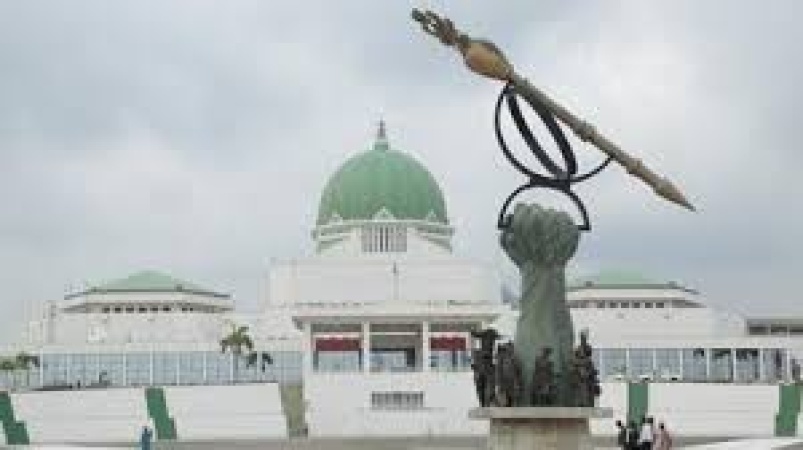
The on-going budget defence session at the National Assembly, involving Ministries, Departments, and Agencies (MDAs), is a startling event, highlighting the huge disconnect between appropriation and actual implementation.
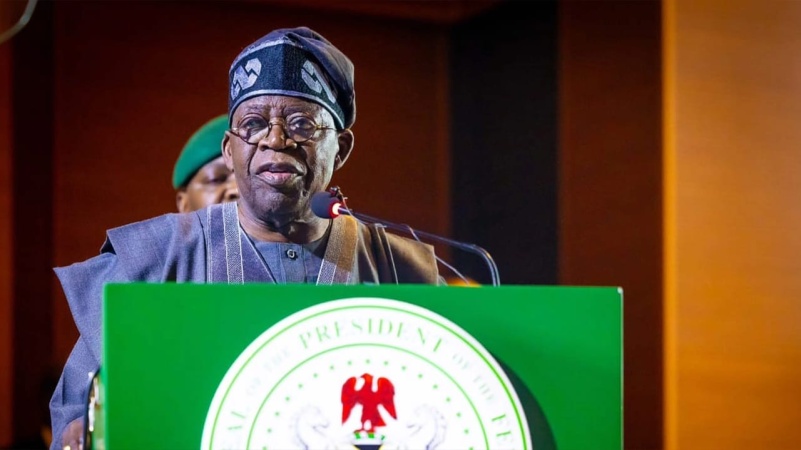
In democratic practice, budget defence is a routine exercise that serves as performance audit but often disguised as a financial request. In his presentation to the National Assembly late last year, President Bola Tinubu proposed a ₦58.18 trillion budget for 2026, with a focus on security and defence, gulping ₦5.41 trillion, infrastructure (₦3.56 trillion), education (₦3.52 trillion) and healthcare (₦2.48 trillion). However, the defence sessions have been marked by raw political brinkmanship and frustration from lawmakers. A major point of contention is the discovery that many MDAs recorded zero per cent capital fund release in 2025.
This controversy is arguably the biggest scandal of the current 2026 budget defence sessions. It has exposed a massive breakdown in the fiscal chain, where billions were appropriated on paper in 2025, but the treasury essentially stayed locked for most critical sectors.
For instance, during the Ministry of Interior’s defence session, lawmakers were shocked to note that despite high-profile reforms, the ministry received zero capital allocation in 2025, stalling critical infrastructure projects.
Interior ministry is not alone in this quagmire, other major MDAs like Ministry of Power, Solid Minerals Development, Ministry of Women Affairs, and National Security Agencies have also suffered effects of non-release of funds for capital projects. The Minister of Power, Adebayo Adelabu, shocked lawmakers by revealing that the ministry operated with zero capital release in 2025.
Additionally, while the government declared a state of emergency on security, critical bodies like the national security agencies have also been allegedly starved of funds. Senate Whip, Tahir Monguno particularly blamed the recent spike in insecurity on zero capital release to various security and intelligence agencies, lamenting that they lacked the funds to purchase necessary hardware and technology for 2025, with many still carrying over liabilities from 2024.
To fix this, the government has proposed a rollover strategy based on projection that 30 per cent of the 2025 capital budget would be released by March 2026 and the remaining 70 projects folded into the 2026 budget as on-going work.
Over all, the 2026 defence for various sectors is less about the amount of money being requested and more about the mechanism of release.
At the Senate level, its Finance Committee is said to be investigating why revenue agencies reportedly generated N28 trillion, yet MDAs claim they could not pay contractors due to a lack of cash backing. Moving forward, Senators are pushing for a shift away from the envelope system-fixed spending ceilings, arguing it is rigid and prevents agencies from responding to emergencies. Instead, they are advocating a performance-based model.
In the House of Representatives, lawmakers are threatening a no performance, no budget stance. “Any agency that fails to account for previous allocations, cannot, in good conscience, expect fresh budgetary provisions,” Hon Bamidele Salam, Chairman, House Public Accounts Committee,” declared. To underscore the seriousness of the matter, the Committee has reportedly recommended exclusion of 22 MDAs, including NiMet, SON, and the CAC from the 2026 budget. This is due to their failure to account for previous funds, refusal to appear for oversight, and non-submission of audited financial statements.
Budget rollover
On a particular note, the budget defence has revealed that the Ministry of Works is the ground zero for the rollover strategy. With a massive N3.24 trillion capital proposal for 2026, the Minister of Works, David Umahi, admitted that the ministry is currently juggling 2, 064 inherited projects while carrying a N2.2 trillion debt to contractors for work already certified in 2024 and 2025.
The Abuja–Kaduna–Zaria–Kano Road, the Sokoto–Badagry Superhighway, Second Niger Bridge Access Roads, and East West Road projects are at the centre of the current storm in the National Assembly. These projects have suffered from chronic underfunding in 2025 and are now being pushed over into the 2026 cycle. Besides rollover, lawmakers are particularly worried about the N2.2 trillion debts to contractors. They argue that if the 2026 budget prioritises rolling over projects but doesn’t pay the old debts, contractors will refuse to mobilize, leading to escalation of cost.
However, President Bola Ahmed Tinubu has told the National Assembly that he intends to terminate the habit of running three budgets in one. He has set a deadline of March 31, 2026, to close all 2025 capital liabilities, so that from April, the country operates on a clean 2026 cycle.
Implications on the economy
Experts have expressed concern over the implications of the rollover practice on the health of the nation’s economy. An erudite Professor of Economics at Babcock University, Ilisan, Ogun State, Segun Ajibola, blamed the fragile nature of the economy on the current trend, warning of its negative consequences. While discussing the matter with Sunday Sun in a telephone interview, he said: “To the best of my knowledge, the practice of rolling over budget has been on for long. Most times, a day or two to the end of the year, capital votes will be released and what has not been spent will be sent back to the Ministry of Finance or Budget Department. Ministries, departments and agencies (MDAs) have been keeping mute on this for long. Now, if the National Assembly approves a fixed figure as capital budget for the MDAs and nothing is released, then the question you should be asking the budget office or the lawmakers themselves is what they have done with their oversight functions. How are they policing the performance of MDAs in terms of capital expenditure?
“It shows a major gap or disconnect in our budget processes. So, I don’t know what the National Assembly will be saying now. They want to roll over the 2025 budget into the new fiscal year. Where is the money allocated to MDAs? Is the money still being kept by the budget office or it will be part of the 2026 budget? We need to find out. But definitely, it’s a drawback to the economy. If all these items were affected and approved as part of the budget and nothing is released, then it is a drawback to the economy as a whole. And it is one of the reasons the economy has continued to struggle for survival.”
Ajibola further attributed the abysmal performance of the budget on the National Assembly, adding that MDAs should not be used as a scapegoat. “To me, everybody shares the blame, including the National Assembly. So, they should not make only the MDAs a scapegoat. MDAs cannot force money on themselves. Why did they refuse to release money? The question should go directly to the Office of Budget and Planning. Is the National Assembly itself just knowing? It is mere grandstanding for the National Assembly to be threatening MDAs. They also carry the blame. They should find out why such a thing should happen so as to stop a similar occurrence in the future rather than looking for a scapegoat. If nothing else, for the sake of the economy,” he added.
A former lawmaker representing Ogun State, Senator Gbenga Obadara, also shared his perspective on the issue, saying it would hinder development. He said in an interview with Sunday Sun: “As you know, budget is an assumption based on expected revenue coming into the government’s treasury. But unfortunately, this is not coming in and the government keeps telling us they have made the money. So, it is neither here nor there. If the money has not been released for capital projects, the best thing is to roll it over. It is unfortunate we are where we are today. All the MDAs are affected by this problem. The implication is that they will keep rolling over and there will not be much development.”
He, however, exonerated lawmakers from the share of the blame. “Based on what the government gave to the National Assembly, the lawmakers have done their bit by passing the budget and it has been assented to. If they want to do oversight, what will they do in a situation where money is not released to the ministries and agencies? Definitely, they will be in limbo. This will surely have negative effects on the economy. If they have made the money, why are they not releasing it? Let those who want to deceive themselves continue to deceive themselves. Everybody knows that nothing is coming in.
“The lawmakers can do as much scrutiny as they like, if there is no money to be released, there is nothing they can do. It is clear to every discerning mind that things are not going well,” he stated.
Senator Gbenga Kaka, on his own part, maintained that the rollover practice could serve as an inducement for misappropriation. “I am more than 13 years out of the National Assembly. So, I may not be able to give you adequate information about what is going on. However, once money is budgeted for in a particular year and it is not exhausted within that particular year, instead of allowing it to waste or returning it to the treasury and be tracing its whereabouts, it will be appropriate if they roll it over,” he said.
Even at that, he described the trend as a recipe for confusion. “I hope it is not a recipe for confusion. When one-year project is not completed and another one is coming, there is bound to be an overlap. How they will separate the overlap, we will be listening to hear from them.
“One, will the money not develop wings and disappear in the process of rolling over? Two, will the money be spent on projects that it is meant for without having any adverse effect on the new year,” he queried. (The Sun)



