 ADAD
ADAD
Updating your news feed...
NEWS EXPRESS is Nigeria’s leading online newspaper. Published by Africa’s international award-winning journalist, Mr. Isaac Umunna, NEWS EXPRESS is Nigeria’s first truly professional online daily newspaper. It is published from Lagos, Nigeria’s economic and media hub, and has a provision for occasional special print editions. Thanks to our vast network of sources and dedicated team of professional journalists and contributors spread across Nigeria and overseas, NEWS EXPRESS has become synonymous with newsbreaks and exclusive stories from around the world.






















Loading banners
Loading banners...

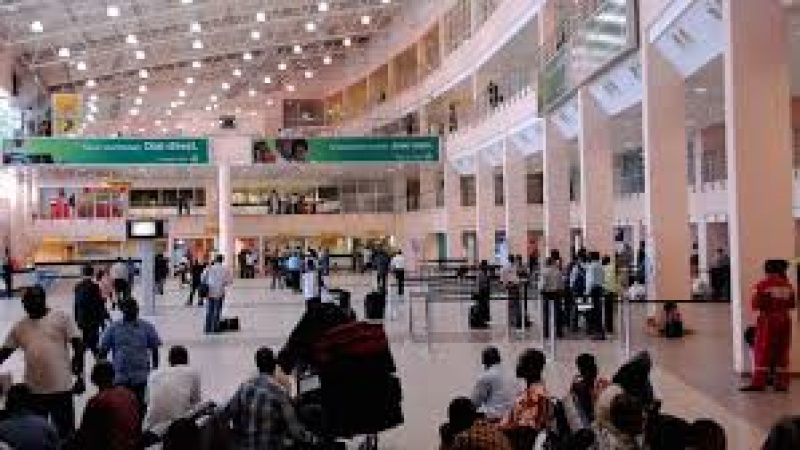
PASSENGERS IN AN AIRPORT
In the last quarter of 2024, a young banker paid a travel agent N10.2 million for return tickets to Canada for his family of six.
The amount excluded other expenses, especially visa processing fees.
Same trip costs more today, amid the harsh economy, while hampering the quest for foreign trips for many.
But, despite the huge cost and stress of relocation, life abroad is not easy also. It has not been as rosy as some friends of the former banker painted it, as he struggles for job to cater for his young family in Canada.
Today, he works as an attendant in a grocery store, despite his first and master’s degrees.
“My brother, there is peace here, but the struggle continues. No job yet, madam is doing a small thing, but I am hustling,” he confessed to a former colleague that assisted in his relocation.
Of course, while a few are gainfully employed abroad, many Nigerian immigrants, especially those driven by the ‘Japa’ syndrome in the last decade, are still struggling to fit into their new societies as jobs and opportunities are not the usual man-know-man obtainable in their home country.
Again, the case of Jide Olagbemiro, a radiographer, is different as a United Kingdom-based medical outfit offered him employment while in Nigeria. He left and later moved his family of three to join him after two years at the Birmingham-based medical outfit.
“The job was through recommendation by a doctor friend in the UK. It came with a small apartment and good salary. I accepted it because it was four times the earnings of my laboratory at Ilupeju, Lagos,” the laboratory scientist said.
While being comfortable in the UK, he regrets often seeing some young Africans, especially Nigerians on the streets and many who are not gainfully employed.
“They are the reason authorities here are clamping down on our people coming here. Some of us have skills and are impactful here,” he said.
The clampdown is obvious with the growing deportations, as at least, over 100 Nigerians are deported from abroad every quarter, amid other unheard and unrecorded cases, lamented Ajoke Fadahunsi, an immigration lawyer and consultant.
“You may not notice the deportations because some deportees keep hiding from family and friends, some bold ones reintegrate, while some carry other African countries’ passports and prefer to be sent there, to plan for their next move.
“Some end up being deported again because they failed to sort out the issues that immigration flagged and key reasons for their deportation,” she said.
According to her, forgery and visa overstay are big crimes that could land one in jail and deportation.
“Things are very organised abroad, you have to be clean, you can’t keep roaming the streets aimlessly, the authorities will pick you.
“They have eyes on drug peddlers, internet and any kind of fraud, even failure to tap out at bus and train stations after a journey is a huge offence.
But our people keep committing such offences. I know there could be witch-hunting in some cases, but the authorities have right to do what they need to do,” she explained.
Apart from deportation, the growing visa refusal is a big challenge too.
According to BusinessDaySunday’s investigations, many visa application centres in Lagos, which used to be a somewhat market place due to the huge crowd seeking visas to leave the country, now see less applicants.
The US embassies In Abuja and Lagos also experience the same as home country immigration policies, in recent times, do not favour Nigerian travellers.
At VFS centres in Lagos, a global visa processing outfit for major embassies, the crowd is declining and businesses that rely on the crowd feeding the exodus, are also complaining.
A hustler at VFS centre in Ikate, Lagos, who calls herself Canada Best, decried that business is not as usual as the crowd is not as big as it used to be.
She blamed the situation on the harsh economy, e-visa by some countries and deportation.
“The officers here said that if you are denied visa, you can reapply, but if you are deported, there is usually ban on your future applications.
But I think there is no money like before, people want to eat first and travel later,” she said.
Kunle Saka, who runs a business centre close to the VFS centre, observed the decline, saying, “we are no longer at the peak of Japa.”
“Yes, the country is harsh, but many are slowing down because of the visa application stress and huge amount required to travel abroad today, some of my clients keep coming, especially for Canada and South Africa because they were denied visas. But the number is declining even for Canada, which used to accept everybody,” he said.
Also, Fadahunsi agreed that visa refusals are on the increase, but also noted that the embassies have right to give or refuse an applicant visa because there is not contract that visa must be given.
“I used to fight European embassies, especially the UK and France over visa refusals, but they have right, they have quota, they have certain people and skills they want to attract to their countries and could say you did not meet the requirements.
“Again, must you travel? That was the question a UK embassy staff asked me during a heated argument some years ago in Abuja. I am asking the same question to fellow Nigerians and Africans. Must we travel out for greener pastures, for medical tourism and education when we can fix things here?
We should not complain over visa refusals or deportations, but see them as opportunity to address our challenges, especially the root cause of the exodus of Nigerians from their fatherland,” she decried.
Also looking at the realities in the country, from the harsh economy, over population to insecurity and corruption, Chijoke Umelahi, an Abuja-based lawyer, thinks that visa refusals will even increase in coming years because no country wants to be infected with bad blood.
“They know us better, they are observers in our elections, they follow corruption cases in our courts and see how the mighty always get away with everything, they see how the insecurity fight is being sabotaged by greed, how hungry we are, they even offer aids and grants, and you still want them to open their doors. Let’s be sincere, no sane country will do that in the magnitude we desire,” he said.
According to him, visa refusals are part of the strategic measures by foreign countries to checkmate the ‘Japa’ syndrome from Nigeria.
“No country will tell you outrightly that they don’t want you because they are signatories to the United Nations protocols on movement of people across the world, but indirectly, they can refuse you visas and deport you at the slightest offence. That is the reality today,” he explained.
For him, the biggest regret is that little or nothing is being done to reverse the case as the economy gets harsher, more taxes to be paid, the poor get poorer and the few rich, get richer.
“The harsh situation at home is pushing many out. If the condition here is relatively fine, less will seek greener pastures abroad,” he said.
Meanwhile, with the cheapest return ticket to London ranging from N1.2 to N1.5 million, Canada and United States of America almost N3 million, the huge cost is not only hampering the quest of many Nigerians for foreign trips, but also threatening travel related businesses, especially travel agency.
Otega Ejirogene, a travel agent, decried that it is not business as usual as many are shelving not only their relocation dreams, but also holiday plans due to the high cost and visa challenges.
“We travel agents rely on commission from ticket sales to survive, but business is not thriving like before, even the rich are becoming frugal.
“One of my rich clients lamented that inflation has eaten up his millions. What will the poor say then? We are back to hustle to survive,” he said.
Ejirogene, who runs a once-thriving travel agency out of Port Harcourt and Warri, now augments his earnings with his other skills.
“I own a travel agency, but I am also a chartered accountant, a tax consultant and corporate trainer. So, I hustle across now, anyone that brings business, I focus on it,” he said.
But Fadahunsi insisted that the situation will rather get worse as the root causes of the exodus are not being addressed and foreigners are also insisting, with their direct and indirect measures, that Nigerians should stay back in their country and fix it.
Rising nationalism fuels rejections
BusinessDay checks revealed that the emphasis by many developed countries on nationalism may have also contributed to the rising cases of visa rejections.
“The core West and developed world are tilting towards nationalism. The European Union, United Kingdom, United States, Canada, Germany, name them- they are not just throwing their doors open to everybody. Unlike in the past when the case was ‘if you can afford it’. That is no longer the case. It is about credibility over cash,” a Nigerian who works with an immigration said, craving anonymity.
According to him, “They are now seeking the right kind of people to come to their countries, not those that can cause them pain or constitute a nuisance.” (BusinessDay)



