 ADAD
ADAD
Updating your news feed...
NEWS EXPRESS is Nigeria’s leading online newspaper. Published by Africa’s international award-winning journalist, Mr. Isaac Umunna, NEWS EXPRESS is Nigeria’s first truly professional online daily newspaper. It is published from Lagos, Nigeria’s economic and media hub, and has a provision for occasional special print editions. Thanks to our vast network of sources and dedicated team of professional journalists and contributors spread across Nigeria and overseas, NEWS EXPRESS has become synonymous with newsbreaks and exclusive stories from around the world.


















Loading banners
Loading banners...

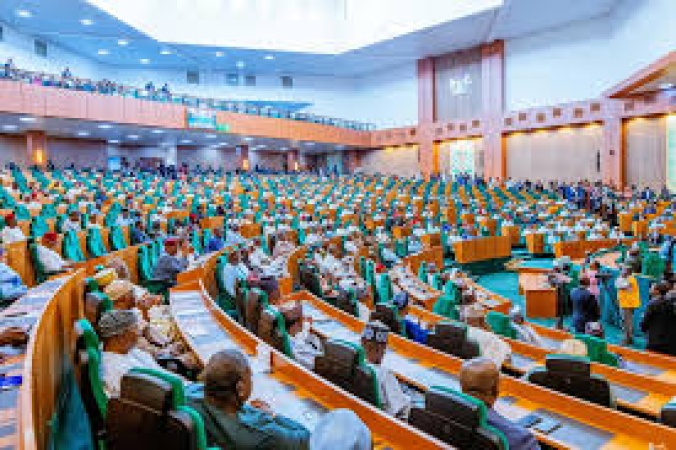
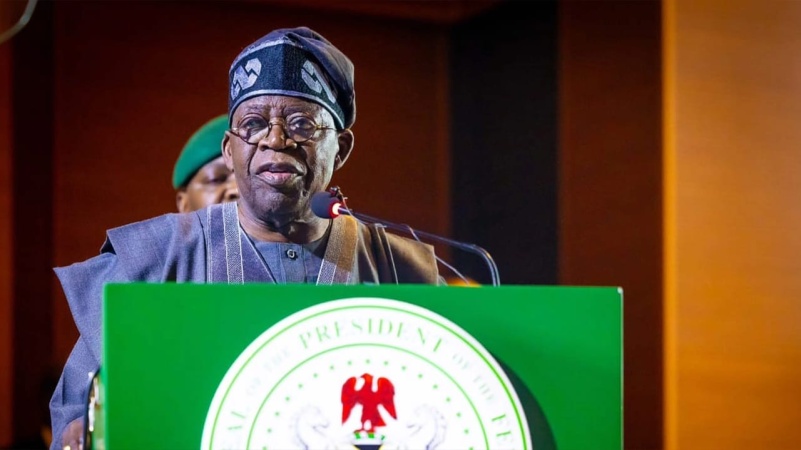
A Joint plenary of the House of Representatives and Senate
Since Nigeria returned to democracy in 1999, voice voting has been the dominant voting method in the National Assembly with senators and representatives registering their choices on various matters through “ayes” and “nays.” This opaque system has often left constituents in the dark about how their lawmakers vote. PHILIP IBITOYE spoke with a cross-section of Nigerians to capture their views on the voice voting system and reforms needed to enhance accountability.
Seun Awogbenle is a Development and Public Policy professional.
How do you view the current system of voice votes in the National Assembly?
I must start by saying that, although voice votes are a standard aspect of parliamentary practice, they are normally used alongside other forms of voting, such as a show of hands or, more recently, electronic voting. However, on matters of critical national or global importance, Parliament must adopt a system—like a show of hands or electronic voting—that allows each member to formally express their position, whether based on party ideology, personal conviction, or the overwhelming will of their constituents. This is the way to deepen public trust, foster transparency in Parliament, and make members more accountable. On this basis, I consider wholesale use of voice votes, especially on matters of national significance, an abuse of parliamentary privilege. It risks denying us the opportunity for robust debates and meaningful representation, particularly in a society where public trust is low, such as ours.
What would be a palatable and democratic way to go?
As I mentioned earlier, voice votes are a standard parliamentary practice, used in addition to other forms such as a show of hands or, more recently, electronic voting. The choice of voting method for a particular issue is determined by the discretionary powers of the presiding officer, who must act in good faith and in the public interest. While voice votes may be appropriate for routine legislative items—such as motions for adjournment, adoption of the order paper, and similar matters—on issues of public interest, amendments to existing laws, passage of the appropriation bill, or other critical reforms, members should be allowed to vote by show of hands or electronically. This is particularly important where the Constitution requires a specific quorum or majority for approval. Adopting such methods would encourage robust debate and enhance public confidence in Parliament.
Voice voting doesn’t align with 21st century parliamentary practice —Olasupo Abideen
Olasupo Abideen is the founder of the Brain Builder Youth Development Initiative (BBDYI), a youth-based non-governmental organization promoting civic engagement, youth entrepreneurship, and empowerment project.
How do you view the current system of voice votes in the National Assembly?
Thank you very much for this. There was a time that our organization, alongside other organizations, advocated for what we call openness. Part of our request then was that we should incorporate what we call electronic voting, so that even in cases like this, voice voting, which is tricky and dubious, would not be relied upon. You cannot really determine the voting pattern with voice votes, and the discretion of the leadership of the parliament means that even if the voice vote is in the other direction, the person who is presiding could favour their personal sentiment in another way.So what I’m trying to say is that it was part of advocacy we have done before through openness. Voice voting is dubious; it’s not good; it’s not something that aligns entirely with 21st century dynamics, and of course it gives room for manipulation.And it will also not allow those who voted for the member of parliament to assess him or her, to know what they are voting for. As a constituent, I want to know how the member of my House of Representatives votes regarding different provisions. So I do not favour it (voice voting).
What voting method would you propose to ensure better representation for constituents?
My preferred voting method would be an electronic voting system that will be displayed and known by everybody, and the log of that voting system released to the public with immediate effect. That will encourage democracy, that will encourage inclusion, that will encourage transparency and accountability. (Sunday Tribune)



