Updating your news feed...
NEWS EXPRESS is Nigeria’s leading online newspaper. Published by Africa’s international award-winning journalist, Mr. Isaac Umunna, NEWS EXPRESS is Nigeria’s first truly professional online daily newspaper. It is published from Lagos, Nigeria’s economic and media hub, and has a provision for occasional special print editions. Thanks to our vast network of sources and dedicated team of professional journalists and contributors spread across Nigeria and overseas, NEWS EXPRESS has become synonymous with newsbreaks and exclusive stories from around the world.

























Loading banners
Loading banners...

By AZUH AMATUS
In recent years, Nigeria has sought to address the persistent financing challenges faced by its youths in accessing tertiary education.
A major milestone in this effort is the establishment of the Nigerian Education Loan Fund (NELFUND), a government-backed student loan scheme designed to reduce financial barriers and expand access to higher education nationwide.
However, the current structure of NELFUND excludes students enrolled in private universities, focusing predominantly on public institutions.
This exclusion, though framed around initial funding constraints and logistical challenges, raises serious questions about equity, national development, and the broader goals of educational inclusion.
It Is imperative that private varsities and their students be integrated into NELFUND’s scope for the scheme to truly benefit Nigeria’s future.
First and foremost, the principle of equity demands inclusion. Education is a universal right, not a privilege tied to the ownership of an institution.
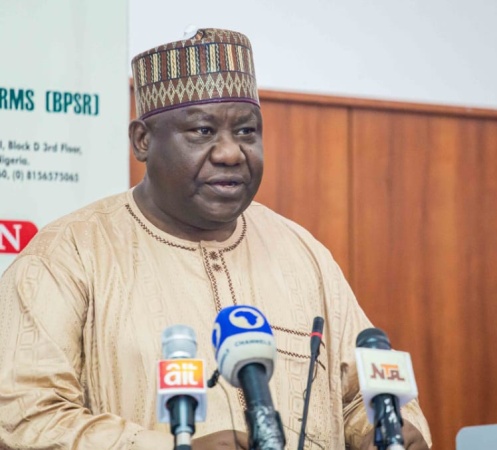
While NELFUND’s Managing Director/Chief Executive Officer, Mr. Akintunde Sawyerr, has explained that private university students are temporarily left out due to high tuition costs and limited financial data to assess need, the goal of the programme is to make education accessible to all Nigerians regardless of their economic background.
Many students in private universities come from low- and middle-income families who would struggle to sustain multi-year fees without some form of financial assistance.
Excluding them on the basis of institutional ownership effectively discriminates against students who have the means and merit to pursue higher education but lack cash flow at key moments.
Expanding NELFUND to private varsities would help level the playing field between public and private tertiary students.
The current gap in policy disproportionately affects families striving to balance quality education with affordability, especially where public institutions are oversubscribed.
As Vice-Chancellors of private universities have repeatedly pointed out, the exclusion of their students from NELFUND amounts to denying them the same citizenship’rights enjoyed by their counterparts in public institutions, a situation that is both unfair and counterproductive.
Moreover, the private education sector contributes significantly to national educational capacity and output.
Over the past decades, private universities in Nigeria have grown in number and academic offerings, thus addressing gaps in access that public institutions alone cannot fill.
These institutions produce graduates ready to enter the workforce, engage in entrepreneurship, and contribute to socio-economic development.
Denying them access to NELFUND undermines the collective national effort to develop human capital.
In the same vein, leaders within the sector have emphasized that private institutions also contribute to national development goals and should be supported accordingly.
Including private varsities in NELFUND also aligns with broader economic objectives. By providing affordable financing to students across all accredited institutions, Nigeria can boost tertiary enrolment, reduce dropout rates caused by financial strain, and ultimately raise the overall skill level of its workforce.
A more educated population enhances productivity, attracts investment, and strengthens economic resilience, all critical factors for sustained national progress.
When students can access loans that cover tuition and living expenses, they are better positioned to complete their studies and contribute meaningfully to the economy upon graduation.
Critics might argue that private universities charge higher fees, making them a less suitable candidate for government-backed loans.
While this concern reflects real cost differentials, it should not be used as a blanket exclusion criterion.
Rather, a nuanced, means-tested approach can be adopted within NELFUND’s framework to assess individual student need regardless of the host Institution’s fee level.
Such an approach ensures that loans are extended to genuinely needy students, irrespective of whether they attend a public or private university.
Structured responsibly, this would preserve financial sustainability while promoting inclusivity.
Besides, expanding eligibility to private university students would likely foster improved data collection and financial transparency across the tertiary sector.
As NELFUND develops more robust mechanisms to evaluate applicants in private settings, it will enhance institutional accountability and allow for better tracking of education financing outcomes.
This, in turn, strengthens the fund’s long-term viability and enhances public confidence in the scheme.
Sincerely speaking, excluding private university students sends the wrong message about the value of private investment in education.
Education in Nigeria has historically been underfunded, and the private sector has played an important role in bridging gaps in infrastructure, innovation, and service delivery.
Integrating private varsities into NELFUND signifies recognition of these contributions and promotes a more collaborative and robust national education system.
In conclusion, including private universities in the NELFUND undergraduate loan scheme is not just a matter of fairness, it is a strategic investment in Nigeria’s future.
By ensuring that all qualified students can access financial support regardless of institutional affiliation, Nigeria affirms its commitment to educational equity, economic growth and human capital development.
Interestingly, such an inclusive approach not only advances the goals of NELFUND, but also strengthens the nation’s capacity to compete globally.
The time has come for policymakers to broaden the scope of NELFUND and unlock the full potential of every Nigerian student.
NB: I have written this article as a young father, who single-handedly pays millions of Naira every session, for my two sons in Nigerian private universities.
•Azuh Amatus, a member of the Nigerian Guild of Editors, is a multiple award-winning journalist and publisher of leading online newspaper, DAYLIGHT. He can be reached on: 08023380008.