Updating your news feed...
NEWS EXPRESS is Nigeria’s leading online newspaper. Published by Africa’s international award-winning journalist, Mr. Isaac Umunna, NEWS EXPRESS is Nigeria’s first truly professional online daily newspaper. It is published from Lagos, Nigeria’s economic and media hub, and has a provision for occasional special print editions. Thanks to our vast network of sources and dedicated team of professional journalists and contributors spread across Nigeria and overseas, NEWS EXPRESS has become synonymous with newsbreaks and exclusive stories from around the world.
















Loading banners
Loading banners...

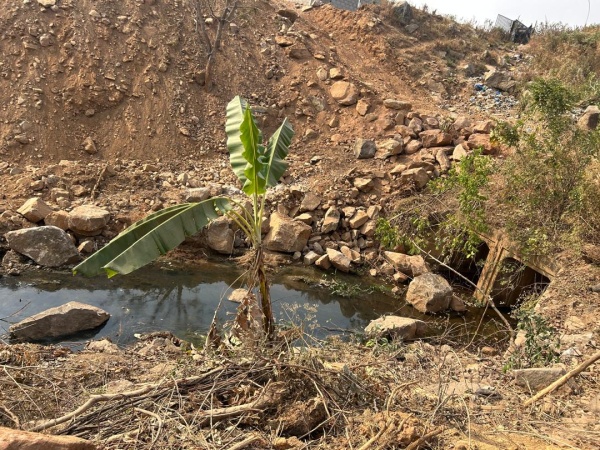
Drains being covered preparatory to the erection of building following land allocation by FCDA
By ADAM A ABATCHA
Since the inauguration of President Bola Ahmed Tinubu’s administration in 2023, there has been renewed momentum to accelerate development across previously underdeveloped parts of the Federal Capital Territory (FCT). Roads are opening, estates are rising, and land values in districts like Guzape, Katampe, and Mabushi are soaring.
Development, however, is only progress when it is guided by rules. In Abuja today, mounting evidence suggests that growth in some districts is drifting dangerously away from the principles of the Abuja Master Plan, with serious implications for environmental safety and urban resilience.
Within the Abuja Municipal Area Council (AMAC), numerous plots allocated to individuals and institutions remain undeveloped for years, while others are reportedly held through multiple allocations by the same persons or corporate entities. More troubling is a growing pattern of construction on natural waterways and designated green areas—zones explicitly protected under the Master Plan.
In cities where urban planning is taken seriously, land development follows environmental impact assessments, hydrological studies, and soil tests. Abuja was designed with exactly these safeguards. Ignoring them does not merely breach planning regulations; it invites disaster.
Abuja’s landscape is structured around seasonal streams and drainage corridors that channel rainwater during heavy downpours. These waterways are not incidental features; they are essential infrastructure. When they are blocked, narrowed, or built over, rainwater has nowhere to go.
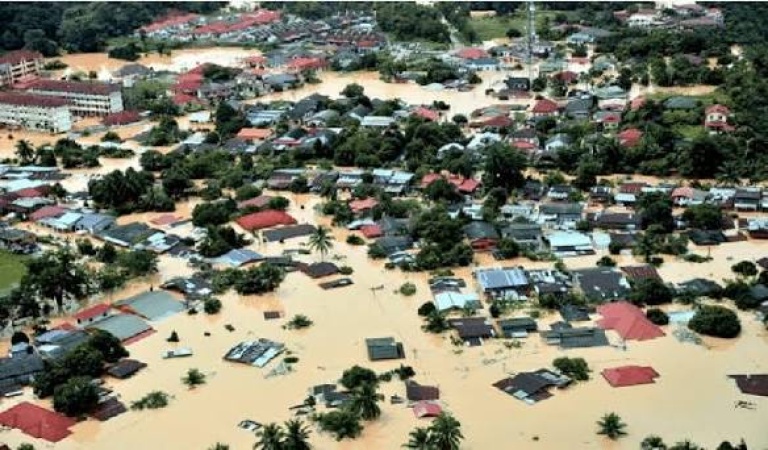
It overflows into streets. It pools in residential areas. It damages roads, foundations, and public utilities. In time, it floods homes.
Guzape: A Case Study in Warning Signs
Nowhere is this risk more visible than in Guzape District, one of Abuja’s fastest-growing residential zones.
Residents report that after heavy rainfall, drainage systems overflow, roads become impassable, and stagnant water remains for days. Vehicles and pedestrians are stranded, and access to entire streets is cut off. This is no longer an occasional inconvenience—it is becoming a pattern.
The flooding follows a predictable route. Rainwater runoff from higher elevations around Bala Mohammed Way flows toward Sunday Adewusi Street, where drainage capacity is already strained. From there, it enters a natural stream corridor that passes near Nest Garden Estate, skirts the back of KYC Estate, and runs toward undeveloped plots opposite COZA Church, Guzape.
This corridor—clearly visible on satellite imagery and older planning maps—was originally reserved as a protected waterway and green buffer. Recent developments along this route have obstructed natural flow, reduced soil absorption, and redirected water into residential streets.
The result is flooding that urban planners have long warned against.
What is happening in Guzape today could easily spread to other parts of the city. Blocked waterways do not stop at district boundaries. They increase downstream pressure on drainage systems, accelerate erosion, weaken road foundations, and heighten public health risks from stagnant water and waste.
In extreme scenarios, floodwaters could breach residential compounds, undermine buildings, and cause structural failures. As climate change intensifies rainfall patterns, these risks will only grow.
The Abuja Master Plan is not merely a planning document; it is a risk-management framework. It exists to ensure that the capital grows in a way that is orderly, sustainable, and safe—for residents, workers, and visitors alike.
Its objectives are clear: protect waterways, preserve green areas, control density, and ensure the long-term livability of the city. When structures rise on drainage corridors, these objectives collapse.
This is not an argument against development. Abuja must expand. But expansion without considering public interest or regulation is not progress—it is deferred crisis.
Authorities responsible for land administration and development control must urgently:
• audit land allocations within AMAC,
• enforce strict compliance with the Abuja Master Plan,
• halt construction on waterways and green zones, and
• restore obstructed drainage corridors before the peak of the rainy season.
Abuja was designed to be Africa’s model capital. Whether it remains one depends on whether its Master Plan is enforced as law—or ignored until the floods arrive.
Guzape is not an isolated case. It is a warning the city cannot afford to ignore. There are further comparable instances within the FCT, such as the grounds adjacent to the stream behind Fraser’s Suites in Wuse Zone 3, as well as in the Maitama Districts.
•Adam A Abatcha, a concerned citizen, writes from FCT Abuja.