ADAD
Updating your news feed...

NEWS EXPRESS is Nigeria’s leading online newspaper. Published by Africa’s international award-winning journalist, Mr. Isaac Umunna, NEWS EXPRESS is Nigeria’s first truly professional online daily newspaper. It is published from Lagos, Nigeria’s economic and media hub, and has a provision for occasional special print editions. Thanks to our vast network of sources and dedicated team of professional journalists and contributors spread across Nigeria and overseas, NEWS EXPRESS has become synonymous with newsbreaks and exclusive stories from around the world.


Loading banners
Loading banners...

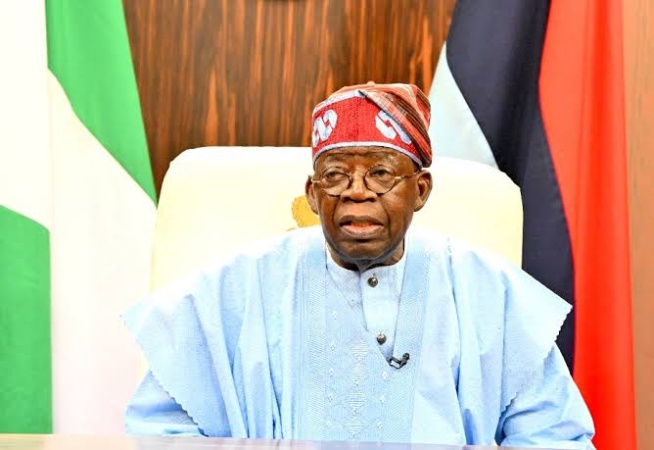
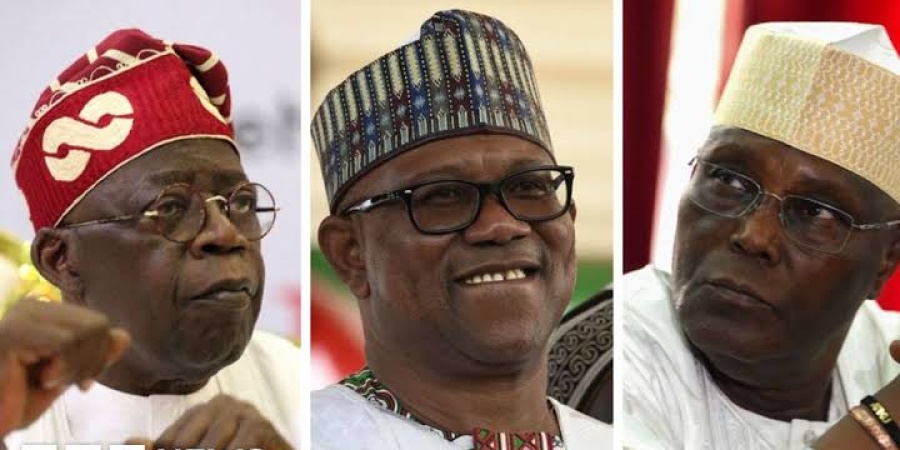
President Bola Tinubu, Atiku Abubakar and Peter Obi set for mother of all battles in 2027
As Nigerians count down to the 2027 general elections, more than 31 governors supporting President Bola Ahmed Tinubu’s re-election bid are desperately wooing the electorate to their camp, but opposition candidates, especially Atiku Abubakar and Peter Obi, have also thrown down the gauntlets despite the odds stacked against them. In this report, ONYEDIKA AGBEDO writes that the outcome of the poll will certainly reshape the debate on the relevance of state chief executives in presidential contests as Nigeria consolidates its democracy.
Two months and 16 days to the 2027 general election, many political watchers are wondering how the opposition parties intend to oust President Bola Tinubu from Aso Rock through the ballot with 34 state governors lined up behind his re-election bid. These comprise 31 governors of the All Progressives Congress (APC)-controlled states: all North-West states (Jigawa, Kaduna, Kano, Katsina, Kebbi, Sokoto, Zamfara); all North-Central states (Benue, Kogi, Kwara, Nasarawa, Niger, Plateau); all South-South states (Akwa Ibom, Bayelsa, Cross River, Delta, Edo and Rivers); five out of the six states in North-East (Adamawa, Borno, Gombe, Taraba, Yobe); four out of the six states in South-West (Ekiti, Lagos, Ogun, Ondo) and three out of the five states in South-East (Ebonyi, Enugu, Imo).
Also, the governors of Anambra, Osun and Abia states, Chukwuma Soludo of the All Progressives Grand Alliance (APGA), Ademola Adeleke of Accord Party (AP) and Alex Otti of Labour Party (LP) respectively have openly thrown their weights behind Tinubu’s re-election bid. And to strengthen the cross-party support by these opposition governors, the APC has named both Soludo and Adeleke into its Presidential Campaign Council.
So, as at today, only two state governors – ’Seyi Makinde of Oyo State and Bala Mohammed of Bauchi State, both of the Allied Peoples Movement (APM) – are opposed to Tinubu’s bid to govern Nigeria for a second term of four years starting May 29, 2027. Makinde, who is of the same geo-political zone as Tinubu, is gunning for the presidency on the platform of the APM.
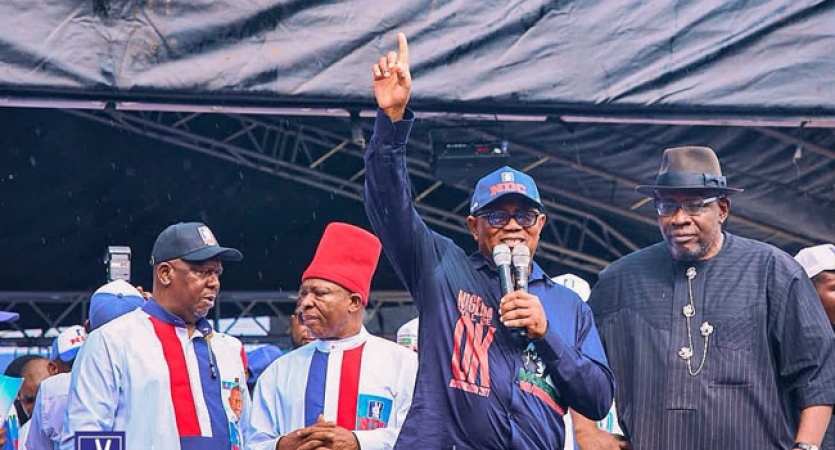
Atiku Abubakar of the African Democratic Congress (ADC) and Peter Obi of the Nigeria Democratic Congress (NDC), who also want Tinubu’s job, have no state governor overtly backing their aspirations.
But they strongly believe they can win the election, especially considering the outcome of the 2023 presidential election where Tinubu, Atiku and Obi won 12 states each. Prior to the election, the APC governed 21 states; the Peoples Democratic Party (PDP), which fielded Atiku, governed 14 states while APGA was in control of one state. Labour Party, the platform under which Obi contested then, had no state under its control. Thus, many political analysts viewed the party as lacking the structure to prosecute a presidential election and wrote Obi off as an underdog in the race.
However, Obi retorted at every opportunity, saying Nigerians living in poverty made up his political structure. “I have said it before when people talk about structure, that my structure is the 100 million Nigerians living in poverty. That’s five million people unemployed, those people who are finding it difficult to live. Nigerians are today spending over 100 per cent of their money on feeding. That is my structure. And above all, the most important structure is the Almighty God,” he said.
His performance at the poll proved him right. He came third in the race, polling 6,101,533 votes as against Atiku’s 6,984,520 votes and Tinubu’s 8,794,726 votes. And his votes came from states controlled by political parties with well-oiled structures, including Tinubu’s Lagos where he defeated him with 9, 848 votes. Obi polled 582,454 votes, Tinubu 572, 606 votes, while Atiku scored 75,750 votes.
Heading into the 2027 elections, Atiku and Obi are still Tinubu’s top challengers and they appear unperturbed by the number of governors the APC is parading. When opposition governors started defecting to the APC in early 2025, a chieftain of the ADC, Nasir El-Rufai, who is now in detention over alleged wiretapping, had underplayed the ability of governors to influence electoral outcomes.
Speaking in Kano in April last year while rallying Nigerians for an opposition coalition that could defeat the APC in the 2027 polls, El-Rufai had maintained that the feat could be achieved without support from governors.
“We are trying to offer Nigerians a real alternative — something different from what they have seen before. A governor has only one vote. Nigerians have many more votes than one governor or even 36 governors combined. It doesn’t matter if you gather all the governors together; if the people of Nigeria say they are not with you, it is over.
The president had a sitting governor in Lagos and still lost Lagos. So, what is the real value of a governor? I was the governor of Kaduna State. I fought hard to deliver President Tinubu in my state, but I lost. That taught me a hard lesson— that elections are ultimately decided by the people, not by political figures,” he said.
Former Osun State governor and National Secretary of the ADC, Rauf Aregbesola, had also argued that governors could not guarantee electoral victory for the APC in the 2027 elections.
Speaking at the public launch of The Loyalist, a memoir by Bolaji Abdullahi, the ADC’s National Publicity Secretary, in Abuja earlier this year, Aregbesola, a former political ally of President Tinubu, cited results from the South-West and South-East to argue that voters, not governors, decide elections.
He, therefore, urged the government to ensure free and fair polls to test the impact of political defections.
I want to use results from two zones—just two zones—to show that when a party controls a state, it may not necessarily translate to votes. I want to use the results from the South-West and South-East. In the South-West, the APC controlled all but one state. Despite this, the party’s maximum performance in that election was 55 per cent, with the other parties sharing the rest.
The same applied in Lagos. The APC candidate lost his ward, local government and state. So please, for goodness’ sake, where is it claimed that governors win elections against the people’s will? That is the South-West.
“In the South-East, the result is even more striking. The APC had only 5.8 per cent of the total vote from that zone. I’ll stop at that. The results of these two zones clearly show that governors do not win elections—the people do.
“What we require from the government overseeing the election is a commitment to a free and fair process. So first, commit yourself to a free and fair election, and let us see what the result will be. That’s what we’re asking,” he said.
Speaking in the same vein, ADC Presidential Campaign Council’s Director of Media and Publicity, Kola Ologbondiyan, recently dismissed the suggestion that the absence of a state governor in Atiku’s political camp would undermine his electoral prospects.
According to him, Atiku could improve on his 2023 performance without the backing of any governor by effectively mobilising Nigerians across the country.
He insisted that Atiku would personally take his campaign across the country rather than rely on surrogates to sell his candidacy to voters.
“Atiku will be everywhere and Nigerians will not accept proxy campaigns,” he said.
Also, Obi’s running mate, Rabiu Musa Kwankwaso, said the APC’s control of more than 30 states does not guarantee President Tinubu’s victory in the 2027 elections.
Kwankwaso spoke in Port Harcourt during a town hall meeting with voters where he and Obi fielded questions on the 2027 general election.
The former governor of Kano and leader of the Kwankwasiyya Movement cited the 2015 elections, when the then-President Goodluck Jonathan lost his re-election bid to Muhammadu Buhari, the APC candidate.
In the build-up to the 2015 election, the PDP, the platform on which Jonathan contested, controlled 21 states in the country. However, during the election, Jonathan won in 15 states and the Federal Capital Territory (FCT), while Buhari won the remaining 21 states, according to results declared by the Independent National Electoral Commission (INEC). Eleven of the 21 states won by Buhari were controlled by the PDP at the time.
Referencing Jonathan’s defeat in 2015, Kwankwaso dismissed suggestions that the ruling party’s control of 31 states would guarantee victory for Tinubu.
“Jonathan was the sitting president and he lost the election. Those who think that because they have over 30 governors they cannot lose are making a very big mistake,” he said.
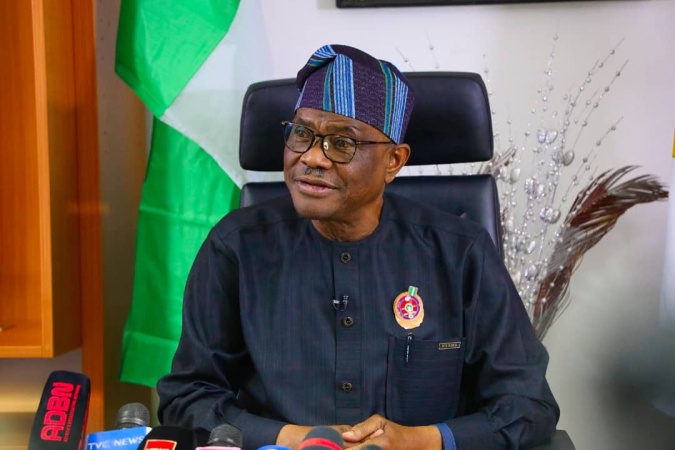
Against this backdrop, the Minister of the Federal Capital Territory (FCT), Nyesom Wike, has warned governors and other members of the APC Presidential Campaign Council against claiming victory in the 2027 presidential election if they fail to deliver their respective states to President Tinubu.
Wike spoke during the inauguration of the APC Presidential Campaign Council in Abuja, where he was appointed coordinator for the FCT and Rivers State.
The minister, who is a chieftain of the PDP but was co-opted into the council by the party due to his strong support for Tinubu’s re-election bid, said the priority of every council member should be to ensure the President’s re-election, regardless of their position within the campaign structure.
His words: “I want to say, if you don’t deliver your states and the President wins, don’t say we’ve won. It’s not a question of whether I am chairman, secretary or member of this council. What is important is for the president to win.
“I told the Chief of Staff to the President, if the president doesn’t win in Lagos, don’t say we’ve won. By the grace of God, Rivers and FCT will vote massively for Bola Ahmed Tinubu.”
Aligning with Wike, Kaduna State Governor, Uba Sani, has declared that it would amount to a failure for the party if any opposition candidate secures 25 per cent of the votes in the state in the elections.
Sani spoke during an interview with TVC last Sunday, expressing confidence that Kaduna would deliver more votes for Tinubu.
“In Kaduna State, allowing any candidate to even get 25 percent of the votes is a failure on our side,” he said.
The governor attributed his confidence to projects and interventions by the Federal Government in Kaduna over the past three and a half years, saying residents should reciprocate the support by voting massively for Tinubu.
He recalled that the APC National Chairman, Nentawe Yilwatda, had said the North would give Tinubu 70 per cent of its votes, adding that Kaduna would deliver an even higher percentage. Sani also commended Tinubu for handing over the Ahmadu Bello Stadium to the Kaduna State government, saying the state had plans to rebuild the facility into a 33,000-capacity stadium that meets FIFA standards.
The governor also cited the reconstruction of the 123-kilometre Kaduna-Birnin Gwari road, which he said had been abandoned for more than 40 years. He added that N178 billion had been released for the project.
He also thanked the President for the ongoing reconstruction of the Zaria-Soba-Kambuwa road and the proposed Kaduna metropolitan light rail project.
According to Sani, $865 million had been approved for the rail project, while China Civil Engineering Construction Corporation, the contractor, had received $300 million in mobilisation funds.
The governor said Kaduna now has four federal universities, including the upgraded Federal University of Education, Zaria; the Federal University of Applied Sciences, Kachia; and the proposed Shehu Musa Yar’Adua University of Petroleum Studies in Kaduna. He also listed the conversion of Kaduna Polytechnic into a federal university of technology.
Sani said the Federal Government’s interventions in the state should motivate residents to vote massively for Tinubu in the next election.
He accused opposition parties of using artificial intelligence and doctored images to criticise the ruling party on social media rather than engaging voters directly.
“We are the only party that is reaching out, talking to the people,” he claimed.
Other governors supporting Tinubu’s re-election also point to the achievements of his administration. These include GDP steady growth, falling inflation, naira stability, doubled FAAC allocations to states, rising foreign reserves, infrastructure renewal, NELFUND loans for indigent students, and consumer credit for young people, among others.
For Edo State governor Monday Okpebholo, President Tinubu deserves a second term in office because more money has been made available to the states following the removal of petrol subsidy.
He spoke during the APC grassroots mobilisation tour of Esan South-East and Esan North-East Local Councils, saying Tinubu has performed beyond expectations.
He also insisted that the party’s target of 2.5 million votes for President Tinubu in Edo was within reach and urged party supporters to stay committed to the cause.
Anambra State governor, Chukwuma Soludo, has also expressed confidence that President Tinubu will secure a second term in office, saying it would provide an opportunity to accelerate the administration’s reform programme.
Addressing Tinubu and members of the All Progressives Alliance Africa at the inauguration of APC presidential campaign council in Abuja recently, Soludo described the administration’s economic reform direction as difficult but necessary, urging the President to sustain the course.
“The path you are going, the path that you have chosen, that you have dared to take, is difficult, but it is necessary,” he said.
The governor had further described the next phase of the reform agenda as an opportunity to advance what he called “pragmatic progressiveness”.
“It is the acceleration path towards what I call pragmatic progressiveness that we must entrench in Nigeria,” he said.
Nevertheless, Atiku and Obi appear to be banking on the hardship induced by the economic reforms of the administration to convince voters to reject Tinubu at the poll.
Reacting to the report of the SBM Intelligence survey released last September, indicating that 67.4 per cent of respondents wanted the Federal Government to restore petrol subsidy, Atiku said the finding showed widespread dissatisfaction with President Tinubu’s petrol policy and the rising cost of living.
In a statement issued by his Senior Special Assistant on Public Communication, Phrank Shaibu, Atiku said the survey result was evidence that Nigerians were seeking relief from higher petrol and transportation costs following the removal of subsidy.
“This survey is no longer merely about economic policy. It has become a democratic question. When an overwhelming majority of Nigerians declare that a government policy is destroying their lives, responsible leadership must listen,” Atiku said.
According to the former vice president, petrol ranked as the second-most cited national problem and the Tinubu administration’s worst-rated policy issue, scoring 1.69 out of four in the survey.
He said the impact of higher fuel prices was reflected in increased transportation costs, food prices and operating expenses for businesses. Atiku also cited regional variations in the survey, saying 32.4 per cent of rural respondents identified petrol as their primary concern, compared with 11.7 per cent of urban respondents.
He said petrol was also the leading concern among respondents in the South-West, at 30.5 per cent, and South-South, at 29.1 per cent. He criticised the government’s decision to remove subsidy, arguing that it was implemented without adequate measures to protect households, businesses and domestic production from the resulting economic pressures. He also rejected what he described as attempts to rely on economic statistics and the Federal Government’s compressed natural gas (CNG) programme to justify the policy.
“Nigerians do not eat GDP figures. A mother cannot take FAAC allocations to the market. A worker cannot fuel his vehicle with presidential promises. Any economic reform that does not improve the lives of the people has failed,” he said. Atiku said his proposed alternative would not restore what he described as the previous subsidy regime but introduce a production subsidy for petroleum products refined in Nigeria and sold domestically.
He said the proposed scheme would exclude imported petroleum products, have a fixed spending limit, require National Assembly approval and be subject to independent audits.
According to him, the measure would be aimed at reducing fuel prices, supporting domestic refining, creating jobs and improving purchasing power.
“The 67.4 per cent demanding relief represents a democratic majority. On the strength of that democratic mandate, we will replace Tinubu’s policy of punishment with a policy of production, protection and affordability,” he said.
Similarly, Obi accused the Tinubu administration of worsening Nigeria’s economic challenges, declaring that he must leave office in 2027.
He spoke in Abuja on Monday, October 26, at the inauguration of the NDC’s national campaign council.
The former governor of Anambra said Nigeria was facing a crisis under Tinubu’s leadership, insisting that Nigerians were seeking a change of government.
“Tinubu has led this country into a crisis. Today, everything is collapsing. From our engagements across Nigeria, Nigerians are looking for new leadership, and we assure you that we will create that leadership,” Obi said.
Obi also criticised the administration over poverty, unemployment, corruption and insecurity, saying the country had recorded poor results across key development indicators.
He faulted Tinubu for launching his re-election campaign without accounting for the funds borrowed by his administration.
“Just last Friday, President Tinubu launched his second general campaign rather than explain to Nigerians what he has used the billions he borrowed to do.
“Rather than explain what he has achieved with the 2023, 2024 and 2025 budgets, he chose to blame the opposition for creating poverty.
“Let me assure you: we will not lead a government of blame. The purpose of governance is to solve problems, not to blame people. I will not blame anybody. We will create that new Nigeria that is possible.
“We need a revolution that will turn this country around, and we are committed to that. The APC-led government under President Tinubu has failed Nigeria,” he said.
However, the noise about restoring fuel subsidy as a campaign gimmick appeared to have mellowed following the warning by the International Monetary Fund (IMF) that “blanket petrol subsidies are expensive, often benefit higher-income consumers disproportionately, and worsen fiscal pressures amid rising borrowing costs.”
Also, political pundits have interrogated circumstances that fostered electoral successes recorded by the opposition figures such as Atiku and Obi in the 2023 elections and concluded that such factors might not impact the outcome of the 2027 poll.
Whether the electorate will key into the campaign messages of the governors or those of the opposition candidates remain to be seen. But one thing is clear: the governors are under test. This is the first time since the return of civil rule in 1999 that an absolute majority of state governors will queue behind a president seeking re-election. Therefore, the outcome of January 16, 2027 poll will further address the issue concerning the extent of their influence in presidential contests. (The Guardian)