 ADAD
Updating your news feed...

NEWS EXPRESS is Nigeria’s leading online newspaper. Published by Africa’s international award-winning journalist, Mr. Isaac Umunna, NEWS EXPRESS is Nigeria’s first truly professional online daily newspaper. It is published from Lagos, Nigeria’s economic and media hub, and has a provision for occasional special print editions. Thanks to our vast network of sources and dedicated team of professional journalists and contributors spread across Nigeria and overseas, NEWS EXPRESS has become synonymous with newsbreaks and exclusive stories from around the world.
Loading banners
Loading banners...

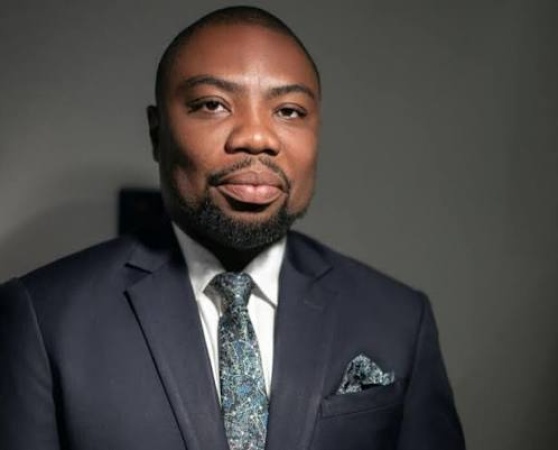
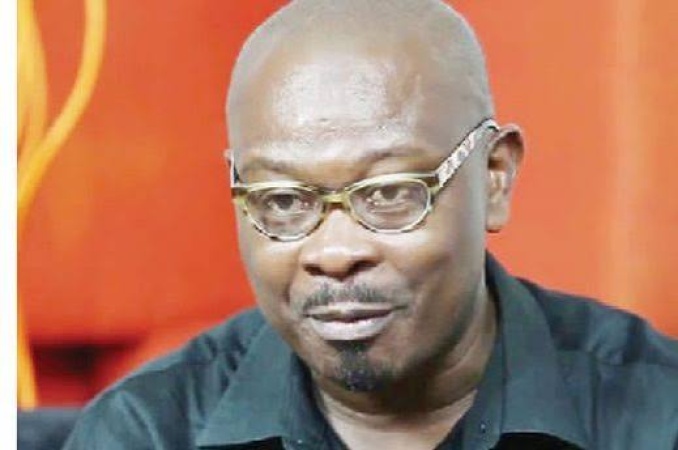
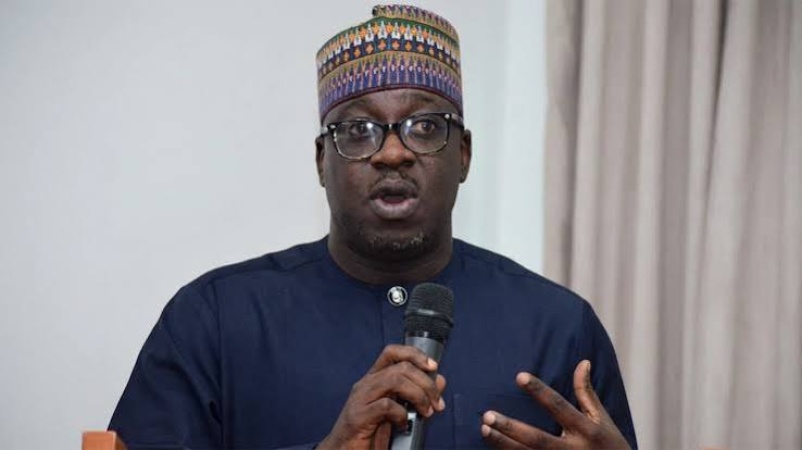
SDP presidential candidate, Prince Adewole Adebayo
Prince Adewole Adebayo is the presidential candidate of the Social Democratic Party (SDP). In this interview by MUIDEEN OLANIYI, he speaks on a variety of issues including the Independent National Electoral Commission (INEC), the omission of governorship candidates from the INEC list, fuel subsidy debate, state police, coalition talks among others.
INEC has just agreed to publish the preliminary voters register online after pressure from Atiku Abubakar and other stakeholders. Do you think INEC is truly ready for a credible 2027 election?
First, INEC has an obligation to publish. And we have been putting pressure on them to publish. But to your question, INEC is not suited for free, fair, and credible election. It is not in nature. INEC is like driving a Toyota Sienna into water and try to use it as a boat. It is not designed to float. So, with effort, you can manage it, but it is not designed to float. You should probably have used your money to purchase a boat. The boat will float naturally. INEC wasn’t designed to do free, fair and credible elections because of the way it is composed.
So, it’s not just the character of the people inside, the way it is composed. That was why when Umaru Musa Yar’Adua came and saw the calamity of an election that got him to be elected, he was determined that he will be the last president who will have such a terrible election situation and people will be asking, ‘oh, your election was not credible’ and all of that. So, he set up the Uwais panel. If we follow that Uwais panel report, it will give us three things. It will give us a naturally independent INEC that the appointment is not from a partisan authority. Second, it will give you a non-governmental INEC that is not just an agency of government. And three, it will give you an INEC where the collective credibility of the political actors will reflect there.
In some countries, they have many methods they are using. But I think the method prescribed by the Uwais panel is better for us. But in some countries like Ghana, every party is part of the commission. And even to print their ballot, every political party has to be present and go to the printing press. There are many methods but as INEC is today, it is not designed to succeed.
INEC omitted several governorship candidates citing Supreme Court judgment on Section 77(5)-(7) on membership registration. As a lawyer, do you agree with INEC’s interpretation?
The issue is that I was in the Supreme Court in a matter. The error is not of INEC. I disagree with the Supreme Court with utmost respect, but they are the final court in the land. The power that the Supreme Court allowed National Assembly to exercise is not supposed to be exercised by the National Assembly. It is not the National Assembly that should determine for a political party who its members are.
So, the only mistake INEC has made is in the interpretation of the provisions of the Electoral Act pertaining to the number of days you must be in your political party before you can contest. They are selectively removing names of candidates. What SDP has told INEC is that if you say that you are not satisfied that a candidate has spent 21 days in the party before they did their primaries, you need to write to that party to say, Candidate ABC, tell us when they entered your party because in your register, we could not find him. Like some of our candidates, INEC went to look for the wrong register. And when we showed the right register, they said, ‘oh we didn’t know’. We said, when you wanted to take that decision, you should have said to the party, you have uploaded the name of your candidate, but we can’t find his name on your register. We would have told you to go to column 7. The name is there. And we have submitted it to you over a month ago or two months ago. Those are the only areas INEC is not acting correctly administratively.
Atiku raised concerns over Section 63(2) permitting counting of ballot papers that do not have official marks of INEC. What is your position on that provision?
My own position is also well-published in that regard. My own position is very clear that that provision is wrong. We were the ones pushing it. You can ask Mike Igini, a former Resident Electoral Commissioner in INEC. We were the ones pushing it that it is wrong and that approach is going to allow for a lot of irregularities in the election. And it’s not acceptable.
What is your confidence level in the BVAS and IReV for 2027, given the glitches experienced in 2023?
There were no glitches in BVAS and IReV. What happened is that there was deliberate sabotage or refusal to comply with the provisions regarding. So, the technology itself is not the problem. If a photographer doesn’t like your face and you stand in the crowd and he says see it but doesn’t click the button, it’s not the cameras that has fault. He just doesn’t want to do his work. So, what we are doing now is to be sure that we keep maintaining democratic vigilance on INEC. INEC is under a lot of pressure, immense pressure to do wrong. That needs to be balanced with immense pressure to do right on behalf of Nigerian people.
On economy and cost of living, you have consistently criticised fuel subsidy removal without alternatives. What would you have done differently on fuel price and naira floating?
First of all, the removal of subsidy is a mistake but also a deliberate mistake because it won’t serve anybody right. The problem of petrol, they should not even have removed subsidy at all. The subsidy will have naturally ended if they lower the price and the way to lower the price is to guarantee supply at a reasonable cost.
If you are selling petrol at N200 per liter, Nigerians will be able to afford it and you will still not need to subsidise it. We have laid that out in our manifesto. That we need to have crude that is meant for domestic consumption. It is not all the crude you produce that you export. It is common sense if you are a taxi driver or Uber driver, you cannot leave your children stranded at home and go and carry other passengers who are going to school. You can’t have a pregnant wife and you’re an Uber driver and you tell the woman, ‘well, come and pay me at Uber rates before I take you to the hospital’.
You cannot be a farmer, harvest 10,000 tubers of yam, take all of them to the market, and tell your mother, wife and children, go to the market and buy it at a general price. It makes no sense. Our constitution says that the resources of Nigeria will be used for the welfare of the people of Nigeria. So, the priority of an SDP government under me is that I will satisfy domestic market first before I export. When I satisfy domestic markets, then the rest will be under OPEC export quota. I said I must make sure that petrol is affordable in Nigeria, the excess, we can sell. And that is why we also had 445,000 barrels earmarked for domestic consumption. What the government is doing now is that they’ve merged everything together, sold it all, borrowed money on it and said, ‘well, we can’t afford to supply to domestic refineries.’ As a result of that, they are shutting down the domestic refineries in the lie that they don’t work. Those refineries are middle-aged refineries. They will work anytime.
The African Democratic Congress (ADC) is proposing a targeted, capped, audited subsidy tied to locally refined petrol. Do you support that?
It is absolutely nonsensical. ADC doesn’t know what they are doing. I don’t want to criticise their position, but it is nonsensical. They took the position four years ago. Their candidate said he was going to remove subsidy. We said don’t do it. You cannot regulate price. You can only make for abundant supply. It’s price mechanism. Anything that is in abundant supply, the price will go down. Nigeria has billions in oil well. All we need to do is to make sure that domestically, we supply enough crude to our refineries at zero cost to the refinery. And the refinery gives us the petrol and the kerosene, which also includes Jet A1. And the rest, like NAFTA, AGO, LPFO, HPFO, and all the other byproducts, including asphaltene, asphalt which you can sell at a profit. It is a very simple thing to do. The problem facing the government of today is that they want to be competing and participating like Dangote. They also want to sell the refineries to themselves and turn us to buyers of a product that is abundant on our oil. They want to turn a man who is in Ode-Omu, or Ikire, or Ile-Ife, or Malumfashi, or who is in Jos, they want to turn him into a buyer of petrol at an international price, like somebody who is in Singapore, or who is in Japan, or who is in South Korea. It doesn’t work that way.
The All Progressives Congress (APC) says its reforms are painful but necessary. Is there any reform of Tinubu administration you would retain?
Tinubu has no reform. There’s no reform there. You only have deformation and sabotage. Because when you are doing reform, you change the system and processes. What he’s doing is just price increase and tax increase and turning himself and his people to contractors. So, there is no reform. A reformer has to have a policy objective and a reform must be constitutional. And it must comply with Chapter 2 of the Constitution, and must be in tandem with national development policy. There’s a national development plan for every season. So, what reform has it done? For example, you bring a programme to defund universities and put your campaign managers and field politicians as governing council members of universities, and you give them a mandate to increase school fees. Then the money we were supposed to use to fund the university, you now turn it into a loan for the students to pay a fee which you jacked up by yourself. And you turn the university to profit centers, not knowledge centers. You now give them a loan to study a course for which there is no laboratory, for which the lecturer is on strike, and use that same money to pay you back. They turn you into a debtor, not a thinker, not a scholar, and then you have no job for him when he graduates. So, you’re going to have a generation who will be getting email from NELFUND on how much they owe and become more desperate. So, it doesn’t make any sense. There’s no reformation anywhere. Show me the reform and I will give you the lack of reform that is there.
Insecurity remains a top concern. What is your alternative security architecture different from what Tinubu and past governments have done?
What they have been doing is to exploit insecurity to steal money. Let’s not waste our time. And they have been accommodating and cavorting with terrorists and terror sponsors. They have been neglecting communities affected by terrorism. There are five things we plan to do. First, we are ensuring that all those people who are sponsoring terror, especially in the Middle Belt region – Benue, Plateau, Nasarawa, Adamawa, Niger, Kogi, are stopped from mining. We ensure that we restore security in the communities. And we ensure that those who are involved in sponsoring terrorism are not involved in mining anymore. This is because mining is what they are protecting with the Lakurawa terror group and all of those. Anywhere they see minerals or farmland, they displace the people.
Secondly, we will ensure that we actually fund the armed forces. President Tinubu claims, and they say it shamelessly everywhere, that they increased funding for security from N1.4 trillion to N6.4 trillion. What they are not telling you are two things. One, they’ve only released less than 5 per cent of the money. So, how can you fight terrorism if you are releasing less than 5 per cent of the budget? This means welfare, ammunition, training, everything that has to do with the project is only 5 per cent funded. That means you are not ready. Then, the N6.4 trillion in real purchasing power is poor because of the nonsensical devaluation of the naira which they have done, is less than the N1.4 trillion before. So, they are not committed, they are not serious at all.
And lastly, most of the money goes to their personal pockets. It doesn’t go to the field and we are going to change all that. The first thing we’re going to do is institute compensation for the victims of terrorism and killings, the victims and their families. Our calculation is that for every unlawful killing in Nigeria, the government will pay N600 million to the family per person. But now, they are using their money to rehabilitate terrorists who are their own agents. But if you go to Yelwata, go to Angwa Rukuba, go to Oriire, go to Askira Uba, all those places, the victims are alive. Their families are there. The ones who are dead, they have their families left behind. The government has not given any compensation. Even under the colonial system, if the government or anybody kills people, they pay compensation. Now, we’re going to change that. And lastly, we’re going to spend the rest of the money of Nigerians on Nigerians so that we can achieve free education, surplus of food, comprehensive housing, health insurance with four critical checks whether you are sick or not per year. And we’re going to give full employment. That way, you have less insecurity because everybody will be relaxed and will be engaged. That’s how we will tackle insecurity.
Would you support state police, and how would you prevent abuse by governors?
The law is there. Our philosophy and our manifesto is that every level of government that has power to make law should have power to maintain the police, to enforce its own law. If a local government can say you can’t go to Gbagi Market and throw rubbish there; if it says that you cannot cross red lights, you should have enough power to enforce your own law. It’s just that local government police will not be investigating financial crime. They will be dealing with bye laws of local government. State police will not be interested in treason or telecommunication offenses or banking offenses because that’s not under state. They will be dealing with murder and things like that that are under state police and then the federal government police will not be arresting for murder. If you kill someone in Sokoto State, they will leave it to the Sokoto State police to handle. But Chapter Four of the constitution governs all government agencies including the police whether state or federal. You cannot abuse it. Right nowthey still abuse the federal police. Why would you tolerate presidential abuse of police but you are worried about governor abuse of police. When police came and invaded the SDP headquarters, and chased us out of our legitimate secretariat, they were not sent by the police. But what saved us was that the law says you can’t do that. So, we went to court and we were back in our place. So, the same constitutional order, the same fundamental human right which is protecting you from federal police, will protect you from state police or local government police.
Your party, the SDP was considered a coalition platform before ADC took lead. Why did you stay in SDP and not join ADC coalition?
I’ve been in SDP since 1991 when I was 19 years old and I will stay there till my last breath. Secondly, ADC is not a coalition party. ADC is a political party that has its own candidates. It’s not a coalition party. We are discussing now on how to cooperate. So, ADC is not leading anybody. They came to SDP and they couldn’t meet our standards. And it’s well documented. We’re not fighting with them or anyone. But they couldn’t meet our standard. Basic manifesto, they don’t remember it or things like that. So, they don’t even understand the purpose of government. They failed our interview. They can’t join our party. But if they went to ADC, they didn’t ask them any question and they accommodated them, good for ADC. But in SDP whether you’re a former president, former vice president, former governor or you are an okada rider, if you want to join the party, there’s a basic interview regarding what we stand for. We will also seek your views of Chapter Two of the constitution, what’s your view on this and that, if you can’t answer the question, we will say you need more training. That’s basically that.
Three Peoples Democratic Party (PDP) governorship candidates, the NDC candidate in Kano and others were omitted from the final list of governorship candidates published by INEC. SDP’s Benue nominee, Sebastine Hon, was also mentioned. What is the status of your party’s candidates?
INEC has acknowledged to us that it was a mistake on their part and they will restore it.
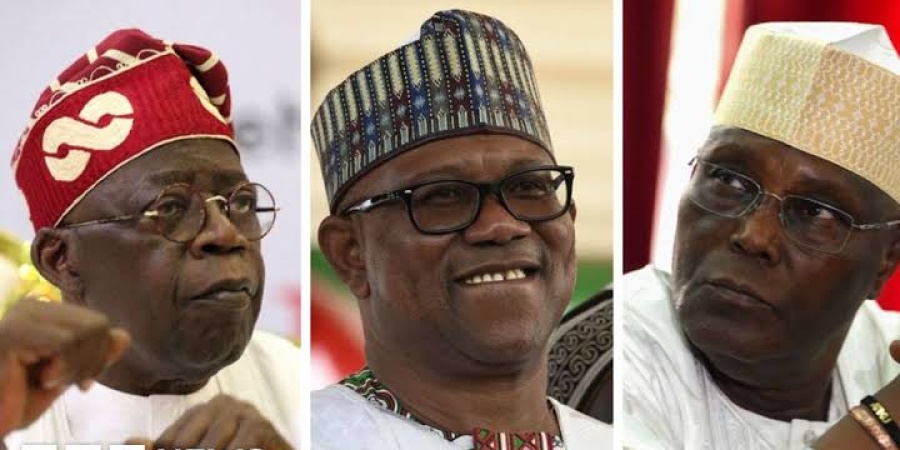
Atiku, Peter Obi, and Tinubu are dominating the headlines. How does SDP intend to break through?
What is my business with that? You are the owner of your headline…. maybe you think they will sell your paper more. I have no control over that. All I have control over is the fact that we have a duty to speak to anyone who wants to speak to us. That’s why we are speaking to you when you came now. And we are speaking to different people. And you will see us on radio, on TV, everywhere. We are also in the community. So, we are not worried about that. What concerns us is the quality of the message we want to pass. We want every Nigerian, when they are going to the poll, to know what SDP stands for; to know the content of our manifesto, to know the qualities of our candidates. And with that in mind, they can make up their minds what they want to do, where they go to vote. As long as the vote is free, fair and credible, we are okay. But we are enjoining the media to try to reflect diversity of opinion because it’s good for democracy and that is the duty of the fourth estate of the realm.
On governance and credibility, there is public debate about educational records of some of our political leaders. Should INEC be empowered to disqualify candidates over certificate discrepancies before election rather than after?
First and foremost, it should not be certificates only; character too should be taken into consideration. The real ultimate power lies with the Nigerian people. If a person has a shady character, why do you need INEC to help you disqualify him? Just don’t vote for him. For me, I don’t want to give more power to INEC because even the ones they have now, they’re abusing it. But if the court wants to do it, we can do it like we did before. If a person is blatantly lying, bringing false certificate, you can go to court. That position should be added, but to give INEC more power, INEC should even have less power. INEC should just conduct elections in a simple way. There should be other bodies dealing with the issue of qualification. INEC is over-burdened.
You are younger than Tinubu and Atiku. Do you think age should be factor in 2027?
Important thing is that a person who wants to be president has to have a good knowledge of the country, has to have certain basic competencies in literacy, numeracy, analytics and all of that. Then you have to have stamina. You should not turn the State House to an infirmary or a hospice. So, you don’t need a president going to make a speech and pall bearers would be standing by the right and the left in case he falls down or things like that. It’s an intensive job. And if you go around the world, you will see that the people who do well in it, do well in it when they are young. It’s an intense game. The fitness required to be president is almost the same fitness required to be a coach in the Super Eagles. You need to be active. You need to be able to be up for 18, 20 hours in a day without collapsing. You need to have your vitals still working. And you need to have a retentive memory. The damage to and the pressure on the physical body is not even the major challenge. It’s on the mind. So, when you see people jump up and down like young candidates, the president will say, it’s not an Olympics now. It’s not that. It is that the strength of your mind must be so strong.
President Buhari, if he met with you today, two days, three days’ time, he’s forgotten the subject. So, the issue is that it doesn’t mean that if you are a youth, you automatically succeed. But you are sure to fail if you are not a youth because the mere physical restraint on you alone will make you to become a liar. In most state functions, the president cannot come. To go and do rally in Kaduna, you have to carry jumbo jets just from Abuja here. So, when you can’t do most of these things, the work will fail. And the danger of that is that that’s what leads to the growth of cabal. When the man cannot treat the file, then he has to do delegation or abandonment of duty. And people who are not elected, who are not trusted by the public, will now start to take vital decisions. And then there will be contradiction in the government. The government will be struggling. Did I create this agency? Did I not? When this issue of the other agency came up, president should be able know that I didn’t create the agency. He had to first ask ICPC to investigate if the agency was real or not. Did I create it or not? So, we don’t want such.
Will you publish your manifesto cost and funding source before campaigns?
We have already published that. It’s there. It was published in English, Hausa, Igbo, Yoruba, Fulfude, Arabic, Ajami, and Tiv languages. We are doing the one in Berom language. We’re doing Efik language and all kinds of languages. And we’re on radio all over the country. We are on three radio stations per state, reviewing it. People are calling in, interrogating it. And we’re doing town hall everywhere. So, it’s well documented: Farewell to poverty and insecurity. (Saturday Tribune)




