 ADAD
Updating your news feed...

NEWS EXPRESS is Nigeria’s leading online newspaper. Published by Africa’s international award-winning journalist, Mr. Isaac Umunna, NEWS EXPRESS is Nigeria’s first truly professional online daily newspaper. It is published from Lagos, Nigeria’s economic and media hub, and has a provision for occasional special print editions. Thanks to our vast network of sources and dedicated team of professional journalists and contributors spread across Nigeria and overseas, NEWS EXPRESS has become synonymous with newsbreaks and exclusive stories from around the world.















Loading banners
Loading banners...

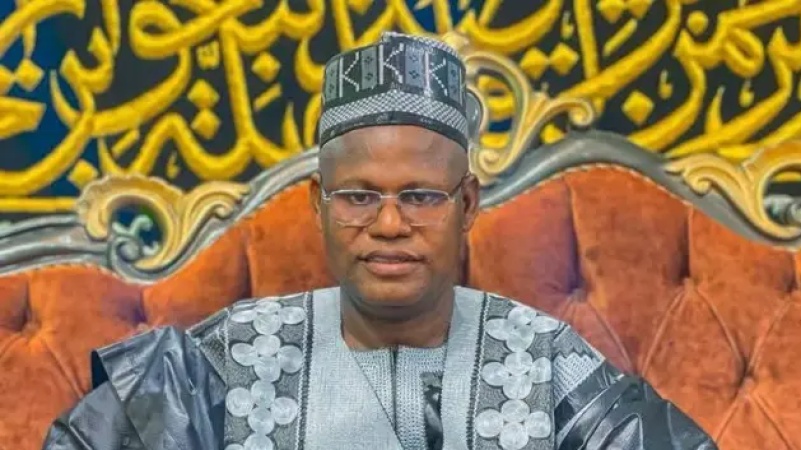
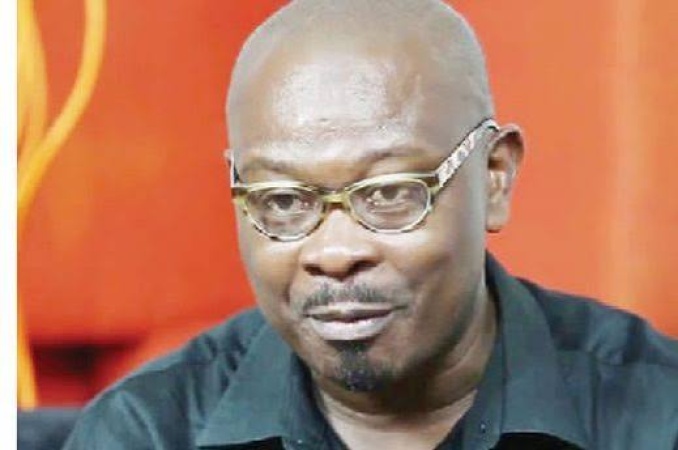
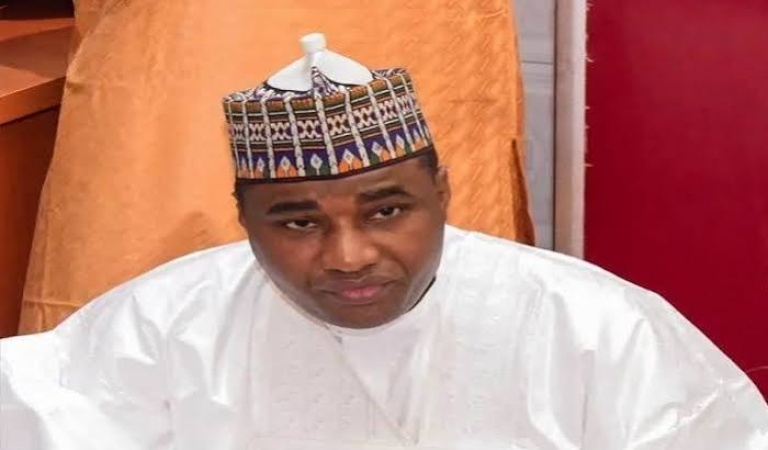
The assassinated Sheikh Yahaya Masussuka
Imam Ibrahim Aliyu Kaduna, Assistant Secretary of the Council of Ulama of Jama’atu Izalatil Bid’ah Wa Ikamatus Sunnah (JIBWIS), FCT, and Secretary-General of the JIBWIS FCT Working Committee, is also a member of the FCT Imams Initiative and Director/Founder of Tadbeed Islamic Centre, Mpape, Abuja. In this interview, conducted in his personal capacity, he explains why he disagrees with the late Sheikh Yahaya Masussuka’s religious ideology, particularly his rejection of the Hadith and Sunnah, while condemning his killing.
How would you assess the late Sheikh Yahaya Masussuka and his place in the Islamic religious landscape?
Sheikh Ibrahim Yahaya Masussuka’s ideology is based on the belief that the Qur’an is the Book of Allah and the sole authority for religious worship, without incorporating the Hadiths of Prophet Muhammad (Peace and blessings be upon him).
There is no doubt that the belief that the Qur’an alone is sufficient, without accepting the Sunnah of the Prophet, contradicts the Qur’an itself.
First, Allah, the Exalted, says: “And We have sent down to you the Reminder so that you may explain to the people what has been revealed to them.” This verse shows that while the Qur’an is the Book of Allah, its explanations were entrusted to the Messenger of Allah (Peace be upon him). Those explanations are contained in the Hadith and constitute the Sunnah of the Prophet.
People, therefore, need to study the science of Hadith to understand the Sunnah, something I believe people with Masussuka’s kind of ideology have failed to appreciate. They have not attended specialised Hadith schools or studied the discipline at university to understand what Hadith entails. The science of Hadith is a specialised and important field in Islam.
Their understanding is fundamentally mistaken because it is impossible to practise Islam fully without incorporating the Sunnah of the Messenger of Allah.
For example, Allah commands Muslims to perform Tawaf around the Ka’abah. But how many times should a Muslim go around it? Does the Qur’an specify the number of rounds? It is through the Hadith that we learn that Tawaf consists of seven rounds.
If someone who rejects Hadith performs seven rounds, we can ask him where the Qur’an specifically states that it should be seven. It is those of us who accept Hadith who have been given that explanation.
Similarly, should a person keep the Ka’abah on their right or left while performing Tawaf? Where exactly should one begin and where should one end? The Qur’an does not provide these specific details. They are explained through the Sunnah of the Prophet.
The same applies to prayers, including the number of rak’ahs and how each prayer should be performed.
Even in matters relating to death and burial, the Qur’an does not provide all the practical details concerning how graves should be prepared, how shrouding should be done, how the deceased should be washed and other related procedures. These details are found in the Sunnah.
The Qur’an generally refers to death and burial, but the specific procedures are explained through the Sunnah of the Messenger of Allah.
Allah also commands Muslims to give Zakat on agricultural produce, saying: “And give its due on the day of its harvest.” However, does this mean that Zakat should be paid on every bag of harvested produce? What quantity should be given? Are all agricultural products subject to Zakat, or are there specific categories of crops on which it is payable?
The same questions arise regarding Zakat on livestock. Are the requirements for camels different from those for cattle and sheep? Is Zakat payable on chickens?
These are issues that require Muslims to consult the Sunnah of the Messenger of Allah (Peace be upon him) for further explanations.
Without doubt, Masussuka’s teachings were characterised by what I consider distortions of Islam and attempts to mislead those who do not share his understanding.
At the very least, his teachings present Islam to the world in a manner different from what it actually represents. His ideology contains serious errors and unusual interpretations.
I believe the teachings originated from Muhammadu Marwa Maitatsine, who introduced a similar ideology in this part of Africa and whose activities we witnessed in the past.
Masussuka acknowledged that he was a disciple of Maitatsine, while his parents were also said to have been Maitatsine’s followers.
This suggests a chain of ideological influence that began with Marwa Maitatsine and continued through successive followers until it reached the present generation.
Consequently, I consider the teachings fundamentally flawed and an attempt to undermine the established teachings of earlier Muslim scholars.
Now that Masussuka has died, his followers are calling for his lectures to be compiled and preserved in digital memory so that future generations can benefit from them.
The question is: Does Masussuka deserve to have his teachings preserved for future generations, while Prophet Muhammad (Peace be upon him) does not deserve to have his teachings similarly compiled and preserved?
There is an obvious contradiction here. His position is controversial and inconsistent, and I believe it represents an attempt to undermine the Islamic foundations that generations of scholars have worked hard to establish.
What is your reaction to his killing, and how do you view the circumstances surrounding it?
Indeed, the killing of Ibrahim Yahaya Masussuka is deeply saddening. No Islamic preacher would be happy to hear that another person has been killed simply because his religious teachings or beliefs differ from theirs.
For us in the Ahlus Sunnah wal Jama’ah, our success lies in calling people to the truth, encouraging them to abandon what we consider wrong and embrace what is right. Whether such a person is alive or dead, if they do not accept the truth, we have not achieved our objective.
As the author of Mursidatul Qulub explained in his book, the success of a preacher or someone engaged in dialogue with another person holding a different opinion is when the other person abandons what is wrong and embraces what is right.
Therefore, it is deeply unfortunate for someone to be attacked and killed in his own home simply because his religious understanding differs from that of another person.
We, as Muslims in the Ahlus Sunnah wal Jama’ah and members of our organisation, Jama’atu Izalatil Bid’ah Wa Ikamatus Sunnah (JIBWIS), strongly condemn the killing. We do not support the killing of anyone, whether a Muslim or a non-Muslim, simply because of differences in religious beliefs.
Our approach in Izala and the broader Ahlus Sunnah movement is to persuade those we believe are holding erroneous views to reconsider their positions and embrace what is right, rather than eliminate them.
That is the philosophy of the Izala movement: dialogue and constructive engagement aimed at establishing the truth.
What are the implications of the killing on religious tolerance, security and peaceful coexistence in the North and country at large?
The killing of Masussuka is extremely dangerous because it could cause unrest. It also raises concerns about the safety of scholars affiliated with his group and those who disagree with its teachings. At this point, the lives of many people could be at risk, not just religious scholars but anyone associated with religious activities.
The killing of Yahaya Ibrahim Masussuka demonstrates that his own life was also in danger. There is, therefore, a serious risk associated with this kind of violence and reprisal killings.
As members of Izala (JIBWIS), we strongly condemn the killing. Although we do not share his religious understanding, we sympathise with his family and condemn the circumstances surrounding his death.
Such an incident is neither something to celebrate nor beneficial to the country or the peaceful coexistence of its people.
Ansaru has claimed responsibility for the killing.What do you make of that?
I am not surprised by the claim by the Ansaru. The reason is that these groups, including Boko Haram and Ansaru, are terrorist organisations that do not tolerate people who disagree with their ideology. They often see killing as the only way to deal with those who oppose them.
They can kill Sunni clerics just as they can kill people who are not Sunni scholars. They do not spare anyone. These organisations operate independently, have their sponsors and determine their own strategies and modus operandi. Therefore, the claim that Ansaru killed Masussuka does not surprise me at all.
It is not just Masussuka they could target. Anyone who disagrees with their ideology or challenges their beliefs could become a target because they do not consider killing a serious wrongdoing. In fact, they portray such acts as religiously meritorious. May Allah protect us and the entire society from their evil.
Do you think the killing could have been motivated by factors beyond religious or ideological differences?
It is possible that Masussuka was not killed solely because of religious differences. His death may also be connected to other personal or social disputes, or there may be individuals who stand to gain something from his killing.
Nowadays, you may find someone who has neither offended nor harmed another person, yet that person still feels threatened by them or harbours resentment towards them.
For that reason, we cannot conclusively determine the motive behind the killing without the outcome of an official investigation.
Only the authorities’ investigation can establish whether the killing was motivated solely by religious differences or whether there were other personal interests and considerations involved.
Hopefully, the circumstances will become clearer in due course.
We pray that Allah grants the relevant authorities success in their investigation and enables them to identify and bring those responsible for this heinous act to justice.
Some people have linked JIBWIS to the incident…
The attempt to link Jama’atu Izalatil Bid’ah Wa Ikamatus Sunnah (JIBWIS) with the killing of Yahaya Masussuka is unfair and reflects a lack of careful consideration, historical understanding and foresight.
JIBWIS has no history of terrorism whatsoever. On the contrary, since its establishment, the organisation has been subjected to various acts of violence, yet it has remained restrained.
The organisation believes in operating within the laws of Nigeria. Even before commencing its activities, it registered with the Nigerian government and committed itself to complying with the country’s laws.
Its members include civil servants, business people and farmers. Izala has no history of violence. JIBWIS has no record of killings or confrontations with the government.
Groups known for violent confrontations with the government include the Kala-Kato movement, which shares similarities with Masussuka’s group in its exclusive reliance on the Qur’an and rejection of the Sunnah.
Its leader, Marwa Maitatsine, engaged in confrontations with the government, resulting in armed conflict, bloodshed and the loss of lives and property.
However, JIBWIS is an organised movement that operates according to established principles. Its contributions to the country have been directed towards promoting peace and stability rather than creating insecurity and violence.
Anyone interested in verifying this can examine the history of Izala from its establishment in 1978 to date and determine whether the organisation has ever attacked anyone or engaged in violence against people who hold different views.
The allegations linking Izala to the killing are merely claims made without any basis. JIBWIS has no responsibility for, or connection with the killing of Yahaya Ibrahim Masussuka.
However, since the government, relevant authorities and security agencies are investigating the incident, we urge them to continue their work until the facts are established.
We are waiting for the outcome of the investigation. Our own clerics from the Izala and Ahlus Sunnah movements have also been killed in the past, and investigations into some of those incidents are still ongoing.
We have remained patient and continue to await the outcome of those investigations. We pray that the authorities will succeed in identifying and bringing those responsible for these heinous acts to justice. (Weekend Trust)




