ADAD
Updating your news feed...

NEWS EXPRESS is Nigeria’s leading online newspaper. Published by Africa’s international award-winning journalist, Mr. Isaac Umunna, NEWS EXPRESS is Nigeria’s first truly professional online daily newspaper. It is published from Lagos, Nigeria’s economic and media hub, and has a provision for occasional special print editions. Thanks to our vast network of sources and dedicated team of professional journalists and contributors spread across Nigeria and overseas, NEWS EXPRESS has become synonymous with newsbreaks and exclusive stories from around the world.
















Loading banners
Loading banners...

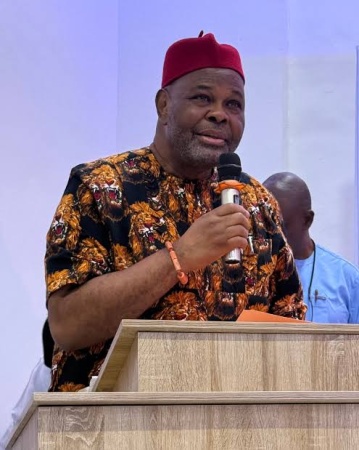
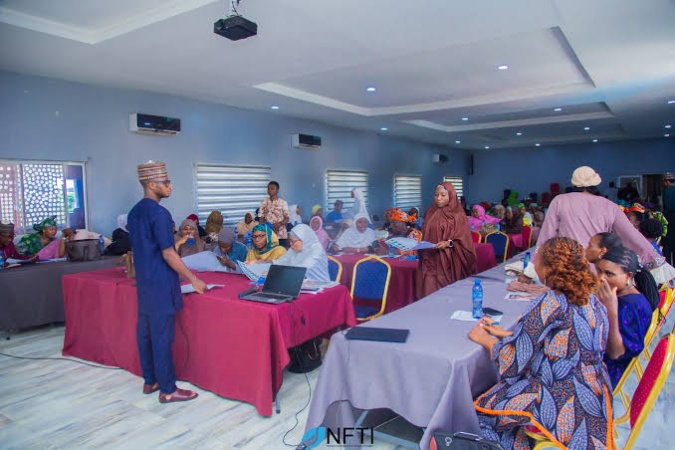
Prof Okey Anueyiagu reviewing the book, Ohanaeze at 50", recently in Lagos
PROTOCOLS
It gives me great pleasure to stand before you today to present a review of Ireke Kalu Onuma’s “Ohanaeze at 50: The Burden of Memory, The Politics of Relevance.”
When the author asked me to write a blurb for this book, I was elated, and when he persisted that I reviewed his work, I knew instantly, that it was going to be a daunting but fulfilling task. This was so, because over the years, I have become an ardent reader of Ireke’s writings, and I have found him to be a brilliant, courageous, effective and an affectionate writer.
When I began to read Ohanaeze at 50, my first reaction was that of astonishment; at a deeply critical analysis of the sheer volume of the book – the 500 pages. I was overwhelmed, and found it to be a procreation of some sort of unimaginable folly of madness in and of itself. But as I read on, it turned out to capture a vital roadmap navigating endless chapters of Igbo anthology – a tortuous journey that teaches us about our past and how to thrive and live a more satisfying life.
This book conditions the reader to the hunt. It makes us feel grateful to know that we can find ourselves in a perpetual state of exploration, making us hungry for more stories and information of a people who remind us of who we were, and who we should have become.
As with most of Onuma’s writings, at least the ones that I have read, there is plenty of real-world bedrock on which he builds his stories. He often centers his work on solid parameters, and he frequently does it so well. In the case of his recent adventure here, there is just so much subject character development to get through, even as they are meticulously laid out in a fascinating manner as a work of both imagination and pedantry propositions.
This book which combines intelligence with savvy, chronicles many of the twists and turns in the many years of Ohanaeze’s existence, by writing the truth as many perceive it to be, even if it may appear at times to be alarmingly proximate, or even dangerous. It offers us an incredible voice that courageously speaks the truth to a people that have treated truth as suspect or a suspicion that stands against a mindless surrender to destruction and anarchy.
Onuma’s book, a portrait of many parts, is really a study in perspective. It is a rummaging for the vantage from which the author indignantly and quietly seethes through the Igbo past and present. Even as I will dare to say that there are also some pages of seeming nonsense and irrelevance, where the author dissolves in his own syntactic echo chamber, it is overall, a brilliant recursive template for the advancement of thought and reason.
My understanding of the risk of writing about tribes, races and religions, is that sometimes you have to risk everything for the truth. I know this fact, because I have found myself squirm in frustration in my own many writings as I believe the author does in this book. Therefore, I will attempt in this review, to stick with the book’s theme, style, context and quality, without spoiling the readers anticipation of the thrust of the book. In other words, my goal will be not to provide readers of my review the opportunity to view my words or sentences as the impetus to read this book, rather, as an inclination to a confounding variable to explore the book more.
As I began to read this book, my worries largely melted away. The book is with a few flaws, but on the whole, it is a wide-ranging landmark exploration of the Igbo experience: searing, propulsive, rich in unfamiliar and original details, and deep in exploring the emergence of the Ohanaeze and its continuing legacy. Realizing the sensitivity of the subject, and the many landmines in the paths of the story, the author commendably trod with extraordinary care and caution, in profoundly revealing the vision of the Igbo, both past and present.
Let me place this work where it belongs, because a book earns part of its meaning from the company it keeps. Ohanaeze Ndigbo has produced, across five decades, a great deal of commemorative writing — anniversary brochures, souvenir programmes, the kind of prose written to be read once at a launch and then filed away with the guest list. It has produced far less in the way of sustained, structurally argued institutional history: a single narrative that moves from the Lagos Ibo Union of the 1930s, through the Ibo State Union, through the ashes of Biafra and the founding charter of 1976, and out the other side into the Mbata era, without losing its argumentative thread. Onuma's book belongs to that thinner, more demanding shelf.
If Igbo popular culture and its ways of life have common idioms and forces that hold them together, the stories contained in Onuma’s book are most probably it. This book subtly establishes hierarchies and several terms of conventional history, geography, and many intercultural encounters deployed dutifully by the author, admiringly, and stilted in an uncommon chronicled style. Even if the book appears to be sometimes boring, it has made imaginative incursions that balances out in a defiant, purposeful and an unapologetic kind of way. In short, and fortunately, Onuma’s historical and deliberately effective feints afford the reader an imaginative frisson and relief from one chapter to another.
What distinguishes it further is its refusal to be either hagiography or hatchet job — a distinction the author draws early and, to his credit, keeps. This is not Ohanaeze as told by its own press office, and it is not Ohanaeze as caricatured on social media by those who have never sat in one of its fractious meetings. It sits closer, in temperament, to the kind of institutional autopsy that Nigerian public life rarely permits itself: an examination conducted by someone inside the house, who loves the house, and who therefore has no patience for its rot. The author's own description — 'an autopsy and a prophecy' — is exact, and I do not say that lightly, because it is precisely the double register a fiftieth-anniversary reckoning requires and almost never gets.
The author while logically addressing longevity as a relevant part of an orga-nization’s standing, equally dismisses time as a standard gauge for the relevance of such an entity. So Ohanaeze is 50, what can it show for these years? This, in my opinion forms the premise upon which the structure and the theme of the book rest. The question of how institutions thrive, grow and survive becomes the judge for Ohanaeze’s philosophical and political evolution. And the author critically addresses this central prism, by dissecting the structural strength and the ways by which it wields authority and power.
The book's first and most obvious strength is its architecture. Nine parts move from Prologue through Foundations, through what the author calls 'The Philosophy of Accommodation' — his treatment of ako-na-uche, the doctrine of strategic caution that has both preserved and imprisoned Ohanaeze — through the Political Evolution, the Internal Dynamics, the Generational Chasm, and into the section I consider the spine of the whole work, 'The Ledger.' That structure is not decorative; it mirrors the discipline of a courtroom. Evidence first, then cross-examination, then verdict. By the time the reader reaches 'The Case for the Defense' set directly against 'The Case for the Prosecution,' the book has earned the right to render judgment, because it has shown its working in full public view rather than smuggling a conclusion in through the tone.
Referencing the Biafra war, the author strenuously, but with precision, ties the atrocities and horrors of the war, its aftermath, and the many upheavals of it, to the political consciousness of the Igbo and Ohanaeze. The sordid memory of the war becomes in this book, a collective trajectory for the place of the Igbo in the Nigeria space. This provides a historical imperative for the emergence of Ohanaeze and its institutional compass and journey.
Kalu Onuma explores in details the plagues and afflictions of ethnic and tribal discrimination directed at the Igbo, and the mendacious maltreatment of its people. In the face of it all, he did not shy away from discussing the well-organized enthronement of systemic, vile and quisquous tribal abuses that the Igbo suffer in the hands of their fellow Nigerians. He inserts Ohanaeze in the middle of these happenings, and wonders if there is any value that the organization provides for the people it was formed to serve and protect.
The significance of the civil war and Ohanaeze’s positions appear to be one of the structural basis of this book. Its focus centered on the fragility and the deadly paralysis that the Igbo people suffered as a result of the war, and how together with the Ohanaeze, they emerged from the debacle and were forced to reintegrate into the Federation. Onuma imagined correctly, and with such clarity on how the Igbo, despite the deep scars and agonies of the sordid war, and with the festering wounds, have survived and sustained an existence. Again, I feel that Onuma cleverly omits the needed deconstruction of the role of Nigeria’s many tribes in the dehumanization of the Igbo and other Biafrans during and after the war. I have wondered why the author on this subject, chose some discretion and lacked generosity. Perhaps, he may be required to dwell more on this.
If I had to recommend a single section to a reader with time for only one, it would be Part Seven. The 'Case for the Defense' does not stint on Ohanaeze's genuine achievements — continuous existence across military regimes and democratic transitions, a platform for collective expression when none existed, cultural stewardship that kept a fractured people legible to itself. But it is the 'Case for the Prosecution' that shows the author's real discipline: the accountability deficit, the funding trap, the spectacle of disunity that hands ammunition to those who would dismiss Igbo claims as 'the whining of a divided people' — his phrase, and a hard one, but earned by the evidence he lays beside it. I do not know of another text on this subject willing to hold both columns of that ledger open at once, without letting either side win by default.
This book achieves significant relevance when it submits itself to self-examination of Ohanaeze’s own faults – banishing the often reserved tendency to always blame external forces for Igbo problems. It focuses inwardly for the problems confronting the Igbo, while also recognizing the ways by which the Nigerian political structures are skewed in imbalances against the Igbo. My only position here, is that the author did not go far enough in exposing the deliberate effort of the enemies of the Igbo in the destabilization of the people. Also, he did not dwell in details, about Ohanaeze’s actions in direct and effective response to this situation.
What stands out in Onuma's book, is that the truths he espouses are factual, and not emotional. His prose is equally untouched by jingoism, and is reinforced by an old-timer’s positive primer and solid evidence. Critical books about tribes and races are something of a countercyclical phenomenon. When all is well within or even between tribes or races, these writings become relatively scarce or unattractive. But when there is profusion of problems within these realms, books like Onuma's Ohanaeze at 50, become essential, and particularly useful. Even as such works signal danger, they suggest some kind of optimism, presupposing that there must be ample time and attention paid to issues in specific terms. Ohanaeze at 50, has supplied us with an excellent embodiment of values about our existence, and along doing so, affirmed absolute conscientious deliberativeness about the actions and activities of the organization.
We must consider this book to be beyond just a history book, or an anniversary account, but as an account of the abundance of Igbo fortitude, intelligence and perseverance. Without essentially celebrating these attributes, this book holds up a mirror to record both the good and the bad, examining the leadership successes and failures over 50 years. The author in his own words, calls this a critical biographical reflection that traces the activities and actions of the institution through several years. He reviewed deeply and with precision, the founding idealism of Ohanaeze, the successes, the upheavals and it’s unfortunate slide into anarchy and disorder. Sadly, even as the author attempts to decipher the root causes of these problems with Ohanaeze, asking the right questions, he fails to provide the reader with sufficient and convincing answers to the questions he raised.
A reviewer who only praises has not done his work, and Onuma, I believe, would say the same of any account of Ohanaeze that only praised. I record the following not to diminish the achievement but because the book itself has taught me, by its own example, to prefer an honest inventory to a comfortable one.
Ireke Onuma is a bold patriot. He sets out his book not as a praise-singing adulatory one, and not as a book sponsored by any group, or persons, but as one that searches deep in the crevices of the Igbo enclaves. He writes with an independent mind. He evidently has “no paymaster”. This is unique. Through this, he is able to present an unbiased argument and a framework populated by honest and fearless assessment. He writes with a vision and an insight of a person who may be operating inside the machines that turn the wheels of the institution.
When the author writes that: “Ohanaeze was born to be the conscience of the Igbo nation. …That is what makes its failure to consistently be that conscience not merely an institutional disappointment – but a civilisational one”, he hits a sensitive cord – a crucial observation of what has become the travails of Ohanaeze. Because the author is threading rather carefully, like one walking on egg shells, he avoids being overtly censorious of Ohanaeze – a duty I wished he performed with utmost criticism, chiding, and if possible, mud-slinging. This is so, because the impairment and malignancy of Ohanaeze, has caused the Igbo immense frustration and distress. The author in this book, and in my own opinion, does not go far enough to point out the historical perfidiousness of the Igbo and their Ohanaeze. Despite his mild criticism of the Oha and the Eze, he fails, willingly or not, to point out in unambiguous terms, the deliberate faithlessness and deceitful treachery of the institution and of those that it represents.
For a book that argues so forcefully against elite capture as one of Ohanaeze's central failures, its own evidentiary base leans heavily on the testimony and speeches of exactly the class it critiques — permanent secretaries, professors, admirals, traditional rulers. The field research listed at the back — displaced families from Orlu, ghost villages in Orsu and Ihiala, teachers attending classes three times weekly — is real and moving, but it arrives as texture rather than as sustained testimony carrying the same weight as the elder statesmen quoted at length elsewhere. A book that indicts elite capture would have been strengthened, not weakened, by giving the market woman in Onitsha and the diaspora graduate driving for a ride-hailing service abroad as much direct voice as the retired admirals receive. The youth chapter gestures honestly at this need; the book does not yet fully answer it.
A remarkable part of this book, appears when the author attempts to create a balance between the institutional mouthpiece of Ohanaeze as a platform for Igbo complaints, and genuine substances. Additionally, he dribbles these variables into national conversations, and debates, yet preserving the strong Igbo values and concerns. The moral authority of the organization, in this book, becomes an imperative by which its achievements and lapses are considered. This strengthens the book’s scholarly positions.
'The Kanu Conundrum: Between the State and the Streets' is one of the braver chapters in the book precisely because it refuses the easy position on either side. I would only observe that it spends more analytical energy on the vacuum of authority the dispute has created than on the legitimate grievances that gave the movement its original following among the young. Given how directly this connects to the generational chasm the book diagnoses elsewhere with such care, a fuller accounting of why so many young Ndigbo found more voice in the streets than in Ohanaeze's chambers would have tightened the connective tissue between Parts Four and Six.
Agbeze Ireke Kalu Onuma veers very glowingly into deploying the effective Igbo styles of speaking in idioms, proverbs and parables. He realizes that in Igbo culture, proverbs and parables are considered sacrosanct in almost all affairs, and are regarded as the richness of the people’s existence. And that these means of communication are fondly referred to as the “palm oil, salt and pepper with which Igbo words are cooked and eaten”. Onuma cleverly adopts the dictum that those who speak in proverbs and parables, use them to express and embody the ingredients of wisdom and the philosophy of life. In this book, he conscripts the Iroko tree as a parable, or perhaps, a metaphor to fittingly describe the greatness or otherwise of Ohanaeze. This is really clever.
The Iroko tree known to the Igbo as Oji is a durable hardwood that is strong, that resists insects, defeats fungi or rot, and does not suffer water damage naturally. This brand of wood serves many purposes: shelter, medicinal; the use of the bark to relieve pain and coughs, and the use of the tree’s sap as an antiseptic, including the sacred and spiritual status of the tree, and so on. Onuma wittingly remembers the famous Igbo proverb that says, “when the Iroko falls, the forest knows”, pointing to the loss of a great person in a community. No wonder he uses this great tree in this book to describe the vitality of Igbo greatness and their survivability against all odds. The nourishments and the all-encompassing values of the Iroko tree represents the Ohanaeze tradition and spirit. A spectacular commitment to Igbo fidelity and spirituality, which recognizes that even as Ohanaeze like the Iroko tree is old and battered, its roots and branches are still capable of producing veritable results of strong lives.
This book presents a solid account of the Ohanaeze story from many angles by someone who may have enjoyed from a distance, a certain amount of privileged proximity. Even as the author writes with such authority and a vision as clear as of one who is an insider, his sense of possession of this story, remains unquestionable. I am particularly impressed that he avoids tactically, not to make it an Igbo book, or a book of grievances of an ethnic constituency, but a global study of a people and their institution, their inheritance, successes and failures.
Beyond the many rhetorics of this book, the Ohanaeze Ndigbo Worldwide should awaken to its original ideals, and rebuild the spirits of resilience in the Igbo by pushing to exorcise from them, that self-deprecating and overzealous tendencies and dispositions. Ohanaeze should lead the way in reversing the slides of their people in education, civil service and commerce. They should return their people to positions in finance, banking, manufacturing, telecom, oil and gas and other serious ventures.
Ohanaeze Ndigbo must leave politics alone and focus on how to help the Igbo validate their Igboness by returning to their historical, structural and cultural paths of the glorious days. They must embark on programs that teach their children that to repudiate their identity and culture as Igbo, is not only a dangerous proposition, but a very problematic tendency.
As a reviewer of this masterclass of a book, I find it expedient to mention that one of the most enormous burdens that the Ohanaeze carries is that of its abdication of the cultural and the ideological imperatives of the Igbo people. The Igbo culture and language are dying a gradual and painful death. And there is no one to the rescue. Ohanaeze must deploy all the resources at its disposal to unravel the dynamics of the distortions on the question of being Igbo or not. It must tackle the dichotomy of the sensitivity of a Mr. Nwike calling himself Wike, or a Nwigwe claiming to be a Wigwe. Ohanaeze must defend and protect the Igbo customs, culture and their traditions.
Ohanaeze at 50 is not a comfortable book, and it was never meant to be one. It is, in the end, exactly what its subtitle promises: a burden honestly carried and a politics honestly named. It belongs on the desk of every serving officer of this institution, every state chapter chairman, every young Igbo professional who has ever wondered aloud whether Ohanaeze still speaks for anyone but itself — and, frankly, on the desk of every elder who believes the organisation's survival to this golden jubilee is achievement enough. It is not. This book says so, with evidence, with structure, and with a love for the institution too serious to let it off easily. I commend it, with the reservations recorded above, and I commend its author, whom I have watched pay the cost of writing it in full.
Ireke Kalu Onuma is a beautifully talented writer, and he carries with him in this book, a referendum on facts – a rather difficult experiment. He has absolute strengths in his convictions, but lacks precision to adequately test his beliefs. And in the absence of thorough self-revelations, turning the pages of this book, somehow, becomes a slightly difficult task. However, it is a book worth reading, and will belong in our memories forever.
OKEY ANUEYIAGU
A Professor of Political Economy
Is the Author of:
Biafra, The Horrors of War,
The Story of A Child Soldier
And
Nigeria and World Affairs,
The Dynamics of Their Complexities