Updating your news feed...
NEWS EXPRESS is Nigeria’s leading online newspaper. Published by Africa’s international award-winning journalist, Mr. Isaac Umunna, NEWS EXPRESS is Nigeria’s first truly professional online daily newspaper. It is published from Lagos, Nigeria’s economic and media hub, and has a provision for occasional special print editions. Thanks to our vast network of sources and dedicated team of professional journalists and contributors spread across Nigeria and overseas, NEWS EXPRESS has become synonymous with newsbreaks and exclusive stories from around the world.






Loading banners
Loading banners...

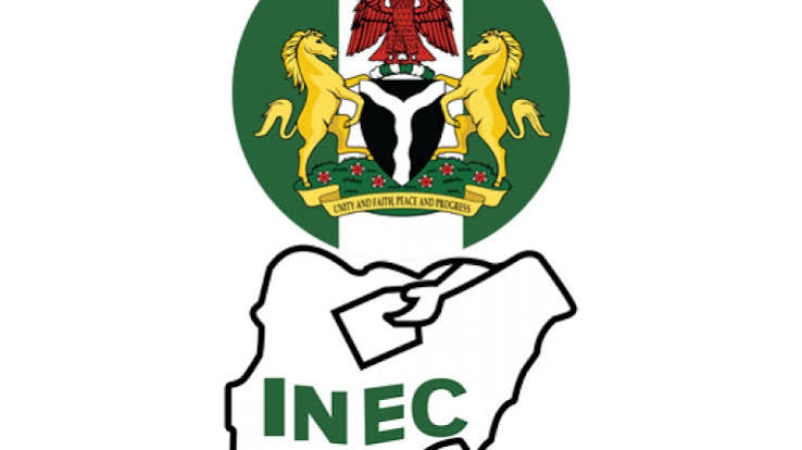
INEC portal displaying candidates for 2027 elections
No fewer than 1,200 aspirants vying for Senatorial and House of Representatives seats in the forthcoming general elections listed the Senior Secondary School Certificate Examination (SSCE) as their highest educational qualification, while the qualifications of 433 other candidates were not clearly classified; a review of candidates’ data shared by the Independent National Electoral Commission (INEC) has shown.
The analysis of the final lists of candidates for the Presidential and National Assembly elections scheduled for January 2027 covers the complete records rather than a sample.
Of the 3,450 candidate entries examined across both chambers, 1,448 were classified as possessing identifiable university-level degrees or postgraduate qualifications. This group outnumbers the 1,200 candidates whose highest listed qualification is at the secondary or SSCE level. A further 433 records were retained in an unspecified or other category because the entries were blank, unclear or inconsistently stated, making clean classification impossible without assigning qualifications without sufficient evidence.
Within the House of Representatives list, 1,022 candidates hold university-level qualifications compared with 884 whose highest listed qualification is secondary or SSCE. In the Senatorial list, 426 candidates have university-level qualifications while 316 list secondary or SSCE as their highest identifiable qualification.
Overall, university-level education appears more common than secondary-level education among the classified candidates in the two lists. The figures, however, cannot be interpreted as representing every candidate’s educational level with certainty given the 433 unclear records.
The two final lists—covering candidates for the House of Representatives and Senatorial Districts—were signed by Rose Oriaran-Anthony, Secretary of INEC.
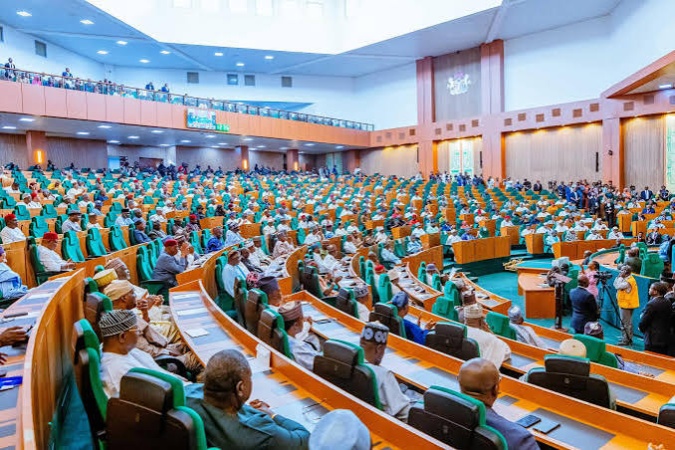
Nigeria’s National Assembly is a bicameral legislature. The Senate, popularly known as the Red Chamber, comprises 109 Senators representing the country’s 109 Senatorial Districts—three per state and one for the Federal Capital Territory. It is presided over by the President of the Senate, assisted by the Deputy President, principal officers and committee chairmen.
The House of Representatives, known as the Green Chamber, consists of 360 members representing the federal constituencies. It is led by the Speaker, assisted by the Deputy Speaker and principal officers, and operates through standing and special committees that conduct legislative work and report to the full House.
Beyond law-making, representation and oversight, the House of Representatives has played a role in promoting democratic ideals, good governance and the resolution of industrial disputes involving the federal and state governments and labour unions. Members of both chambers are elected for four-year terms.
The educational profile of the aspirants emerges against this institutional backdrop. While a larger number of candidates present university credentials, the substantial presence of those listing only SSCE, together with the sizeable group of unclear entries, underscores the varied academic backgrounds among those seeking seats in the 10th National Assembly. INEC’s publication of the final lists provides the primary source for the classification. The review treated incomplete or ambiguous qualification fields separately rather than forcing them into either the university or secondary category, thereby preserving the integrity of the counts.
Nigerian Tribune’s analysis shows that the data do not include a sampling margin of error because the examination covers the full candidate lists. Any residual uncertainty stems solely from the quality of the original qualification entries submitted and recorded. As the January 2027 polls approach, the educational qualifications of those seeking to represent Nigerians in the Senate and House of Representatives remain a matter of public interest, reflecting both the formal requirements of candidacy and the broader spectrum of academic attainment among the contenders.
Meanwhile, stakeholders have raised concern over the low representation of women among candidates for the 2027 National Assembly elections, with only 443 women featuring among the 4,408 candidates cleared by the Independent National Electoral Commission (INEC) to contest the Senate and House of Representatives seats.
The figure represents about 10.1 per cent of the total candidates, with men accounting for 3,965, according to an analysis of INEC’s final National Assembly candidates’ list.
Led by Gender Strategy Advancement International (GSAI), in collaboration with PWAN, CISLAC and PAACA, stakeholders expressed concern at a press conference in Abuja on Thursday, where they called for deliberate measures to remove structural barriers limiting women’s participation and competitiveness in elective politics.
Speaking under the theme “Beyond Participation: Amplifying Women Candidates, Advancing Political Leadership and Building an Inclusive Nigeria for 2027,” the stakeholders said the issue was no longer simply about getting more women to participate in elections, but ensuring that they could secure nominations, gain visibility, compete effectively and win elective offices.
GSAI Executive Director, Adaora Onyechere Sydney-Jack, said: “A democracy cannot be fully representative when women, who constitute nearly half of Nigeria’s population and a significant proportion of the electorate, remain substantially underrepresented in decision-making spaces.”
She said the figures from the 2027 electoral cycle showed that exclusion often started before the general election, particularly during party primaries, where women struggled to obtain nominations for competitive positions.
“The question before Nigeria is not whether women are prepared to lead. The question is whether our political systems are creating equitable pathways for women to compete, be visible, and succeed,” she said.
A breakdown of the INEC figures shows that 115 women are among the 1,195 candidates contesting the 109 Senate seats, while 328 women are among the 3,213 candidates seeking the 360 House of Representatives seats.
The stakeholders said the figures underscored the need for reforms capable of addressing the financial, institutional and social barriers confronting women in politics.
They identified the rising cost of political participation as one of the major obstacles, citing nomination fees, campaign logistics, mobilisation, media visibility and other electoral expenses.
The group called for consideration of reserved seats for women, arguing that such a mechanism could help address historical and structural barriers to women’s representation.
“Reserved seats are not a replacement for competitive elections. They are an inclusion mechanism designed to address historical barriers and ensure that women’s voices, experiences, and leadership perspectives are represented within Nigeria’s legislative institutions,” the stakeholders said.
The demand comes against the backdrop of Nigeria’s long-standing low level of female representation in the National Assembly. The UN has previously reported that women occupy only about four per cent of seats in the National Assembly, while a proposed Special Seats Bill has sought additional legislative representation for women.
The stakeholders also pointed to disparities in female participation across states, noting that their analysis of the senatorial candidates’ list showed no female senatorial candidate in Jigawa, Nasarawa, Niger and Yobe, while Akwa Ibom recorded the highest number with 10 female senatorial candidates.
They said although the number of female National Assembly candidates had risen from 380 in 2023 to 443 in 2027, the increase remained insufficient to alter the wider pattern of male dominance in the electoral field. (Nigerian Tribune)