ADAD
ADAD
Updating your news feed...
NEWS EXPRESS is Nigeria’s leading online newspaper. Published by Africa’s international award-winning journalist, Mr. Isaac Umunna, NEWS EXPRESS is Nigeria’s first truly professional online daily newspaper. It is published from Lagos, Nigeria’s economic and media hub, and has a provision for occasional special print editions. Thanks to our vast network of sources and dedicated team of professional journalists and contributors spread across Nigeria and overseas, NEWS EXPRESS has become synonymous with newsbreaks and exclusive stories from around the world.











Loading banners
Loading banners...

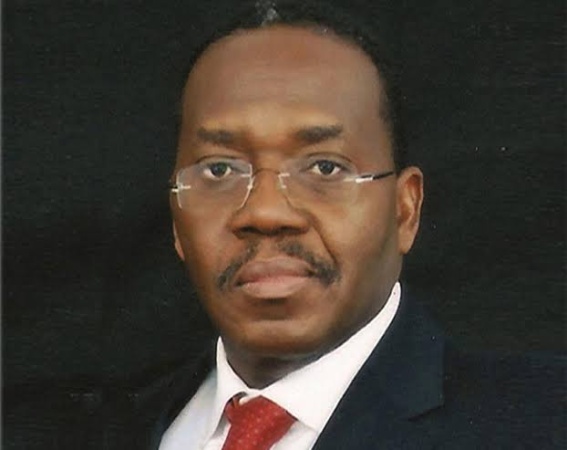
Executive Director, FixPolitics Africa, Anthony Ubani
The #FixPolitics Initiative and other democracy advocates have called for collective action by electoral institutions, political parties, security agencies, citizens and the judiciary to restore confidence in Nigeria’s electoral process ahead of the 2027 general elections.
They made the call at a national dialogue on election integrity and accountability, organised by #FixPolitics Africa, with the theme, ‘Beyond the Electoral Act: Ensuring Integrity and Accountability in Nigeria’s Elections,’ in Abuja on Thursday.
According to the advocates, although Nigeria has a legal framework for conducting elections, the credibility of the 2027 polls will depend largely on the willingness of institutions and individuals involved in the process to obey and enforce the law.
The Executive Director, #FixPolitics Africa, Anthony Ubani, pointed to voter apathy as a clear indication of the growing distrust in the electoral system.
Ubani noted that presidential election turnout declined from 53.7 per cent in 2011 to 26.7 per cent in 2023, describing the trend as evidence that many Nigerians were losing faith in the value of electoral participation.
He said restoring citizens' confidence required electoral institutions to demonstrate transparency and accountability in the management of elections.
“Before we ask citizens to trust the electoral process, the institutions and actors who manage that process must prove that they are worthy of that trust.
“INEC must understand that transparency cannot be selective. When technology fails, Nigerians deserve immediate facts, not explanations after days, weeks or months,” he said.
He also urged political parties to strengthen the integrity of their internal processes, arguing that the credibility of general elections was linked to the manner in which candidates emerged from party primaries.
“Political parties must stop behaving as if elections are warfare and votes are commodities. The integrity of a general election cannot rise above the integrity of the primaries that produce its candidates,” Ubani said.
On the role of security agencies, he called for visible neutrality and professionalism, stressing that their responsibility was to protect voters and the electoral process rather than political interests.
He equally urged citizens and civil society organisations to move beyond post-election complaints by registering to vote, participating in elections, observing polling processes, documenting irregularities and resisting inducement.
“Our courts must remain the last line of defence, not the place where Nigerians routinely go to discover who actually won an election,” he said.
At the event, the Executive Director of Yiaga Africa, Samson Itodo, identified violence, vote-buying and political selfishness as major threats to the integrity of elections in the country.
Itodo, however, said the resilience demonstrated by voters in the recent Osun State governorship election showed that citizens could play a decisive role in protecting the electoral process.
He said large-scale voter participation, coupled with citizens’ determination to protect their votes, would make it more difficult for individuals or institutions to manipulate electoral outcomes.
“We need to see a high level of resistance on the part of citizens. It begins with showing up for elections. When people show up for elections in large numbers, it makes it difficult for them (fraudsters) to cook results. Citizens have the power to influence the work,” he said.
Itodo cautioned citizens against apathy, saying that assuming electoral outcomes had already been predetermined would only make it easier for those seeking to rig elections.
Similarly, the founder of Citizens Hub, Aisha Yesufu, urged Nigerians with integrity and capacity to participate actively in politics rather than abandon the political space to individuals with less commitment to public interest.
The socio-political advocate said the perception of politics as a dirty game had discouraged many people of integrity from joining political parties or contesting elections.
She challenged people with “white integrity” to participate in politics and demonstrate that it was possible to navigate the political space without compromising their values.
The Executive Director, Civil Society Legislative Advocacy Centre, Auwal Rafsanjani, said electoral credibility should not be regarded as the responsibility of the Independent National Electoral Commission alone.
He called for accountability across the electoral chain, including INEC officials, political parties, security personnel and judicial officers involved in election-related processes.
“We already have a legal framework. What we need is to ensure enforcement of the laws we have.
“We must demand operationalisation of our legal framework and ensure that actors behave and act responsibly; there must be sanctions as consequences for doing otherwise,” Rafsanjani said.
The Founder of Working Moms Africa, Mary Ikoku, also condemned the level of impunity allegedly exhibited by some political actors, warning that failure to address such conduct could undermine the credibility of the 2027 elections.
Ikoku called for sanctions against political actors, public officials and other stakeholders who violate electoral laws, irrespective of their political affiliations.
She described credible elections as a continuous process that begins with joining a political party and conducting transparent internal activities, extending through campaigns, media coverage, voting and post-election litigation.
“Our law does not need to be just fine on paper; it needs to work for the people. The 2026 Electoral Act already stipulates what constitutes electoral fraud; violators must be prosecuted,” she said.
Also, Saheed Adeleye, a member of the Nigerians in Diaspora Organisation Americas, advocated the introduction of diaspora voting in Nigeria.
Adeleye argued that Nigerians living abroad remained affected by developments in the country and should therefore have the opportunity to participate in elections.
He urged citizens and stakeholders to intensify advocacy before the National Assembly and state Houses of Assembly for the amendments required to the Constitution to facilitate diaspora voting.
The speakers collectively stressed that credible elections in 2027 would require more than amendments to electoral laws, insisting that accountability, enforcement, citizen participation and institutional neutrality must become defining features of Nigeria’s democratic process.