ADAD
ADAD
Updating your news feed...
NEWS EXPRESS is Nigeria’s leading online newspaper. Published by Africa’s international award-winning journalist, Mr. Isaac Umunna, NEWS EXPRESS is Nigeria’s first truly professional online daily newspaper. It is published from Lagos, Nigeria’s economic and media hub, and has a provision for occasional special print editions. Thanks to our vast network of sources and dedicated team of professional journalists and contributors spread across Nigeria and overseas, NEWS EXPRESS has become synonymous with newsbreaks and exclusive stories from around the world.




















Loading banners
Loading banners...

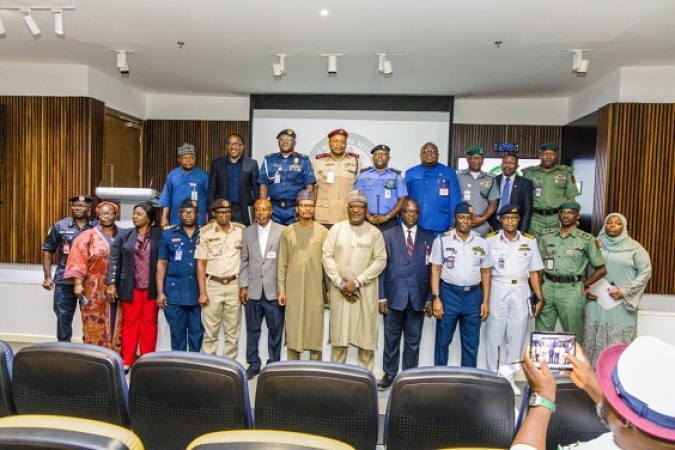
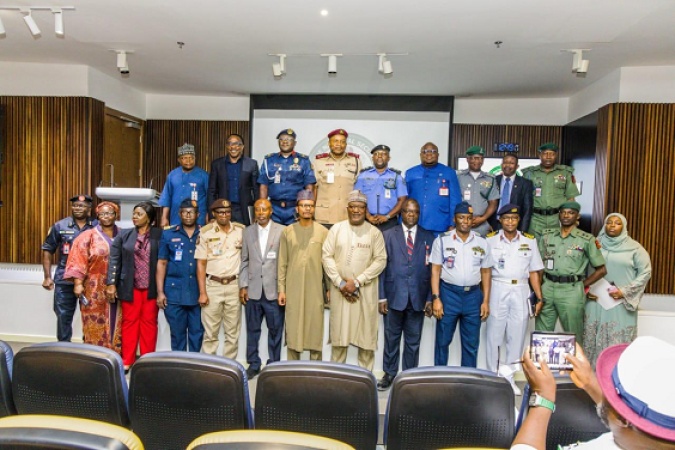
A cross section of participants
By CHIDO ONUMAH
On July 2, 2026, Nigeria’s defence, intelligence, law enforcement, anti-corruption, emergency response, and public safety agencies took an extraordinary step by jointly addressing the nation on the state of national security. The initiative emerged from consultations among the leadership of these institutions under the coordination of the National Security Adviser (NSA).
The Joint Security Press Briefing marked an important milestone in Nigeria’s efforts to address its evolving security challenges. More than a presentation of operational statistics, it demonstrated the growing maturity of Nigeria’s national security architecture—one built on coordination, transparency, accountability, and strategic communication.
National security is often judged by the day’s headlines. A terrorist attack, a kidnapping, an arms seizure, or a successful rescue quickly captures public attention. Such scrutiny is both natural and necessary in a democracy where citizens rightly expect accountability from those entrusted with their safety. Yet headlines, by their very nature, tell only part of the story. They illuminate individual incidents but rarely reveal the broader trajectory of a nation’s security landscape.
The true measure of national security lies not in isolated events but in sustained progress. It is reflected in institutions that steadily improve their capacity to prevent attacks, dismantle criminal networks, rescue victims, prosecute offenders, protect vulnerable communities, and earn the confidence of citizens. It is measured by the ability of government institutions to work together against increasingly interconnected threats. Above all, it is reflected in the quiet confidence with which ordinary Nigerians go about their daily lives.
The nature of security itself has changed dramatically. Terrorism no longer exists in isolation. It intersects with banditry, kidnapping, arms trafficking, organised crime, cyber-enabled offences, illicit financial flows, drug trafficking, human trafficking, economic sabotage, and disinformation. These threats reinforce one another, creating complex networks that no single institution can confront alone.
This reality demands what security practitioners describe as a whole-of-government approach. Military operations must be supported by intelligence. Law enforcement must be reinforced by effective prosecution. Financial intelligence must disrupt criminal financing. Border management must leverage technology. Anti-corruption institutions must safeguard public resources. Emergency response agencies must protect vulnerable populations. Strategic communication must build public trust. And citizens themselves must remain active partners in safeguarding their communities.
The operational record presented during the briefing provides tangible evidence that this integrated approach is increasingly translating into measurable outcomes.
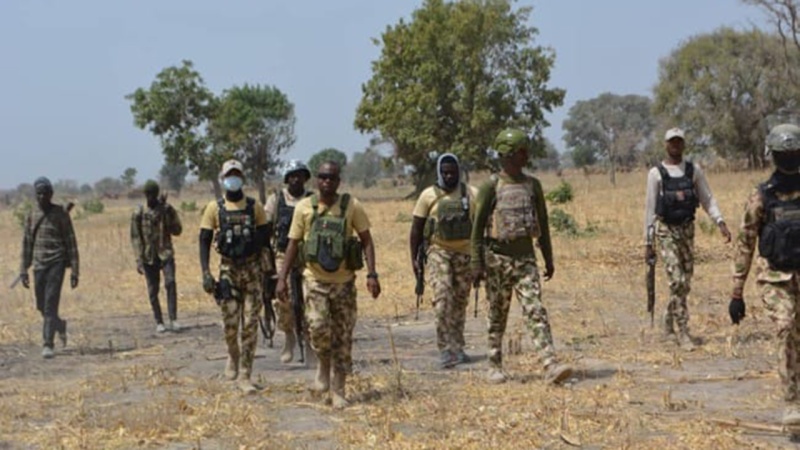
The Armed Forces of Nigeria maintained one of their highest operational tempos in recent years, conducting more than 14,000 security operations across the country. These intelligence-driven missions resulted in the rescue of over 1,500 kidnapped victims, the neutralisation of nearly 1,600 terrorists and insurgents, and the recovery of hundreds of firearms, thousands of rounds of ammunition, and numerous explosive devices. Beyond these impressive figures lies a more important reality: terrorist enclaves have been disrupted, criminal mobility has been constrained, and many communities have regained a greater sense of security.
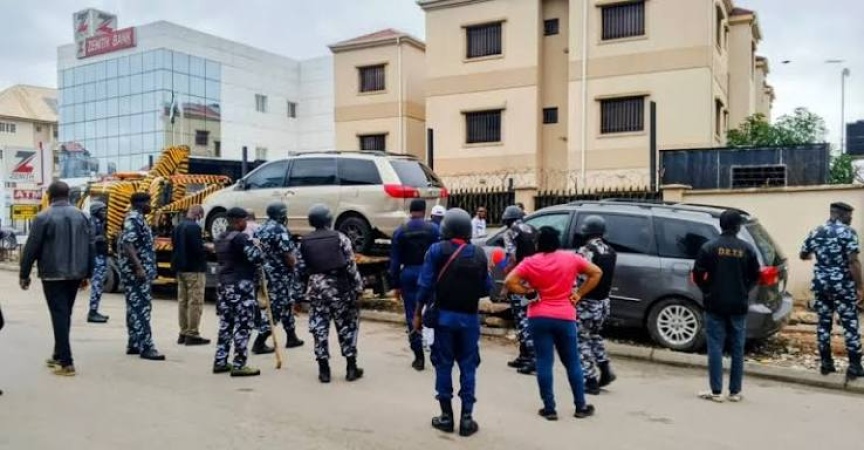
The Nigeria Police Force complemented these efforts through intelligence-led policing, dismantling criminal syndicates, arresting kidnappers, terrorists, gunrunners, and other violent offenders, while strengthening border security and community policing. The growing collaboration among the Police, the Armed Forces, the Department of State Services, INTERPOL, and other partners reflects a clear recognition that today’s threats transcend institutional boundaries.
The Department of State Services continues to underscore the decisive role of intelligence in modern security operations. Intelligence-led interventions enabled the rescue of hundreds of kidnapped victims, disrupted arms-trafficking networks, foiled criminal plots, intercepted pirates, and supported successful terrorism prosecutions. Increasingly, intelligence is becoming the bridge that connects prevention, enforcement, and justice.
Security operations, however, achieve lasting value only when they culminate in accountability under the rule of law. The Federal Government’s Mass Trial Programme has now secured 1,721 terrorism-related convictions since its commencement in 2017, with more than half of those convictions recorded in 2026 alone. Equally significant is the fact that defendants against whom sufficient evidence could not be established were discharged or acquitted, demonstrating that justice in a constitutional democracy demands both accountability and fairness.
Another dimension highlighted during the briefing deserves equal attention: the fight against corruption. National security is secured not only by weapons but also by institutions of integrity. Corruption diverts scarce resources meant for military equipment, intelligence capabilities, policing, disaster management, infrastructure, and essential public services. It weakens institutions, erodes public trust, and creates conditions that criminal and extremist groups readily exploit.
This is why the work of the Economic and Financial Crimes Commission (EFCC), the Independent Corrupt Practices and Other Related Offences Commission (ICPC), and the Nigerian Financial Intelligence Unit (NFIU) constitutes an indispensable pillar of Nigeria’s national security strategy.
The EFCC recorded significant successes between January and April 2026, securing 915 convictions in cases involving economic and financial crimes nationwide.
Among those convicted were four high-profile public officials: Mr. Robert Orya, former Managing Director and Chief Executive Officer of NEXIM Bank; Mr. Albert Bassey, former Senator representing Akwa Ibom North-East Senatorial District; Mr. Chukwunyere Anamekwe Nwabuoku, former Acting Accountant-General of the Federation; and Mr. Saleh Mamman, former Minister of Power.
These convictions underscore the Commission’s sustained commitment to enforcing accountability, combating corruption, and ensuring that those who abuse public trust are brought to justice, irrespective of status or position.
Between January and June 2026, the ICPC received 271 petitions from citizens, investigated 234 cases, filed 25 cases before the courts, and secured 20 convictions. It also recovered nearly ?5.8 billion in proceeds of crime—resources that rightly belong to the Nigerian people and can now support legitimate national priorities.
Beyond investigation and prosecution, the ICPC strengthened preventive mechanisms through Systems Studies, Corruption Risk Assessments, institutional monitoring, and the establishment of Anti-Corruption and Transparency Units across Ministries, Departments, and Agencies. Hundreds of public sensitisation programmes, anti-corruption clubs in schools, television broadcasts, and digital engagements reaching millions of Nigerians further demonstrate that building integrity requires public participation as much as law enforcement.
The relationship between corruption and insecurity is now well established globally. Terrorist organisations flourish where institutions are weak. Organised criminal networks exploit corruption to evade justice. Illicit financial flows undermine development and weaken national resilience. Protecting public resources is therefore inseparable from protecting national security.
Financial intelligence constitutes another critical pillar of this broader strategy. Nigeria’s removal from the European Union’s list of high-risk countries for money laundering and terrorism financing reflects years of institutional reform, stronger regulatory frameworks, improved inter-agency coordination, and enhanced international cooperation. Financial intelligence, sanctions implementation, beneficial ownership transparency, and asset tracing are today as important in disrupting terrorist networks as conventional military operations.
The Nigeria Customs Service and the Nigeria Immigration Service are equally modernising border management through intelligence-driven enforcement and technology-enabled surveillance. Their efforts to combat illicit trade, irregular migration, wildlife trafficking, currency smuggling, and transnational organised crime strengthen both national security and economic stability.
The briefing also reminds us that security extends well beyond the battlefield. The National Drug Law Enforcement Agency’s dismantling of Nigeria’s largest clandestine methamphetamine laboratory illustrates how organised crime increasingly threatens national stability. The Nigeria Security and Civil Defence Corps continues to protect critical national infrastructure against economic sabotage. The Federal Road Safety Corps, Federal Fire Service, Nigerian Correctional Service, NAPTIP, and NEMA each contribute in distinctive ways to safeguarding lives, protecting communities, and strengthening national resilience.
Collectively, these institutions affirm an important truth: national security is fundamentally about protecting people.
Perhaps the most significant lesson from the Joint Security Press Briefing is the recognition that communication itself has become a strategic national security capability.
Violent extremists, organised criminal groups, and hostile actors increasingly weaponise misinformation, disinformation, fear, and propaganda. Their objective is not merely to inflict physical harm but also to undermine public confidence in state institutions and weaken social cohesion.
Governments cannot afford to cede this information space to those who profit from fear, falsehood, and division. Strategic communication requires the timely dissemination of accurate, verified, and balanced information. Transparency builds trust. Trust encourages cooperation. Cooperation generates intelligence. Intelligence saves lives.
It Is therefore encouraging that Nigeria’s security institutions are increasingly investing in public engagement, community dialogue, media relations, digital communication, and proactive efforts to counter misinformation. Communication is no longer merely an administrative function; it has become an operational capability that strengthens every aspect of national security.
Yet even the most capable institutions cannot succeed without the active partnership of citizens. Communities remain the first observers of suspicious activities. Traditional rulers, religious leaders, civil society organisations, professional associations, the media, youth groups, and responsible citizens all have indispensable roles in preventing violence, promoting resilience, and strengthening national unity.
The progress reflected in the Joint Security Press Briefing should inspire neither complacency nor triumphalism. Nigeria continues to confront determined adversaries who constantly adapt their methods. Sustained operational pressure, institutional reform, technological innovation, regional cooperation, and public vigilance remain indispensable.
At the same time, our national conversation must be guided by evidence rather than pessimism alone. Democracies are strengthened when governments communicate honestly about both achievements and challenges. Public confidence grows when citizens witness institutions learning, adapting, collaborating, and remaining accountable.
Ultimately, the success of any national security strategy will not be measured solely by operational statistics or dramatic headlines. It will be measured by citizens going about their daily business without fear and communities trusting the institutions responsible for their protection.
That confidence is built patiently—one successful operation, one rescued victim, one criminal conviction, one recovered public asset, one institutional reform, one strengthened partnership, and one truthful conversation at a time.
This is the quiet work of national security. It rarely commands banner headlines or dominates the news cycle. Yet it is this patient, disciplined, and often unseen work that secures the nation, strengthens democratic governance, protects public confidence, and preserves hope for future generations. Beyond the headlines lies the enduring story of institutions working together, citizens playing their part, and a nation steadily building a safer and more resilient future.
•Chido Onumah, PhD, is Special Adviser to the National Security Adviser on Strategic Communication and Civil Society Liaison. (onumah.chido@nsa.gov.ng)