 ADAD
ADAD
Updating your news feed...
NEWS EXPRESS is Nigeria’s leading online newspaper. Published by Africa’s international award-winning journalist, Mr. Isaac Umunna, NEWS EXPRESS is Nigeria’s first truly professional online daily newspaper. It is published from Lagos, Nigeria’s economic and media hub, and has a provision for occasional special print editions. Thanks to our vast network of sources and dedicated team of professional journalists and contributors spread across Nigeria and overseas, NEWS EXPRESS has become synonymous with newsbreaks and exclusive stories from around the world.



.webp)







Loading banners
Loading banners...

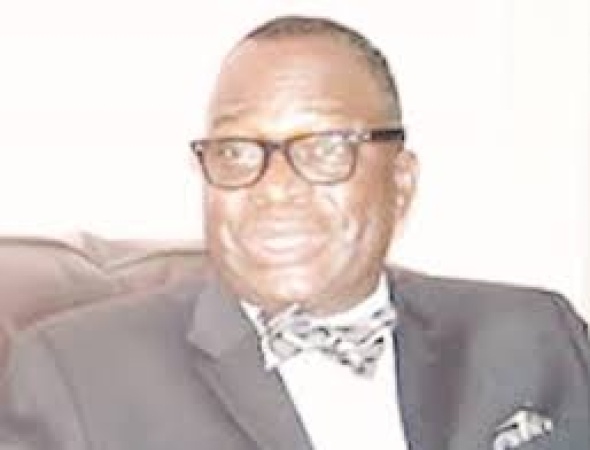
Senator Arise
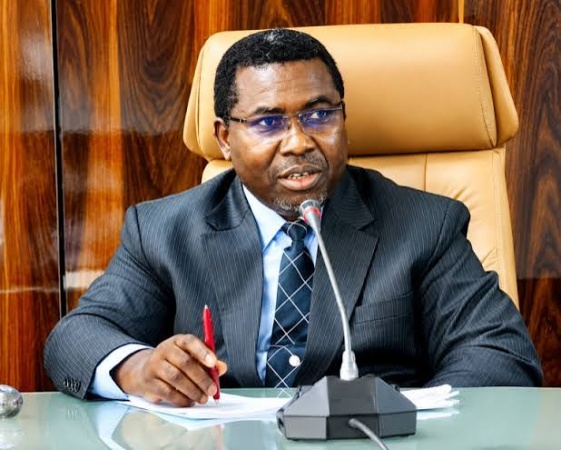
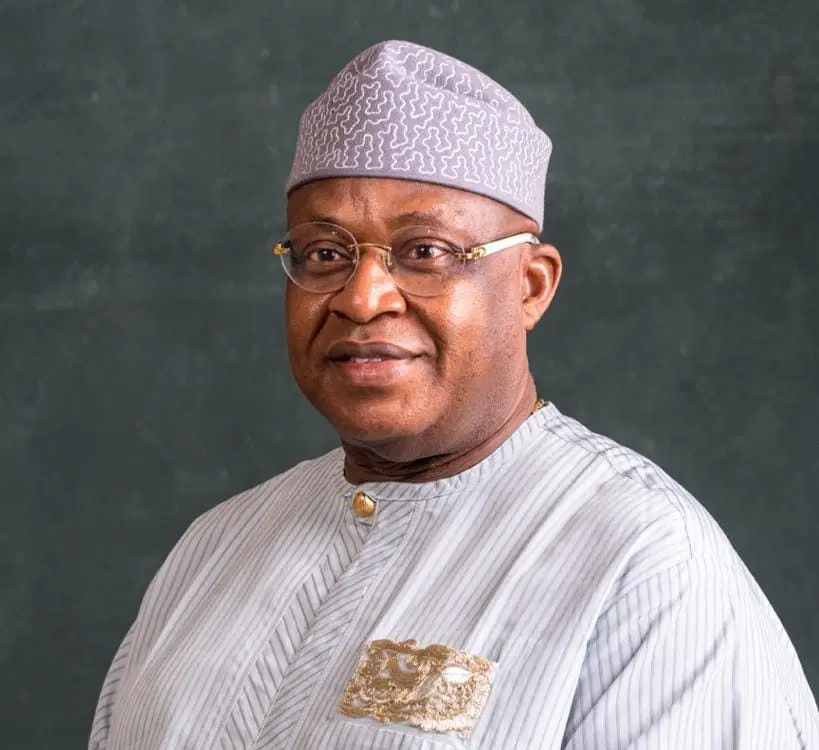
Senator Ayodele Arise, a chieftain of the All Progressives Congress (APC) in Ekiti State and an aspirant for the Ekiti North senatorial ticket, has raised concerns over the overbearing posture of governors ahead of the party’s primaries to pick its candidates. Taiwo Amodu brings excerpts from an interactive session with him.
IN recent times, you have expressed strong reservations for consensus option in selection of candidates. But the Electoral Act makes provision for direct primary and consensus. In the event that the party decides to adopt a consensus candidate, what actually do you have against consensus?
The party cannot simply say it has adopted consensus without following the laid-down guidelines. Consensus means that, among the contestants, there is an agreement on the person to be supported for a particular position. Where that is not achievable, the party should proceed to direct primaries to select its candidate. That is the clear provision.
The party cannot just insist on consensus in all cases. How can that happen when you have more than four contestants from the same party seeking the same office? Does consensus then mean that a governor, or one or two leaders, should simply point at someone and say, “This is our candidate”? There is no provision for a picking system in that arrangement. It is either consensus or direct primaries.
Everyone has a constitutional right to aspire to any office. So, if the party says it wants to adopt consensus, let it clearly spell out the process for achieving that consensus. Without the consent of the participants saying, “We agree that this is our consensus candidate,” it cannot be for one or two individuals to impose candidates and claim they emerged by consensus. What kind of consensus is that?
Let me use my senatorial district as an example. I am a leader there. In terms of ranking and years of service in public office, I am the second most senior political office holder in the district. Apart from Dr. Kayode Fayemi, who served as governor under the APC and is now a former governor from the same local government as I am, I come next.
So, if a decision is to be taken under the guise of consensus, and those making such arrangements are seated at the table, I should also be there. It cannot be for him alone to say, “I am picking this person.” That is not consensus. As I said, he is free to support whoever he believes is best suited for the office. But if other candidates do not agree, then everyone should go to the polls.
If people do not want due process to take place, and do not want a popular candidate to emerge, then I submit that such people are working against the interest of the party, against the interest of whoever holds office in that state, and against the broader interest of the national election itself.
There is nothing I am asking for that is out of place, unreasonable or selfish. Nothing at all.
This will most likely be the last election I participate in. I will be 70 this year, and the primary will take place before my 70th birthday. I have told them clearly what I want from the party. If they cannot give it to me in recognition of my efforts, sacrifices and contributions to the party, then let us go to the field. Let the people of the senatorial district decide and say, “We do not want this man; this is who we want.” If you allow them to freely choose even your preferred candidate, so be it.
But if I see that the process leading to the emergence of that preferred candidate is fraudulent, I will not accept it. I will go to court, and I will reclaim my mandate, because we must teach our people that leadership must be built on decency and integrity. Without those values, no one can truly lead.
Have you tried to convey your feelings to the governor? The party has always maintained that the governor is the leader of the party in the state…
I have told you that before I began this journey, I consulted all of them. In December 2024, I first went to Chief Niyi Adebayo, the first civilian governor of Ekiti State and, by every definition, the political godfather of the current governor. He served as his Personal Assistant, later as his Chief of Staff, and has continued to promote his political career. So, I went to speak with him first. After meeting him, I went to see Dr. Kayode Fayemi. I told him I wanted to run. He said we should focus first on the governorship election and that afterwards he would know what to do. Later, reports began to circulate that Fayemi himself might contest. I could not fault that, because for many former governors, the next natural political destination after leaving office is the Senate. However, I had already made up my mind that since he had denied me the opportunity twice before, if he decided to run this time, and I had already informed him of my intention, then we would both meet on the field. From the outset, I was determined to reclaim that Senate seat. From there, I went to meet the governor himself. He asked me, “Have you spoken to my boss?” I said yes. That I had gone to Governor Adebayo and informed him, and that I had also gone to Governor Fayemi. He asked, “You have told Fayemi too?” I said yes. He then said he would call him. I replied, “Call him now, I have already told him.” After that, I left. Even before then, I had called my brother and friend, Adedayo Adeyeye, and informed him. I also called Segun Oni and told him. These are the people who, in my view, should be able to say, “Yes, this man deserves the ticket; give it to him.” Beyond that, I do not know what the issue is. They then started handpicking people — the senator, the House of Representatives member, and I told them I would not agree. If my name is not the one submitted for Ekiti North, I will not accept it. I had already seen the direction they were going, and to this day, I do not know what offence I committed against them.
Governors have cashed in on these consensus arrangements to determine who gets what in their states. Do you think the consensus provision added to the new Electoral Act has given governors too much power over other politicians? Do you see this as a challenge, using your state as a case study?
What I have observed is that there is really no method outside proper voting that does not give governors an advantage. Even with voting, they still enjoy the upper hand because they often influence those appointed to supervise the election, those who collate results, and those responsible for transmitting them. In some cases, people are allegedly confined in offices while events are unfolding elsewhere, with results already prepared for submission. We are still developing our democracy and trying to strengthen it. Governors have been vested with enormous powers. It is often only when they have not won an election that they are willing to listen. Once they win, many begin to act like emperors in their states, almost without exception. When people are given such powers, unless they exercise restraint, they tend to use them to the fullest extent. The state also has more resources than individuals seeking office, so governors can deploy logistics and other support to favour their preferred candidates. In this particular case, however, they have a difficult situation on their hands. That is why there is little they can do. As I have always said, once I believe in something, people should not trample on it or provoke me, because it is my right. We have two federal constituencies in my senatorial district. By the end of the tenure of the current senator, Cyril Fasuyi, in May next year, his constituency would have held the Senate seat for 24 years. His local government alone has produced senators for three terms, while that federal constituency has had about two senators from there. The other local government has also had eight years. In my federal constituency, which comprises Oye Ekiti and Ikole, I am the only person who has represented it in the Senate, and that was for just one term.
Are you saying the zoning favours you?
Of course, if it is a matter of zoning, I am the person who should go. There is no question about that. These people have monopolised the position, and in the end, it is similar to what happens in other places where power is concentrated in a few hands without being meaningfully used for the benefit of the people. My four years in office had significant impact on the people of my federal constituency. That is why I do not understand the parameters being used to justify sending someone else back when I am here, having waited for 15 years while they held the position without challenge. I have said clearly that this is my time. Now they are arguing that they do not want to give it to me and do not want to follow the law. That will not stand. I have told them that if they try to impose someone by force or submit another person’s name unlawfully, I will challenge it in court and reclaim that mandate, because I am fully prepared for them.
So what is your message to your constituents, considering this is not the first time you are aspiring to represent them and they are already familiar with your capacity? What is your message to them in this scenario?
I have gone around the 56 wards, and I can say confidently that I have not experienced this level of support at ward level in any election before. I told them that they have only seen a fraction of what I was able to do in four years. Now I am going in as a ranking senator. My focus, as always, is their welfare, development, and progress — ensuring that their children can access education and empowering them to overcome poverty. That is my message. I often remind people that I once served as Chairman of the Senate Committee on Privatization, while Vice President Jonathan was Chairman of the National Council on Privatization. In that structure, I was essentially the one overseeing activities linked to the Vice President’s office. That is part of how relationships and trust are built in politics. After that period, when I sought further opportunities, I never asked him to sell any government company to me or to give me shares. All I requested was a federal university, which he approved. That is the difference. People go to the Senate for different purposes. I went with a clear purpose, and I achieved it for my people. Today, villages where land used to sell for ₦10,000 or ₦20,000 have transformed significantly. In one town in my local government where one of the campuses is located, I was told that land now sells for about ₦600,000. When I built my house in 2006, I bought the land for ₦50,000. Today, along the main road passing through that town, you cannot find land for less than ₦15 million to ₦20 million. That reflects the prosperity I brought to my people. As a matter of fact, many people pray for me daily because of what they have experienced. This is the story across most towns in my senatorial district. That university now has continuing education centres in Ifaki, Idosi, Oye, Ayegbaju, Ilupeju, Ikole, and even Omuo. Why would anyone think they can defeat me on the field when I have tangible results to show? Beyond the university, I have impacted every local government with visible projects. I established ICT centres in several areas, built markets, and provided health facilities. For example, in Ilejemeje, I built a health centre in a place called Eda. In Moba, I have an ICT centre in front of the palace, which the traditional ruler frequently references. In the same Moba, I also built a market for the people. I did not even fully realise at the time that I was laying foundations for the future.
You just said it was mentioned to you that Dr. Kayode Fayemi is also aspiring for the senatorial seat, but there is an insinuation that you are his anointed candidate. How do you respond to that?
That was only at the initial stage when I began my consultations. When I spoke with him, I asked him directly if he was also going for the Senate seat, and he said no. I even attended his birthday in February last year, and up until the time of the affirmation for Governor Oyebanji, I did not see him. We were not in regular communication. So, for anyone to suggest that Governor Fayemi is sponsoring me is not correct. I understand that when he returned, there were claims that he was being awaited and that various endorsements and alignments were already ongoing. From what I gathered, at some point, the three of them, Otunba Niyi Adebayo, Governor Fayemi, and the current governor met and discussed the senatorial district, since we all come from the same local government. They reviewed all the aspirants on the table. According to what I was told, Governor Fayemi reportedly expressed the view that, among all the aspirants, Senator Arise was the most qualified. I believe they all reached some level of agreement on that at the time. What happened afterwards, I cannot really say.
Away from Ekiti politics, let’s discuss a burning national issue which is state police.
The House of Representatives has laid their reports, but the Senate has not laid its own report and the new IGP has set up a committee on state police, and they have submitted to the Senate adhoc Committee on constitution review. Tell us why they should fast track the Constitution review so that they can make provision for state police
Our greatest challenge in Nigeria today is security, and successive presidents have had to grapple with it. While there appear to be gradual improvements, the problem is still far from abating. The Federal Government, with a unified police structure, is required to deploy personnel from Abuja to all parts of the country. The state police system has numerous advantages. One is its capacity to address insecurity more effectively, and another is its potential to create employment for young people. When states establish their own police structures, they will be able to recruit young graduates who have been unemployed for years. It will open up significant job opportunities, with even smaller states potentially employing a minimum of about 2,000 new officers. That aspect is often overlooked. Beyond employment, the effectiveness lies in local knowledge. Officers will be drawn from the communities they serve, meaning they understand the terrain and the people. When a stranger enters such a community, local officers can quickly identify that something is unusual and monitor the situation closely. That familiarity helps in detecting threats early and preventing harm before it escalates. The advantages of State Police are therefore substantial. Even the President’s exposure to systems like those in the United States may be influencing some of these considerations. I also studied in the U.S., and I saw how layered their policing structure is. Even my campus had its own police unit. If a crime occurs on campus, those officers handle it and can transfer the case to city police.
City police handle their jurisdiction, including roles such as traffic enforcement and issuing citations for offences like speeding, while federal agencies like the FBI handle cross-border or federal crimes. Once such cases arise, local and state authorities complete their part and then hand over to federal agencies where necessary. In that sense, state policing fits into a broader security architecture. State police handle local matters, while federal agencies intervene in cases that go beyond state boundaries. I have examined this critically and believe it is one of the most effective approaches to tackling insecurity in Nigeria. In addition, there are complementary efforts such as the use of security lighting in vulnerable areas, especially since many of these crimes occur under cover of darkness, although some also happen during the day. There is also the need to leverage technology, including surveillance systems that can help identify individuals even when they attempt to conceal their identities. Technology that enhances detection and analysis would be very useful in supporting security operations. Ultimately, governance is about continuous thinking and adaptation. No single person has all the answers, but what matters is the willingness to act. The current administration has also sought international cooperation, including engagement with the United States for training and logistical support. These are steps in the right direction toward strengthening security. It will not be achieved overnight, as insecurity is a complex challenge that takes time to resolve. However, with sustained effort and cooperation among stakeholders, it is possible to move steadily toward a more secure and equitable society.
Do you think there is any attempt or any plan to frustrate the amendment to the constitution?
Yes, I do not know why there is delay, but the fact that this thing, this pronouncement, came not too long ago and is now dovetailing to an election period, some of these people are fighting the battle of their lives to come back. I mean, the man that is contesting against me now, who is seated in the Senate, he cannot sit down for too long because there is fire on the mountain. And that is the situation with many of them. So the period that we’re in actually has contributed to the slow movement. But I think the president should call the Senate President to let him see the urgency and what we have here. If he has to call an emergency sitting, he can do that. They can do the harmonisation between the House of Representatives and the Senate, and ensure that the bill is passed and now sent to the states, for the concurrence.
Do you nurse the fear like many others that state governors, over time will abuse the use of state police?
There is no doubt about that, that it is a possibility, not even an ordinary possibility, it is something that is very likely to happen. The part of the development process is for us to ensure that when you do such things, many of them do invest with government money, but when they leave, they keep on visiting the EFCC, and ICPC. We have organs of government saddled with the responsibility of their answering to their actions while they are in office. The success of those organisations is another issue. Whether they have been able to successfully prosecute them and deal with them to serve as a deterrent to others, we don’t know, but the law still provides that you can answer to your crimes. So if a governor stands up and shoots somebody while he’s in office, or you order somebody to be shot, and you have the evidence that he is responsible, then whatever goodwill he has amassed while in office, those things will disappear overnight.
That means he wields awesome powers while in office?
Yes, that is the constitution, because he has immunity against prosecution. But that does not mean he is going to get away with it for life. So sometimes we say the maximum a governor can stay in office is only eight years, and he has forever to answer for his crimes. (Sunday Tribune)



