 ADAD
ADAD
Updating your news feed...
NEWS EXPRESS is Nigeria’s leading online newspaper. Published by Africa’s international award-winning journalist, Mr. Isaac Umunna, NEWS EXPRESS is Nigeria’s first truly professional online daily newspaper. It is published from Lagos, Nigeria’s economic and media hub, and has a provision for occasional special print editions. Thanks to our vast network of sources and dedicated team of professional journalists and contributors spread across Nigeria and overseas, NEWS EXPRESS has become synonymous with newsbreaks and exclusive stories from around the world.





.webp)















Loading banners
Loading banners...

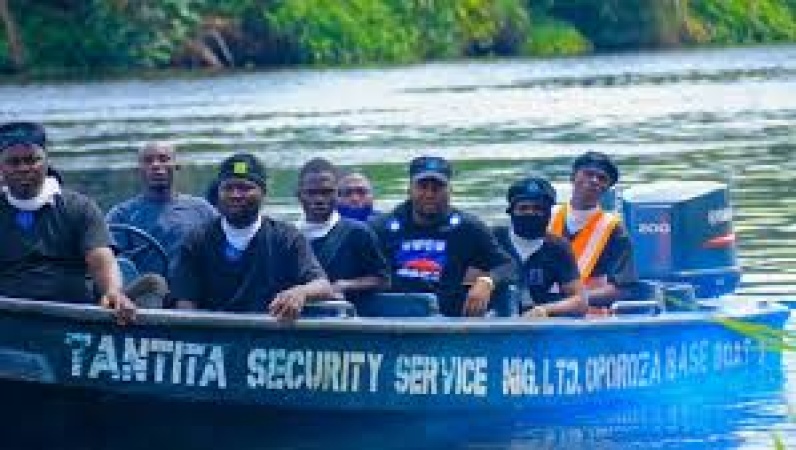
Tantita Security Service
The Joint Committee On Petroleum Resources of the Senate and House of Reps, has been presented with a report detailing how Tantita Security Services Nigeria Limited discovered a sophisticated illegal export channel that has been funnelling vast quantities of stolen Nigerian crude oil to offshore vessels through clandestine jetties and wooden boat networks operating under the cover of darkness and mangrove forest canopies.
The report presented to the joint committee described how Tantita’s marine patrol teams, during expanded operations across the Niger Delta waterways, intercepted multiple boats specifically designed and constructed for the sole purpose of ferrying stolen crude to ships loitering offshore. These vessels, committee members were told, are not ordinary fishing boats pressed into occasional criminal service but rather purpose-built craft optimised for the unique demands of stealth petroleum transport.
According to testimony in the report, Tantita operatives discovered hundreds of sacks filled with crude oil and condensate awaiting shipment at hidden locations along the region’s extensive coastline. These sacks, the report explained, had been carefully positioned at clandestine jetties constructed in remote areas where visibility from both land and sea was limited. The jetties themselves were rudimentary but functional, built from local materials in a manner that allowed them to blend into the surrounding environment.
The joint committeee was presented with chilling testimony about how these illegal export operations function as a parallel crude oil marketing system, completely outside any legitimate regulatory framework. Ships loitering in international waters, the report indicated, send smaller vessels to collect stolen crude from the clandestine jetties. These ships, reportedly seeking discounted Nigerian crude, then transport the illicit cargo to refineries and markets around the world, depriving Nigeria of billions of dollars in legitimate revenue.
The report before the joint committee emphasised the scale of this illicit trade. The wooden boats, commonly referred to as “banana boats” in local parlance due to their long, narrow design, are capable of transporting significant quantities of stolen crude in each trip. Multiple trips per night, coordinated across multiple jetties, can result in the movement of tens of thousands of barrels of stolen crude to offshore vessels over the course of a single week.
Committee members were shown evidence of how the criminal networks have optimised every aspect of this illegal supply chain. The banana boats are constructed from lightweight materials that allow them to navigate shallow waters where larger enforcement vessels cannot follow. Their engines are carefully maintained for reliability, and their crews are trained in evasion techniques designed to avoid detection by security patrols. The entire operation, the report noted, runs with a level of logistical coordination that would be impressive in any legitimate commercial enterprise.
The joint committeee was further informed that Tantita’s marine patrols have had to develop specialised tactics to counter these illegal export operations. Unlike land-based theft, which can be addressed through pipeline monitoring and ground patrols, the maritime dimension requires capabilities including high-speed interceptor boats, night-vision equipment, and intelligence networks that can track vessel movements across vast stretches of coastline.
In one notable operation detailed in the report before the joint committee, Tantita personnel spent weeks gathering intelligence about a particularly active illegal jetty before moving to interdict it. The operation involved coordination with naval assets and resulted in the seizure of thousands of litres of stolen crude and the arrest of multiple suspects. The jetty itself was subsequently destroyed to prevent its continued use, though the report noted that criminal networks have shown a frustrating ability to reconstruct such facilities quickly.
Testimony before the committee highlighted the international dimension of this criminal enterprise. The ships receiving stolen Nigerian crude are often flagged in countries with minimal enforcement of maritime regulations, the report indicated. Their ownership is frequently obscured through complex corporate structures designed to evade tracing. This international character of the crime, committeee members were told, complicates enforcement efforts that are necessarily focused on Nigerian territory and waters.
The report before the joint committee called for enhanced international cooperation to address the offshore dimension of crude oil theft. Specifically, it recommended that Nigeria work with regional and international partners to identify, track, and interdict the vessels that receive stolen crude. It also suggested that ports suspected of accepting illegally obtained Nigerian crude should face diplomatic and economic pressure to cease such practices.
Committee members expressed particular concern about the implications of these illegal export operations for Nigeria’s reputation in global oil markets. If buyers can reliably obtain discounted Nigerian crude through illegal channels, the report noted, it undermines the legitimate market for Nigerian oil and potentially encourages further theft. Several committee members indicated that they would raise this issue with relevant international partners and organisations.
The joint committee was also informed about the environmental risks posed by the illegal export operations. The transfer of crude from sacks to boats to offshore vessels, conducted without any of the safety protocols required in legitimate operations, frequently results in spills that contaminate marine ecosystems. These spills, the report noted, add to the cumulative environmental damage already inflicted on the Niger Delta by decades of oil industry operations and criminal activity.
Despite these challenges, the report before the joint committee expressed confidence that continued enforcement can significantly reduce illegal exports. The success Tantita has already achieved in interdicting boats and destroying clandestine jetties has reportedly disrupted the operations of multiple criminal networks, forcing them to expend more resources on evasion and reducing the profitability of their illicit activities. (The Sun)



