ADAD
ADAD
Updating your news feed...
NEWS EXPRESS is Nigeria’s leading online newspaper. Published by Africa’s international award-winning journalist, Mr. Isaac Umunna, NEWS EXPRESS is Nigeria’s first truly professional online daily newspaper. It is published from Lagos, Nigeria’s economic and media hub, and has a provision for occasional special print editions. Thanks to our vast network of sources and dedicated team of professional journalists and contributors spread across Nigeria and overseas, NEWS EXPRESS has become synonymous with newsbreaks and exclusive stories from around the world.


























Loading banners
Loading banners...

Over the past few years, remote work has fundamentally reshaped one of the oldest assumptions about modern life: that where you live must be tied to where you work.
For decades, relocating abroad typically meant a corporate transfer, retirement plan, or navigating a complex immigration process. Today, the rise of remote work, digital entrepreneurship, and creator-led businesses has dramatically expanded who can realistically consider living overseas. Increasingly, professionals are discovering that their careers are no longer anchored to a single city—or even a single country.
That shift is already visible in migration patterns. Recent reporting on where Americans are increasingly relocating abroad currently highlights how housing affordability, lifestyle flexibility, and global mobility are reshaping where people choose to live.
Fabulous mountain village with high cliffs and waterfalls, Lauterbrunnen, Switzerland
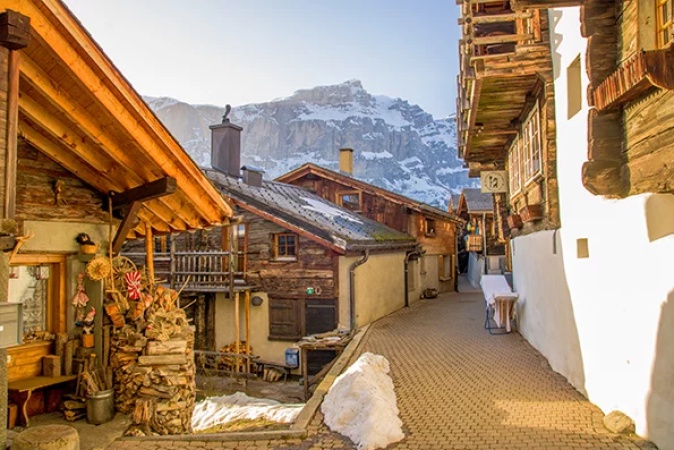
An alpine village in Switzerland, where small communities like Albinen have offered financial incentives to attract new residents.
A recent Gallup analysis finds that roughly one in four U.S. employees now work remotely at least part of the time, a shift that continues to expand the number of professionals able to consider living abroad—or build location-independent careers as entrepreneurs, creators, and digital nomads.
As explored in a recent Forbes analysis of countries attracting digital nomads, the growing population of location-independent workers is beginning to influence how countries think about residency, immigration policy, and digital nomad visa programs.
For remote workers, founders, freelancers, and creators whose careers can travel with them, geography is becoming increasingly flexible.
Santorini island, Greece.
A village on the Greek island of Santorini. Some smaller Greek islands have introduced relocation incentives aimed at attracting new residents.
Across Europe, Asia, and parts of the Americas, a growing number of countries and regional communities are experimenting with an unusual strategy to attract new residents: offering financial incentives to move there.
In some cases, the incentives include direct cash grants. In others, they take the form of tax breaks, housing subsidies, or startup support aimed at entrepreneurs, remote professionals, and digital nomads willing to relocate.
For people already considering a move abroad—or exploring digital nomad visas and other residency pathways—these programs are becoming part of a broader conversation about global mobility. Relocation incentive programs are simply the next chapter in that story.
Below are eight countries currently offering relocation incentives to attract new residents.
Italy
Italy has become one of the most well-known countries offering relocation incentives, particularly in small southern villages facing population decline.
Several towns in regions such as Calabria, Sardinia, and Puglia have introduced programs offering grants to newcomers willing to relocate and start businesses. Some programs provide up to €30,000 over several years to residents under certain age thresholds who commit to moving to small towns with declining populations.
In addition, a number of Italian municipalities have attracted global attention with symbolic €1 homes, although buyers must typically commit to renovating the properties within a set timeframe.
Switzerland (Albinen)
The alpine village of Albinen in Switzerland launched one of Europe’s most widely publicized relocation programs.
To combat population decline, the town offers financial incentives to families willing to move there permanently. Eligible residents can receive roughly 25,000 Swiss francs per adult and 10,000 francs per child, provided they purchase property and commit to living in the village for at least 10 years. The program is designed to attract younger residents to sustain the community’s long-term viability.
Japan
Japan faces one of the most significant demographic shifts in the world, with rural communities shrinking as younger populations migrate toward major cities.
To address this imbalance, the government has introduced relocation subsidies for families willing to move from Tokyo to rural areas. Some programs offer grants of up to 1 million yen per child, alongside additional support for housing or starting local businesses. The goal is to encourage population redistribution while revitalizing smaller towns.
Spain
Spain has experimented with several rural revitalization programs as well. In some small villages facing population loss, local governments and private initiatives have offered incentives ranging from housing assistance to employment guarantees for new residents.
While the exact terms vary by region, the broader objective remains the same: attracting families and entrepreneurs willing to bring new economic life to aging communities.
Greece
Greece has also introduced targeted relocation incentives for certain island communities experiencing population decline.
On the island of Antikythera, for example, families relocating to the island have been offered housing, land and monthly stipends to encourage long-term settlement. Programs like this reflect a broader effort to sustain small island communities that might otherwise struggle to maintain population levels.
Ireland
Ireland has launched several initiatives aimed at revitalizing remote coastal communities.
Through programs connected to the “Our Living Islands” strategy, the government is encouraging people to relocate to smaller islands with financial support for property renovation and local development.
While these incentives often target Irish citizens or EU residents, they highlight a growing trend of governments offering financial support to attract new residents to underpopulated regions.
Croatia
Croatia has experimented with relocation incentives in smaller municipalities seeking to attract younger residents.
In some towns, local governments have offered housing subsidies or financial grants to individuals willing to purchase and renovate homes in rural areas. Combined with Croatia’s growing digital nomad visa program, the country has become increasingly attractive to remote workers considering a move abroad.
Chile (Patagonia Startup Programs)
Chile has taken a slightly different approach by offering financial support to entrepreneurs willing to relocate.
Through initiatives like Start-Up Chile, entrepreneurs from around the world can receive funding and support to build companies while living in the country. While the program focuses on startups rather than permanent relocation, it effectively attracts global talent to the region.
A coastal town in Croatia, where growing digital nomad programs and local relocation incentives are attracting new international residents.
Relocation incentives can be appealing, but they rarely represent a simple financial windfall. Many programs require commitments such as purchasing property, starting businesses, or remaining in the area for several years.
Still, these initiatives reveal a broader shift in global migration patterns. As populations age and urban centers continue to grow, smaller communities are increasingly competing to attract new residents—and the rise of remote work is making that competition possible.
For remote workers, entrepreneurs, and creators whose careers are no longer tied to a single location, relocation incentives may simply be one more factor in a much larger decision about where to live.
Many professionals exploring these programs are also considering countries that offer strong infrastructure for remote work, vibrant international communities, and emerging digital nomad visa pathways.
As global mobility continues to expand, the question for many professionals is no longer whether they can live abroad—but which place might offer the most compelling version of daily life. (Forbes, but headline rejigged)