ADAD
ADAD
Updating your news feed...
NEWS EXPRESS is Nigeria’s leading online newspaper. Published by Africa’s international award-winning journalist, Mr. Isaac Umunna, NEWS EXPRESS is Nigeria’s first truly professional online daily newspaper. It is published from Lagos, Nigeria’s economic and media hub, and has a provision for occasional special print editions. Thanks to our vast network of sources and dedicated team of professional journalists and contributors spread across Nigeria and overseas, NEWS EXPRESS has become synonymous with newsbreaks and exclusive stories from around the world.





















Loading banners
Loading banners...

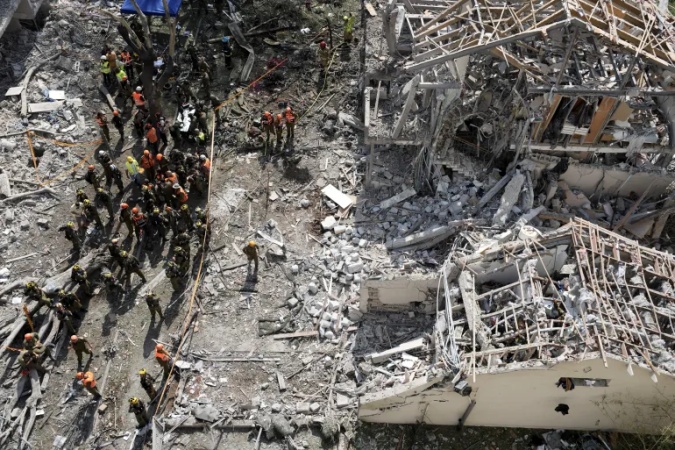
bombing site in Iran
The escalating war in Iran is raising concerns over potential drug shortages and price hikes in Nigeria, as disruptions to global shipping routes threaten pharmaceutical imports in Africa and across the globe.
Industry experts say prolonged instability in the Middle East, particularly around key maritime corridors used for global trade, could delay shipments of medicines, drive up freight costs and worsen Nigeria’s dependence on imported drugs.
Nigeria, which relies heavily on imports of pharmaceutical supplies, this could have severe ripple effects, according to experts.
For instance, Nigeria’s pharmaceutical import bill runs into billions of dollars annually, reports say.
Recent Customs data show the country imported $1.14 billion worth of pharmaceutical products in 2024, with India and China dominating supply chains.
India accounted for $380 million (33.3 percent) of imports, while China supplied $310 million (27.4 percent). Other suppliers include the Netherlands, the United Arab Emirates and France.
Common imported drug categories include antimalarials, antibiotics, analgesics, antiretrovirals, insulin and vitamins, many sourced from Asian manufacturers.
Analysts warn that disruptions affecting shipping routes from Asia could directly affect the availability of these critical medicines in Nigeria.
Also, Nigeria was projected to import N675 billion ($450 million) worth of drugs from India in 2025, according to Statista, highlighting the scale of the country’s dependence on Asia’s pharmaceutical industry.
This import dependence is already raising concerns as the Iran war begins to impact trade flows.
A report by ‘The Economic Times’ estimates that Indian pharmaceutical exporters are already facing losses of between $300 million and $500 million due to disruptions linked to the wars.
“The escalating war in Iran is disrupting global ocean freight and air cargo networks, raising the risk of supply bottlenecks, higher shipping costs and shortages of critical goods worldwide,” the Associated Press reported.
“With vessels rerouting from the Gulf and flights disrupted across key Middle Eastern hubs, the conflict is delaying shipments of essential commodities, from pharmaceuticals to fertilisers, raising concerns of global price spikes and supply constraints,” the report added.
Implications of Nigeria’s import dependence
Nigeria’s healthcare system is particularly vulnerable to such shocks because most medicines used in the country are imported.
Abdu Mukhtar, national coordinator of the Presidential Initiative for Unlocking the Healthcare Value Chain, recently revealed that Nigeria imports 80 percent of essential medicines, 100 percent of vaccines and 99 percent of medical devices, underscoring the scale of the country’s reliance on foreign supply chains.
Ayodeji Alaran, chief executive of PBR Life Sciences, says the industry is at a critical turning point.
“The country’s pharmaceutical industry is at a pivotal moment,” Alaran said.
“About 70 percent of medicines consumed in Nigeria are imported. This leaves our healthcare system vulnerable to currency fluctuations, supply chain disruptions and escalating costs,” he added.
Even though a recent statement by the National Agency for Food and Drug Administration and Control (NAFDAC) in October 2025 revealed that Nigeria’s dependence on imported medicines has declined slightly from 70 percent to 60 percent, imports still dominate the market.
Freight disruptions could raise drug prices
Industry players say the Iran conflict could trigger a ripple effect across shipping costs and import logistics.
“There’s definitely going to be a ripple effect. Freight disruptions could raise drug pricesct as freight costs surge and petrol prices increase, due to disruptions resulting from the war,” said Temitope Akindele, corporate services manager at Fidson Healthcare Plc.
Rising freight rates could quickly translate into higher prices for medicines at Nigerian pharmacies.
Ikpe Chikamara, a pharmaceutical retailer, said the market has not yet seen immediate price spikes but warned that the situation could change if the conflict persists.
“I predict a hike in drug prices and possible shortages of critical drugs due to delays in freight and the high cost of imports,” he said.
“Although Nigeria’s drug imports are mainly from India and China, the ripple effect from dwindling oil prices and high fuel costs could also affect the country’s import capacity,” Chikamara added.
Because most pharmaceutical imports are priced in dollars, any rise in freight costs, which is also paid in foreign currency, compounds the burden on importers when the naira weakens.
The combination of higher dollar-denominated freight charges and exchange-rate volatility creates what some analysts describe as a “double whammy” for pharmaceutical importers.
Ultimately, those costs are often passed on to patients, many of whom already pay for healthcare out of pocket.
In Nigeria, out-of-pocket spending accounts for over 90 percent of total healthcare expenditure, largely due to limited health insurance coverage, the National Institute of Health reports. To date, the situation still exists as only 10 percent of Nigerians are under health insurance coverage.
Some categories of medicines could be particularly vulnerable if disruptions persist.
Nigeria’s growing burden of non-communicable diseases means the country relies heavily on imported drugs for chronic conditions such as diabetes and cancer.
According to Statista, the importation of oncology drugs used in cancer treatment was projected to reach N472.13 billion ($314.75 million) in 2025.
The broader pharmaceutical market was valued at $1.84 billion in 2025, with projections indicating it could grow to $2.36 billion by 2029, reflecting rising demand for medicines across the country amid a growing population.
Experts warn that disruptions in global supply chains could affect not only cancer treatments but also widely used medicines such as insulin, antibiotics and antimalarials, which remain essential for Nigeria’s public health system.
Global health concerns
Health authorities say the effects of the conflict may extend beyond supply chains.
Hanan Balkhy, regional director for the Eastern Mediterranean at the World Health Organisation (WHO), warned that the crisis is already affecting health systems both within the region and across the globe.
“The Eastern Mediterranean crisis is escalating, threatening civilians and global health systems,” she said during a press conference.
Some experts argue the crisis could push Nigeria to accelerate local pharmaceutical production.
Despite persistent challenges, domestic drug manufacturing capacity has gradually expanded in recent years.
“Local manufacturers can tap the opportunity to produce locally instead of relying on expensive imports, ensuring that high-quality Nigerian-made alternatives remain the most viable option for the healthcare system,” Akindele said.
However, analysts caution that local production alone cannot fully shield Nigeria from global supply shocks.
Nigeria’s pharmaceutical manufacturers still rely heavily on imported Active Pharmaceutical Ingredients (APIs), the core raw materials used to produce medicines, which are largely sourced from India and China.
This means that even locally produced drugs can still be disrupted if global raw material supply chains are affected.
A source within the Pharmaceutical Manufacturers Group of the Manufacturers Association of Nigeria (PGMAN), who requested anonymity at the time of this report, said it is still too early to determine the full impact of the Iran war.
However, the source warned that prolonged conflict could push drug prices upward.
“There is a high likelihood of price increases if the crisis persists, given Nigeria’s heavy reliance on imported pharmaceutical products,” the source said.
For policymakers, analysts say the crisis is another reminder of the need to strengthen domestic pharmaceutical manufacturing, improve health financing and build a more resilient medical supply system.
Without these in place, global supply-chain disruptions will keep exposing Nigeria’s fragile health systems, further exacerbating the crisis in the treatment and management of critical illnesses like cancer and diabetes. (BusinessDay)