 ADAD
ADAD
Updating your news feed...
NEWS EXPRESS is Nigeria’s leading online newspaper. Published by Africa’s international award-winning journalist, Mr. Isaac Umunna, NEWS EXPRESS is Nigeria’s first truly professional online daily newspaper. It is published from Lagos, Nigeria’s economic and media hub, and has a provision for occasional special print editions. Thanks to our vast network of sources and dedicated team of professional journalists and contributors spread across Nigeria and overseas, NEWS EXPRESS has become synonymous with newsbreaks and exclusive stories from around the world.























Loading banners
Loading banners...

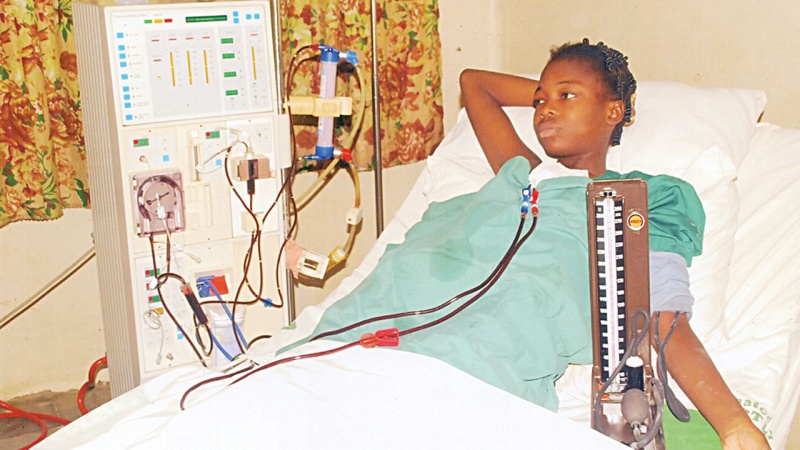
Patient under going dialysis
Nephrologist and Clinical Director at St. Nicholas Hospital, Dr Ebun Bamgboye, has raised concern about the burden of kidney disease in Nigeria, warning thousands are dying because they cannot afford such as dialysis.
The warning came as the world marked World Kidney Day, a global health initiative observed every second Thursday in March to highlight importance of kidney health and rising cases of kidney-related illnesses.
Speaking at the 20th World Kidney Day and 26th anniversary of kidney transplant services at theospital, Dr Bamgboye, described kidney disease as a growing public health crisis that requires urgent attention.
According to him, studies showed that about 10 per cent of any population lives with chronic kidney disease. Applying that estimate to Nigeria’s population of over 230 million suggests that nearly 23 million Nigerians could already be affected.
Bamgboye explained that one of the biggest dangers of chronic kidney disease is that it often progresses silently until the kidneys eventually fail.
“Once the kidneys fail and the patient does not receive treatment, the person will die. Every year, thousands of people develop kidney failure and require dialysis or transplantation,” he said.
However, he noted that access to treatment remains a major challenge for many patients. Dialysis, which is essential for survival in kidney failure cases, costs between N50,000 and N100,000 per session and is typically required three times weekly.
“Very few people can afford dialysis long-term. If you add up all the patients currently receiving dialysis in Nigeria, they are not even up to 10,000. That means many people who need treatment are dying,” he said.
The nephrologist also identified common conditions, such as hypertension and diabetes as leading causes of kidney failure in the country, noting that a large number of Nigerians remain unaware that they suffer from these illnesses.
“Only about 30 per cent of people with hypertension know they have it, and among those diagnosed, only a small fraction receive proper treatment,” he added.
Bamgboye further explained that diseases such as malaria, hepatitis and other chronic infections thrive in warmer and more humid environments, increasing the risk of kidney damage, particularly when combined with dehydration.
He therefore stressed the importance of prevention and early detection, urging Nigerians to adopt healthier lifestyles.
“The best strategy is prevention. Exercise regularly, avoid obesity, monitor your blood pressure and blood sugar levels, stay hydrated and avoid excessive use of over-the-counter medications,” Bamgboye advised. (The Nation)



