ADAD
ADAD
Updating your news feed...
NEWS EXPRESS is Nigeria’s leading online newspaper. Published by Africa’s international award-winning journalist, Mr. Isaac Umunna, NEWS EXPRESS is Nigeria’s first truly professional online daily newspaper. It is published from Lagos, Nigeria’s economic and media hub, and has a provision for occasional special print editions. Thanks to our vast network of sources and dedicated team of professional journalists and contributors spread across Nigeria and overseas, NEWS EXPRESS has become synonymous with newsbreaks and exclusive stories from around the world.








Loading banners
Loading banners...

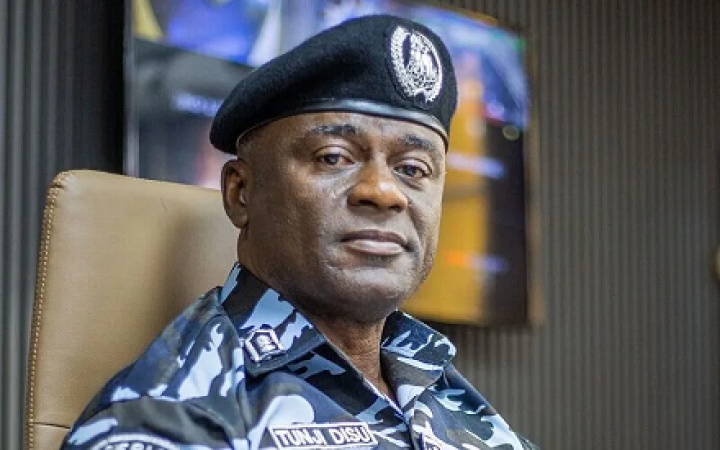
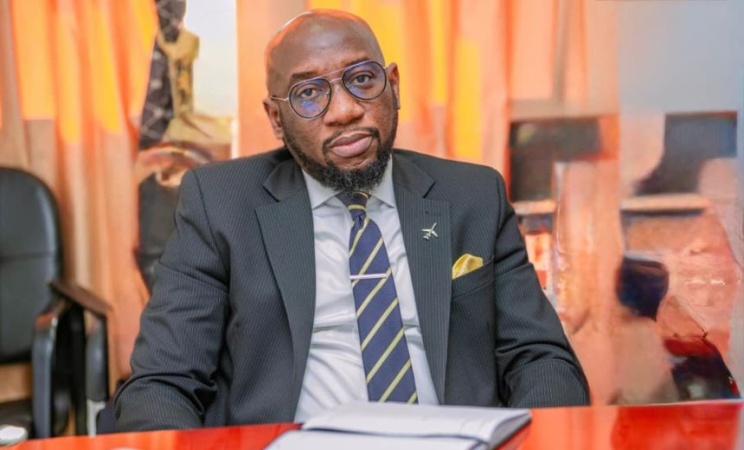
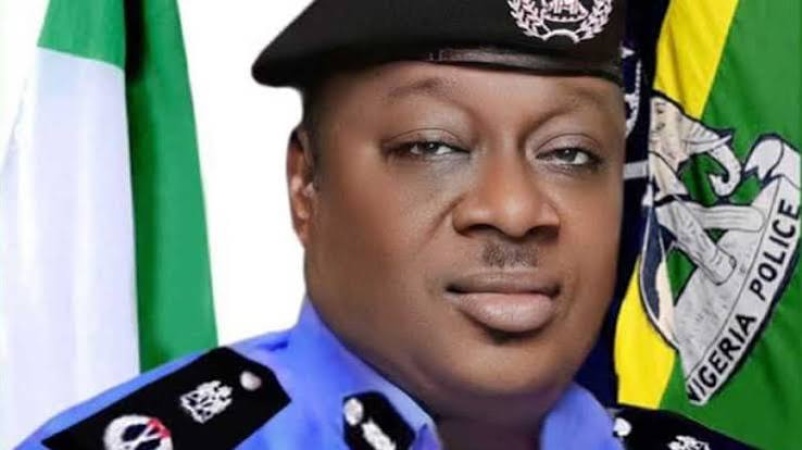
Inspector-General of Police, Tunji Disu
There is a raging debate over the proposal to introduce state policing architecture in the country. The issue is currently generating a motley of opinions among public analysts, leaders of various ethnic nationalities and other stakeholders.
According to Sunday Sun investigations, whereas some Nigerians on the southern side of the divide are rooting more for the idea citing how it would help to curb insecurity, their counterparts from the North have expressed cautious optimism, with some foreseeing a peculiar misuse.
Overall, there is a general consensus that when the novelty becomes operational, there is a strong tendency that state governors might seize the initiative and use it to oppress the opposition. And so to that extent, a strong guard rail around the initiative to ensure its success is being advocated.
What state policing is
While providing an insight into what state policing really is, Prof Yakubu Ochefu, President General of Opiatoha K’Idoma, an umbrella socio-cultural organisation of the Idoma people in Benue State said: “When we talk about state police, we are not saying anything new. It’s not as if we have not had state police in this country before, or there’s no state police in other parts of the world.
“We call it state police, but it’s actually jurisdictional policing, whereby you break down control – jurisdictional control – to local government, state and federal levels, as it exists in many parts of the world.
“I think Nigeria is one of the few countries in the world that operates a combined structure from top to bottom. All other countries have decentralised their policing system.
“So in terms of structure, everybody agrees that the first response to any criminal situation is usually an advantage, and that is what the state police bring to the table. So the whole thing is not much about structure. It’s about the character of the individuals that are going to manage that structure.
“We have some of the best structural systems of any kind in the world in Nigeria. But they don’t work because we politicise structural engagements, and we politicise the people that manage the structures. That is why things don’t work for us as they work in other jurisdictions.”
President of Middle Belt Forum (MBF), Dr Bitrus Pogu also provided a context, and while expressing his support for the idea, he called it “the panacea for addressing the festering insecurity in the country.”
Going back the memory lane, the MBF noted that before the military took over in 1966, the country had the regional government, and native authorities, and there was the Native Authority Police, adding that “the state police that people are talking about now is similar to that.
He recalled that the Native Authority Police took care of the day-to-day running of the Native Authority, emphasising that some of the states today are not even up to the size of the native authorities the country had before the military intervention in 1966.
Initiative critical for Nigeria’s survival
Also supporting the idea, the Yoruba Council of Elders (YCE) said that the establishment of state police is critical to Nigeria’s survival amid worsening insecurity across the country.
The elders argued that a decentralised policing system would strengthen grassroots security, improve intelligence gathering and restore public confidence in law enforcement.
The council commended President Bola Tinubu, the National Assembly, and the Inspector-General of Police, Mr. Tunji Disu, for supporting moves toward the creation of state-controlled policing structures.
The Secretary-General of the council, Chief Oladipo Oyewole, said the elders remain firm in their longstanding position that a decentralised policing structure is essential for national stability and grassroots security.
In a response to enquiries by Sunday Sun on the renewed debate over state policing, Oyewole stressed that the creation of state police would help communities better protect themselves.
He noted that policing is most effective when it is closely tied to local knowledge and community relationships.
According to him, “in developed economies, the police are the best friends of established communities. When a stranger arrives in a community, the host is usually required to register the person. If such a process is not followed, an established safety network can easily detect the presence of a stranger. That is how internal security is protected. Only a friend can protect the welfare and well-being of residents.”
He added that such closeness between the police and the people would be better achieved through a state-controlled policing framework.
Right step in right direction
In the same vein, two Igbo groups: Igbo Heroes and Icons Foundation and Igbo National Council (INC), have welcomed the state policing idea.
While welcoming President Bola Tinubu’s directive on the move, Igbo Heroes and Icons Foundation described it as a step towards addressing Nigeria’s security challenges.
The National Coordinator of the group, Chinedu Nsofor argued that decentralised policing would improve intelligence gathering and response times, especially in rural areas.
Nsofor said: “For years, security experts, civil society groups, and policy advocates have argued that Nigeria’s highly centralised policing system is no longer capable of effectively responding to the country’s evolving security challenges.
“Among the organisations that have consistently advocated decentralised policing is the Igbo Heroes and Icons Foundation, which has repeatedly called for restructuring of Nigeria’s security architecture to empower states and communities to protect themselves.
“The Foundation argues that the present system where policing decisions are largely controlled from Abuja cannot adequately address the realities of insecurity in a vast country with 36 states, the Federal Capital Territory, and 774 local government areas”. Nsofor stated.
INC on its part applauded the president’s efforts at actualising the long-standing demand for state police in Nigeria as well as the proposed amendment of the Nigeria Constitution to allow for the establishment of State Police.
President of INC, Chilos Godsent believes that state police will effectively address the menace of insecurity threatening Nigeria’s corporate unity under a true federalism.
Also lending its voice to the establishment of state police, the Coalition of South East Youth Leaders (COSEYL), called it a welcome development whose time has come.
COSEYL President General, Comrade Goodluck Egwu Ibem, said the step represents a significant move toward restructuring the nation’s security architecture and addressing the persistent insecurity that has plagued many parts of the country.
Also in support of the idea is a chieftain of National Rescue Mission (NRM), Rev. Emmanuel Olorunmagba.
He said: “In my view, the introduction of state police is a step in the right direction for improving Nigeria’s security landscape, as it will allow law enforcement to be more localised and attuned to the unique security challenges faced by different regions.
“The national police force, as it currently stands, often struggles with resource constraints, distance, and lack of local knowledge, which diminishes its effectiveness.”
Fears of the North
In his response to the debate, former Arewa Consultative Forum scribe, Anthony Sani, told our correspondent: “The North is not opposed to state police, but advocates improvement of Nigeria Police.” He expressed fears that state police would be abused especially in states which are diverse. According to him, the state police can be part of the problems instead of solutions in the event of communal conflicts.
“I do not believe state police would be the magic wand against the prevailing insecurity, especially if state governments do not provide what it would take the state police to secure the nation. I say so because the inability of Nigeria Police to deliver on the promise of its mandate has to do with lack of what it takes to secure the country.
“I also believe state governors would abuse state police for political reasons reminiscent of how they have abused state electoral commissions and killed democracy at the local government.
“I also believe in states which are diverse, state police would become part of the problems rather than solution of any conflicts. State police would secure the nation only if the personnel are enough in number, well trained as well as adequately equipped and motivated.
“The functions and administration of Nigeria Police and state police must be clearly defined, lest there be administrative dissonance.
“If state governors could not be prevented from abuse of state electoral commissions and local government administration amid Supreme Court judgement, it would be foolhardy to expect the governors not to abuse state police.
“Everybody knows that the recruitment should reflect the diversity of the state.
“If state police are not provided with what it takes to secure the nation, they cannot be magic wands.”
In the light of that, Sani said it would be inaccurate to say the North is simply “opposed” to the idea.
He noted that: “The region’s position is largely one of caution based on historical and structural realities. Northern states are vast, with complex ethnic compositions, rural governance challenges, and existing communal tensions.
‘The caution expressed by many in the North stems from legitimate concerns about political misuse, ethnic tensions, and governance complexities in large and diverse states.”
North opposed to idea
However, the National Coordinator, Coalition of Northern Groups (CNG), Jamilu Aliyu Charanchi, insisted that state police, if created, may be hijacked by sponsors of terrorism if their networks are not dismantled before the implementation.
According to him, “our position has remained clear and consistent. While we recognise the urgency of improving Nigeria’s security architecture, we have expressed strong reservations about the creation of state police under the current political realities, particularly after carefully examining the complex social, political, and security variables across Northern Nigeria.
“The directive by Bola Ahmed Tinubu asking the Inspector General of Police to work out modalities reflects growing concern about insecurity.
“However, the issue is not simply whether state police is desirable, but whether the present Nigerian environment can sustain it without abuse or unintended consequences.”
He further observed that “while decentralised policing could improve local intelligence and response time, Nigeria’s insecurity is driven largely by terror-financing, political-interference, weak-intelligence coordination, and heavily armed criminal groups. Without dismantling the networks of sponsors and collaborators behind terrorism and banditry, merely creating additional police structures may replicate existing weaknesses.
Fear over misuse by govs
Meanwhile, the Chairman, Northern States Christian Elders Forum (NOSCEF), Elder Sunday Oibe has expressed strong concerns that state police, if created, would become a tool of oppression by politicians against the opposition while questioning what is wrong with the existing structure.
Elder Oibe said: “My personal view on the issue of the state police has always been this: what is wrong with the federal police as it stands? What are the likely benefits of the state police should it be created?
“Rather than creating another layer of police that will bring conflict in their operational activities, it will be better and safer to address the challenges hindering the efficiency of the federal police. The federal police needs overhauling in structure, operations, attitudinal change to meet the desires of the people they are designed to serve. If the federal police are neutral and independent in their operations, there will be no clamouring for state police.
“With the attitude of the Nigerian politicians, it will be accidental to create a state police because it will become a tool of oppression of their political opponents. This is a genuine fear and concern.
“In some states, we have started hearing political thugs chatting “if not certain individuals, no particular individuals will campaign here.” These are dangerous signs that make many opposed to the idea of a state police.”
Similar sentiments were expressed by a chieftain of National Rescue Mission (NRM), Rev. Emmanuel Olorunmagba who worried that state governors were bound to take undue advantage of the idea.
According to him, “the major demerit of state police is the fact that some governors who believe in excessive power will definitely take advantage and use it to violate the fundamental human rights of people in the state and at the same time use it as a political witch-hunting tool against opponents, critics and perceived enemies.
“For instance, if there was state police during the tenure of former governor Nasir El-rufai of Kaduna State, his rule as well as violation of fundamental human rights and going against court order would have been so alarming. Maybe all the houses of the majority of his opponents and critics would have been demolished illegally even against subsisting court orders or injunctions.
“Those in Kaduna State will still remember how El-rufai demolished the house of members of the oppositions like Senator Suleiman Hunkuyi and how he demolished some communities against subsisting court injunction, using his local vigilante called Kaduna Vigilante Service (KADVIS) and some police attached to Government House and him.”
Fear over ethnic, religious issues
In the same vein, Rev Olorunmagba feared religious and ethnic sentiments might come into the mix.
“I want to believe that the opposition to state police from the northern region largely stems from concerns over political control, ethnic, and religious tensions.
“In the North, there are fears that state police could be used by governors to target opposition groups, especially considering the region’s complex ethnic and religious makeup.
“Some northern leaders may also be worried that state police could be used to oppress certain ethnic or religious groups, further exacerbating divisions in a region already beset by insecurity and conflict.
“It’s an open secret that in many northern states, there is a lack of trust in the political establishment and concerns that governors would misuse the state police for political gains just like the example of former governor Nasir El-rufai that I earlier cited.
“Given that the North is often the epicentre of insurgency and ethnic clashes, there is worry that regional forces might be ill-equipped or politically biased in handling such sensitive issues.
“In addition to the above, there is the concern that many northern states do not have the financial resources to fund the state police properly, which could undermine its effectiveness.”
Nigeria not ripe for state police
On the flip side, two former civil servants, based on their experience, have stated that the country is not yet ripe for the big jump.
Mr. Nwama Ibe and Joshua Wadak cast doubts on the workability of the proposed state police.
Ibe said that state police will be akin to the Native Authority (NA) police, which was used to victimise political opponents during the colonial era.
He claimed he witnessed firsthand how the native police operated as a civil service in Oturkpo, Benue State, in the 1960s and how the native authority policies were used, not only to intimidate political opponents, but also suppress the citizens.
He advocated what he described as a hybrid police force.
According to him, under this arrangement, most senior police officers will be posted to their local government of origin while other ranks can be drawn from other areas.
He said: “State police in Nigeria will not work and in fact will lead to the disintegration of Nigeria. Having witnessed firsthand how the Native Authority police were used to intimidate the citizens and oppress political opponents, and with the heterogeneous nature of Nigeria, state police will lead to chaos.
“Instead of state police, I am advocating the establishment of a hybrid police force where senior police officers are posted to their localities.”
Wadak too said he did not foresee the workability of a state police in Nigeria.
According to him, apart from the fact that it will need a constitutional amendment, state governments might not have the financial muscle to shoulder the responsibilities of a state police.
He recommended strengthening the capabilities of the Nigeria Police Force and boosting the morale of the operatives.
Operational clashes foreseen
Having critically considered the issues on hand, Elder Oibe warned against operational clashes.
“There will be an operational clash between the federal and the state police as being witnessed among some inter agencies of government.
“Nigeria is not ripe for the issue of state police because of the attitude of our political class. Our social capital which is trust ought to be rebuilt before venturing into anything like the creation of state police, he said.
In the light of the foregoing, Rev Olorunmagba volunteered that “state police should have a clear mandate and operational guidelines when it comes to dealing with terrorists, bandits, and other violent criminals, particularly in the forests and rural areas.”
He added that “they should be given the authority to engage in operations aimed at neutralising these threats but within a well-defined framework to prevent abuses.
“While the state police should be empowered to act within their jurisdictions, any operation targeting large-scale terrorist or bandit groups should be coordinated by federal security forces. This ensures a unified approach to the national security threat.”
How to reduce abuse
On steps that should be taken to reduce abuse, if not totally prevented, Afenifere spokesman, Ajayi, stated that it needs to be clearly stated in the laws establishing the police outfit that the objective is to carry out police duties in the best interest of the citizens of the given state.
“With this in mind, those who would be in charge should place the interests of the public above personal interests. Given how selfish an average individual can be however, mechanisms such as the following can be put in place to reduce, if not prevent, abuse:
“The State Police Act must be explicit on the duties that the body can carry out. They should be routine crimes, localised security breaches such as robbery, burglary, actions that disturb public peace, kidnapping, banditry, community disputes, vandalism, arson, and so on.
“Their involvement in political issues should be very limited, while they should not be involved in handling crimes that are federal in nature.
“There should be legal provisions for possible federal intervention, especially by the Nigeria Police Force or a federal authority, when a state police force is used to violate the constitutional order.”
He added that: “State Police Service Commission should be established to handle recruitment, promotion and discipline. This is to reduce the influence of the governor.
“There is also the need to establish an independent ombudsman to which citizens can report abuses without fear too.
“Mechanisms must be in place to prevent the governor from being able to employ, promote or dismiss senior police officers without thorough, independent, and justified proceedings through the Police Service Commission.”
Strong guardrails imperative
Similarly, Charanchi noted that “if state police must be considered, strong safeguards are essential to prevent abuse by governors, including independent oversight mechanisms, constitutional limits on political deployment, and strict accountability frameworks.
“Recruitment must be professional, inclusive, and supported by modern security training, while ensuring compatibility with national policing standards.
He further noted that “state police, if created, should focus mainly on community policing and intelligence gathering, while the fight against terrorism, insurgency, and heavily armed bandits remains under coordinated federal command.”
Checks and balances recommended
Amid the fear trailing the state police idea, Olorunmagba has called for effective checks and balances to be introduced to ensure the initiative does not turn into a tool against opponents, critics and perceived enemies by governors, noting that such would become counterproductive in many states.
“This is a very critical issue, and I must stress that the primary concern of creating state police must be the people’s security, not the personal or political interests of governors. There must be clear provisions that limit the overreach of governors, ensuring that state police forces do not become tools for political manipulation or oppression,” he noted.
Based on the foregoing, Prof Ochefu warned the committee working on the state police committee not to allow the governors final say.
“When you insulate the structure from over politicisation, then you are getting closer to a structure that will work best.
“Governors should not have the final say on the management committee that is going to the state’s police management committee. They will not have the final say on that composition. That final say will be made up of people, of persons who the law requires that it should be in place.
Operational latitude for state police important
Prof Ochefu said for effective operation, the operatives of state police would be made to operate like any other law enforcement agency.
“The difference should be jurisdiction. Instead of waiting to take instructions from the Inspector General of Police in Abuja, they should be taking instruction from somebody who is on ground. They are broken down so that each political ward in a state, for example, will have a police presence. So you have the ward level, the local government level, the state level, before you now come to the federal constituency or federal-zone level.”
Why North rejects idea
Reacting on why the northerners are seemingly rejecting state police, Nsofor believes opposition to it has been particularly strong among some political leaders.
According to him, “the concerns often stem from fears that state police could be used for ethnic or political persecution, especially in states with complex ethnic compositions.
“Another reason is historical. Some critics worry that decentralised security forces could weaken national unity or revive regional tensions that existed during Nigeria’s First Republic,” he said.
Godsent expressed regrets that some northern Nigerian state governments were opposed to state police because it feels they used the present polarised security architecture to advance their dominance over other weak ethnic nationalities in Nigeria.”
Why security chiefs are unhappy
Rev Olorunmagba had reasoned that part of why some security chiefs are unhappy with the idea is because they see it as a potential threat to the centralistion of power in the national security apparatus.
“The fear therefore is that a fragmented police system might lead to coordination issues and create a patchwork of uncoordinated forces with varying levels of competence and loyalty.
“Also the central security agencies like the military and the national police are concerned that state police forces might act independently and undermine national strategies to combat crime and terrorism. A lack of synchronisation could reduce the effectiveness of the overall security architecture.
“Then there is also the issue of control. National security chiefs may feel that decentralising power to states could lead to a loss of oversight over law enforcement, which could result in inefficiency or abuse of power at the state level.
“Besides, some of these security chiefs may also worry genuinely that state police could become pawns in political battles at the state level, which could undermine their ability to maintain national security effectively.”
Prof Ochefu attributed the allegation to fear of having their influences reduced.
He said: “You know what happens when you wake up in the morning and then you find out that your jurisdiction is broken down. You can imagine how powerful the Inspector General of Police is.
“Then all of a sudden there are certain crimes that are now outside his purview. You know, the Deputy Inspector General, the Assistant Inspector General, the posting that you can do to Zone 6, Zone 7 and stuff like that; you can no longer do so. You are stripped of some of those powers.
“You are a human being. You know that if you wake up one morning and you are asked to park out of a five-bedroom house to a face-me-I-face-you house, you will not be a happy person.
“It’s only natural because what we are saying is that there are certain levels of crime that will be a federal crime: kidnapping, terrorism, counterfeiting and things like that. But the local, petty crimes are no longer in your purview. So that will be the reason why I think they are not supporting it.”
However, Sani is of the view that security chiefs are averse to the idea because they know governors will abuse it.
“Many of the security chiefs are opposed to state police because governors would abuse the state police and create more problems. What is more: Nigeria Police can be made to work.”
Criteria for recruiting officers
On how recruitment could be conducted, Prof Ochefu advocated two levels.
“For the senior officers, that is the officer cadre, the inspector cadre, the recruiting structure should be uniform, whereby people will apply, they will be trained at police academies; they will establish at least six police academies, one in each geopolitical zone. They will be trained there. The curriculum will be uniform and things like that, so that you get the very best at that level.
“Then at the level of the rank and file, you cannot do that recruitment at the state and local government level, ensuring that you do it the way we normally do admissions in the university system, whereby you have state merit, you have equality of local government. Each recruitment criterion should have a minimum of 15%, 20%, 30% set aside for women, and things like that. So we have that type of mechanism embedded in the law establishing the state police.”
Ibem recommended that every recruitment and training of personnel must be merit-based, transparent, and inclusive.
“We recommend that candidates must possess minimum educational qualifications and pass rigorous background checks. Recruitment should reflect the diversity of the state while prioritising competence and integrity.” (The Sun)