ADAD
ADAD
Updating your news feed...
NEWS EXPRESS is Nigeria’s leading online newspaper. Published by Africa’s international award-winning journalist, Mr. Isaac Umunna, NEWS EXPRESS is Nigeria’s first truly professional online daily newspaper. It is published from Lagos, Nigeria’s economic and media hub, and has a provision for occasional special print editions. Thanks to our vast network of sources and dedicated team of professional journalists and contributors spread across Nigeria and overseas, NEWS EXPRESS has become synonymous with newsbreaks and exclusive stories from around the world.


















Loading banners
Loading banners...

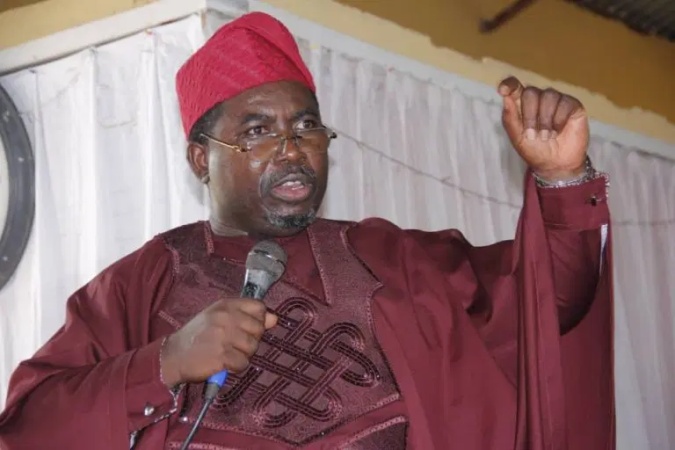
INEC Chairman, Prof Amupitan
With less than three months to the May 30 deadline for the conduct of party primaries, including the resolution of disputes arising from primaries, the Independent National Electoral Commission (INEC), has warned political parties against conducting flawed primaries and allowing internal crises to fester, cautioning that such practices could jeopardise preparations for the 2027 General Election.
INEC Chairman, Prof. Joash Amupitan, gave the warning yesterday at the opening of a three-day Technical Review Workshop on the Regulations and Guidelines for Political Parties in Ikot Ekpene, Akwa Ibom State.
INEC further expressed commitment to ensuring its regulations and guidelines on political parties are enforced to the letter ahead of the party primaries, an exercise it noted comes with a deluge of intra-party fighting, crises, and the foisting of unpopular candidates, which it added result in either voter apathy or unnecessary litigations.
Amupitan said the 2026 guidelines will introduce stricter benchmarks for membership documentation, financial transparency, and the inclusion of women, youth, and persons with disabilities (PWDs).
He regretted that political parties, rather than being used as vehicles for national transformation, are currently witnessing a disturbing trend of leadership squabbles and infighting that threaten to turn them into theatres of permanent strife, saying the commission was ready to address the issues with the new guidelines.
While addressing participants at the workshop, Prof. Amupitan said a day spent defending these intra-party disputes in court “is a day diverted from the primary mandate of election planning.”
The workshop, supported by the Westminster Foundation for Democracy (WFD), is part of the Commission’s efforts to review and tighten its regulatory framework following the enactment of the Electoral Act 2026 and the release of the timetable for the 2027 polls. Primaries for the 2027 elections are scheduled to be held between April 23 and May 30, 2026, under the revised timetable.
“The quality of internal party democracy has a direct bearing on the credibility of the elections we conduct. Where candidates emerge through opaque processes, the consequences are voter disillusionment and an upsurge in pre-election court cases,” he said.
NNPP urges INEC to prioritise restoring public confidence over party disputes
THE National Working Committee (NWC) of the New Nigeria Peoples Party (NNPP) has said internal party disputes, while significant, are secondary to the larger crisis of public confidence in Nigeria’s electoral process. The party, while disagreeing with the INEC boss, urged the election body to focus on reforms that restore trust in the vote.
Speaking with journalists, NNPP National Publicity Secretary, Ladipo Johnson, acknowledged that legal battles arising from party infighting can strain INEC’s resources. However, he insisted that voter apathy driven by scepticism over electoral integrity poses a far greater threat to Nigerian democracy.
Johnson said: “While administrative hurdles are real, the greatest cause of voter apathy is not internal party friction; it is the widespread perception that INEC is complicit in subverting the will of the people. Until INEC demonstrates absolute transparency and proves it is an unbiased arbiter, no amount of internal party stability will bring Nigerians back to the polling units.”
Senator Victor Umeh of the Labour Party, representing Anambra Central, echoed the view, stressing that credible elections are essential to restoring citizens’ interest. “The Commission can only resurrect citizens’ interest in elections if it conducts credible elections. The public has lost confidence due to lack of transparency,” he said.
NNPP’s position underscores a growing concern among political stakeholders that strengthening internal party democracy, while important, must be complemented by transparent electoral processes to rebuild trust in Nigeria’s democracy.
A week after INEC released the revised timetable for the 2027 general elections, opposition parties are racing against time over the mandatory electronic membership registration introduced under the Electoral Act 2026. This is just as the African Democratic Congress (ADC) warned that the new requirement could narrow the democratic space.
At the heart of the dispute is Section 77(4) and related provisions of the amended law, which mandate all registered political parties to submit their digital membership registers to INEC, not later than April 2, 2026, as a precondition for participating in the elections.
Under the law, political parties are required to maintain a digital register of members and submit it to INEC within a stipulated timeframe. Only individuals whose names appear in the submitted register can participate in party primaries, congresses or conventions.
Opposition leaders are now arguing that the timeline is too tight and the provisions too stringent, effectively placing hurdles before parties that may not have the same structural or financial capacity as the ruling party. ADC warned that with barely weeks to comply, the requirement risks shutting out smaller or less technologically prepared parties from the 2027 race.
Other opposition parties, including the Peoples Democratic Party (PDP) and the Labour Party (LP), have also expressed reservations over the implications of the new law.
Yesterday, the Inter-Party Advisory Council (IPAC), an umbrella body of political parties, convened a meeting to deliberate on the matter, amid growing anxiety across party lines. The outcome of the meeting was yet to be disclosed as of press time last night.
APC spokesman: Electoral Act was made by N’Assembly, not APC
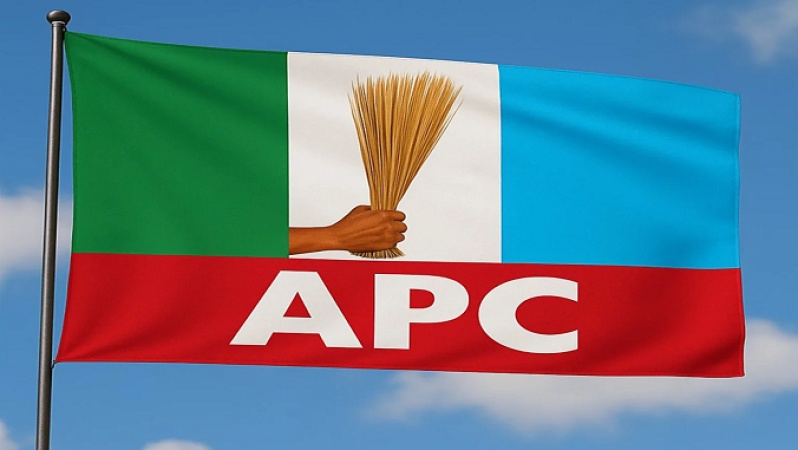
But the ruling All Progressives Congress (APC) has urged opposition parties to stop attributing the provisions of the Electoral Act to the ruling party, insisting that the law is a national document created by a constitutionally recognised body, not a partisan tool.
Speaking during an interview on ARISE TV on Wednesday, the party’s National Publicity Secretary, Felix Morka, addressed what he described as the opposition’s “flawed” narrative.
Morka argued that the opposition’s habit of ascribing the actions of the National Assembly to the APC reveals a fundamental misunderstanding of how laws are made in a democratic setting. He emphasised that the legislative process is distinct from the party structure and that all political actors are bound by the same rules.
“The APC has no reason to intimidate anyone. The Electoral Act was promulgated by the NASS pursuant to its constitutional authority; the APC isn’t the National Assembly. We’re also affected by the Act’s mandatory e-register for parties. I don’t know where the opposition thinks we have an advantage or are skewing the process in our favour,” Morka stated.
The interview was prompted by recent complaints from opposition figures who have expressed concerns that the legislative majority held by the APC has resulted in a legal framework tilted against them. However, the APC spokesman dismissed these allegations, reiterating that his party is not the source of the legislation.
“We are not coercing, we are not intimidating, and we have no reason to coerce or intimidate anyone or any opposition party. Now, the Electoral Act was promulgated by the National Assembly, pursuant to its constitutional authority. The APC is not the National Assembly,” Morka said.
In a detailed defence of the legislative process, Morka explained that the National Assembly is a microcosm of the nation’s political diversity, housing representatives from various parties, adding that to claim that its output is solely the product of the APC is to ignore the reality of democratic representation.
Morka further challenged the opposition to specify where the alleged advantage lies, stressing that the APC is equally bound by the provisions of the Act, including those that may limit certain electoral options.
“The fact of the matter is that, you know, we, the APC, are affected like everyone else, all other political parties in the country. I don’t know where they think that the APC has an advantage or that the APC is doing something untoward to skew the process in its favour,” Morka said.
The party’s National Chairman, Nentawe Yilwatda, on the other hand, expressed satisfaction with the state of the opposition ahead of the 2027 elections, describing them as disorganised and unprepared.
Speaking on Wednesday at the national secretariat of the party in Abuja, Yilwatda welcomed the defection of Governor Fintiri of Adamawa State from the PDP to the APC. According to him, Fintiri’s experience and track record make him a valuable addition to the party.
On the opposition, he noted, “it is not our duty to organise the opposition. Their responsibility is to organise themselves. We are very happy if they can’t. Our duty is to ensure we win elections. APC has been winning across the country in by-elections and off-season elections. Nigerians love APC, and they love Mr President. We will continue to sustain the impact of the Renewal Agenda on the economy and people as we approach 2027.”
Regarding the visit of six ministers to the party secretariat on the same day, Yilwatda explained that it was aimed at ensuring synergy between the party and the executive.
Atiku engages South-East leaders ahead of ADC primaries
Meanwhile, former Vice President Atiku Abubakar on Tuesday night held a closed-door meeting with key South-East political figures in Abuja, in what sources described as a strategic move to consolidate support ahead of the ADC presidential primaries.
The meeting, which combined an Iftar dinner with political consultations, signals Atiku’s early positioning within the party as it begins internal realignments ahead of the 2027 general elections. This is coming days after another chieftain of the party and former Minister of Transport, Rotimi Amaechi, was purportedly endorsed by the South-South leaders of the party.
Sources familiar with the discussions said talks centred on political collaboration, alliance-building and the South-East’s role in the ADC’s national strategy. Broader national issues, including unity, economic challenges and security concerns, were also reportedly discussed.
The gathering took place at the Abuja residence of Chikwe Udensi, an ADC chieftain and security expert, and attracted a cross-section of prominent Igbo political stakeholders.
Among those in attendance were Senator Augustine Akobundu, Chekwas Okorie, former Minister of State for Education, Emeka Nwajiuba; Dr Osita Oruche, Prof. Onyi Nwagbara, Uchenna Okogbuo, former ADC National Chairman, Ralph Nwosu; Uzoma Abonta, Uko Nkole, Etigwe Uwah (SAN); Dr Steve Nwadiuko, Dr Dave Eboh, Senator Frank Ibezim, and Morris Eboh, among others.
Atiku was accompanied by close associates, including Dr Kassim Ibrahim and Prof. Ahmadu Shehu, while some northern political figures were also said to have participated in the wider consultations. Party insiders described the engagement as crucial to shaping the ADC’s internal direction ahead of its primaries.
As of the time of filing this report, Atiku had not issued any public statement on the outcome of the meeting through his verified social media platforms. (The Guardian)