ADAD
ADAD
Updating your news feed...
NEWS EXPRESS is Nigeria’s leading online newspaper. Published by Africa’s international award-winning journalist, Mr. Isaac Umunna, NEWS EXPRESS is Nigeria’s first truly professional online daily newspaper. It is published from Lagos, Nigeria’s economic and media hub, and has a provision for occasional special print editions. Thanks to our vast network of sources and dedicated team of professional journalists and contributors spread across Nigeria and overseas, NEWS EXPRESS has become synonymous with newsbreaks and exclusive stories from around the world.
























Loading banners
Loading banners...

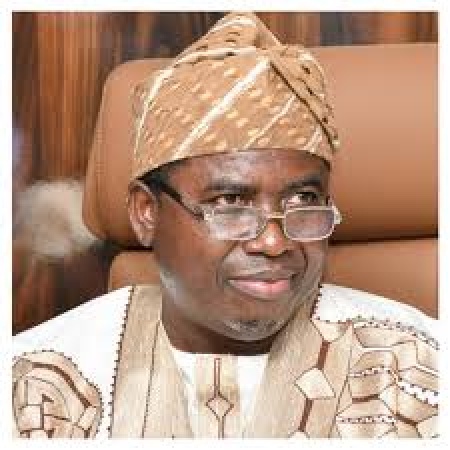
INEC Chairman, Prof Amupitan
Opposition political parties have rejected the Independent National Electoral Commission’s (INEC) revised timetable for the 2027 general elections, alleging that the compressed deadlines are designed to favour the ruling All Progressives Congress (APC) and exclude other parties from effectively participating in the polls.
INEC had initially fixed the Presidential and National Assembly elections for February 20, 2027, and the Governorship and State Houses of Assembly elections for March 6, 2027. However, following criticism from Muslim stakeholders that the dates coincided with the Ramadan period, the Senate amended Clause 28 of the Electoral Act Amendment Bill, reducing the mandatory election notice period from 360 days to 300 days.
The amendment enabled INEC to release a revised timetable last Thursday, rescheduling the Presidential and National Assembly elections to January 16, 2027, and the Governorship and State Houses of Assembly elections to February 6, 2027.
Under the Electoral Act 2026, political parties are required to submit their digital membership registers before any primary election, congress, or convention, with failure to comply resulting in disqualification from fielding candidates. The law mandates that the register must include each member’s name, sex, date of birth, address, state, local government area, ward, polling unit, National Identification Number (NIN), and photograph, submitted in both hard and soft copies.
Party primaries are scheduled to begin on April 23, 2026, and end on May 30, 2026. However, opposition parties said the requirement to submit updated digital membership registers by early April leaves them with limited time to comply.
The African Democratic Congress (ADC) rejected the timetable, alleging that it was structured to favour the ruling party and undermine opposition participation.
In a statement issued by Bolaji Abdullahi, its national publicity secretary, the party described the new requirements under Sections 77 and 82 of the Electoral Act 2026 as unfair and exclusionary.
The ADC said the requirement to submit digital membership registers ahead of the primaries “creates a near impossible hurdle that could exclude other parties from fielding candidates.”
The party added that what had been presented as a routine electoral schedule was, in reality, a “political instrument carefully structured to narrow democratic space and strengthen the hand of the incumbent administration ahead of the 2027 general elections.”
It further stated: “However; what is more significant is that pursuant to Section 77(4) of the Electoral Act 2026, political parties are required to submit their digital membership registers to INEC not later than 2 April 2026. That is only 34 days away. Section 77(7) further provides that any party that fails to submit its membership register within the stipulated time ‘shall not be eligible to field a candidate for that election.’ These are not house-keeping rules. They are deliberately constructed barriers to exclude opposition from partaking in the coming election.”
The party noted that the requirements for digital membership registration were extensive and restrictive. “According to this law, failure to meet these requirements would result in disqualification,” the ADC stated.
The party also alleged that the ruling party had prior knowledge of the requirement and had already begun compiling its digital register well ahead of others.
The ADC said it had joined other opposition parties in rejecting what it described as a “corrupted Electoral Act 2026 and the INEC time-table,” which it claimed were designed to support President Bola Ahmed Tinubu’s “automatic self-succession project.”
Similarly, the New Nigeria People’s Party (NNPP) criticised the compressed timeline, saying it favoured the ruling party.
“It is clear that all that has been done is for the advantage of the ruling party, the time constraints are too short and we have all complained about this. However, we know that they would not change anything; it is the people of Nigeria that would determine the next election,” Ladipo Johnson, the NNPP national publicity secretary, told BusinessDay.
APC chieftain dismissed opposition claims
However, reacting to the criticisms, Samuel Kehinde, an APC chieftain, dismissed the opposition’s claims, insisting that the electoral guidelines and timelines were transparent and applied equally to all political parties.
Speaking against the backdrop of recent criticisms, Kehinde maintained that the provisions of the Electoral Act 2026 were explicit and designed to ensure fairness and compliance.
“All the parties saw the bill and guideline timelines before it became law, it was not hidden, nor were they crafted to favour any particular party. They applied equally to all,” he said.
He added that political parties were provided with adequate timelines and clear directives to conduct their internal processes, including membership registration, digital updates, party primaries, and submission of required documentation to INEC.
The APC stalwart expressed disappointment that opposition leaders had resorted to public complaints instead of strengthening their internal structures.
“Democracy thrives on preparedness, discipline and strategic planning not on excuses,” he said.
Kehinde further argued that electoral success depended on organisation and institutional readiness rather than protests.
He noted that the APC had demonstrated that compliance with electoral regulations was achievable through proper coordination, urging opposition parties to focus on building credible membership registers and presenting policy alternatives to Nigerians.
“Attempting to shift responsibility for internal disorganisation onto institutions does not inspire public trust,” he added.
Don’t expect perfect election — INEC chairman
Meanwhile, Joash Amupitan, INEC chairman, has appealed for public understanding, noting that while the commission would strive for credible elections, perfection could not be guaranteed.
“Let me just appeal to Nigerians, because I have noticed now that what Nigerians desire is a perfect election. And INEC will strive as much as possible to give this country the best election.
“However, we may not be able to achieve a 100 per cent perfect election for now. But as far as electronic transmission of results is concerned, I said it before the FCT Area Council that we have the capacity to transmit the results, and that we’re going to transmit the results. The only concern was real-time,” he said.
The revised timetable has set the stage for early preparations ahead of the 2027 elections, but the controversy surrounding the deadlines signals the likelihood of intensified political tensions in the months ahead. (BusinessDay, but headline rejigged)