Updating your news feed...
NEWS EXPRESS is Nigeria’s leading online newspaper. Published by Africa’s international award-winning journalist, Mr. Isaac Umunna, NEWS EXPRESS is Nigeria’s first truly professional online daily newspaper. It is published from Lagos, Nigeria’s economic and media hub, and has a provision for occasional special print editions. Thanks to our vast network of sources and dedicated team of professional journalists and contributors spread across Nigeria and overseas, NEWS EXPRESS has become synonymous with newsbreaks and exclusive stories from around the world.













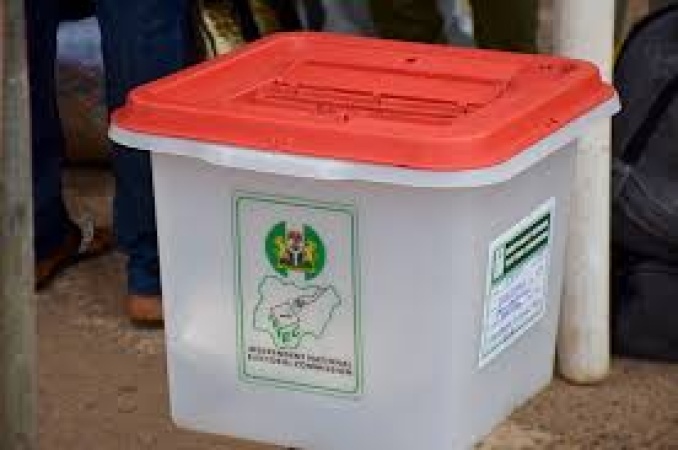
INEC ballot box
By KELECHI OKORONKWO
Nigerians have historically shown rapid adoption of digital trends, especially on the social media. Platforms such as Facebook, X and WhatsApp played significant roles in shaping public opinion during the elections that brought Muhammadu Buhari to power in 2015 and 2019; and later, Bola Ahmed Tinubu in 2023. Next elections are not just going to be about the social media-driven political persuasion, it is going to be about AI-powered influence operating within social media ecosystems.
As the authorities prepare for general elections in February 2027, Nigerians may as well start preparing for possible disruptive effect of artificial intelligence (AI) on political communication. Barely a year until the election, the political atmosphere is already getting tense and politicians are playing familiar cards.
One emerging trend that will shape the polls is the growing use of AI to spread misinformation. This development could deepen confusion among voters and strain the country’s fragile democratic processes. The signs are already visible and ominous. At the risk of sounding pessimistic, in an era where AI tools can generate hyper-realistic images and videos, clone voices, and simulate public figures, many Nigerians, particularly those with limited awareness of artificial intelligence, may struggle to distinguish between authentic political communication and fabricated content.
Recently, a real video of Senator Adams Oshiomhole massaging a lady’s feet on the plane surfaced online. His aides issued a statement claiming that the video was AI-generated by Oshiomhole’s detractors. This is an example of the disruptive effect of AI in political communication. Typical of elections in Nigeria, Nigerians can expect loads of political messages deliberately created to confuse the public. This is the type of issue Nigerians will face as the election processes come underway soon. “Is this AI or real?”
This portends misinformation risk. AI-generated propaganda could produce convincing deep-fake videos of candidates, circulate synthetic audio recordings mimicking political leaders, flood online spaces with automated political messaging and ultimately amplify false narratives at unprecedented speed and scale. Such tactics could erode trust in institutions, distort voter perception and potentially trigger unrest.
Adopting AI itself is not a problem. Adaptability is a key survival strategy for humans, animals and organisations. To survive quickly, we must adapt quickly. However, attention must be given to the alarming ethical issues associated with AI.
What can Nigeria do as country? This brings to mind the issue of AI governance policy. Where is Nigeria on this? Available data show that some African countries, including Nigeria, made efforts towards AI governance, leveraging the African Union AI Strategy of July 2024. However, Rwanda was the only African country that reached the level of full implementation backed by law. At the last count, 54 other African countries had not made definite policies to guide the use of AI. This means that there is no measure to protect their citizens from the indiscretions of AI developers.
There is need for more African countries to look the way of creating AI governance policies. Nigeria, often regarded as the giant of Africa and the second or third economy in the African continent, should lead on this. As AI continues to shape the future, Nigeria cannot afford to stay behind. Establishing a comprehensive AI governance policy is imperative to protect citizens’ rights, promote innovation and position Nigeria as a leader in Africa’s digital economy.
By learning from global frameworks and tailoring them to its unique socio-economic landscape, Nigeria can harness the power of AI for sustainable development and inclusive growth. AI governance policy is needed in Nigeria to establish ethical guidelines to prevent discrimination, bias and privacy violations, as well as protect citizens’ data in hospitals and finance institutions and spur economic growth. By regulating AI development and encouraging innovation, Nigeria can attract investments and foster technological advancements.
We should start thinking about creating legislative frameworks that could enact laws that define AI usage, ethical standards and compliance requirements, establish a national AI regulatory authority to oversee implementation and enforcement, collaborate with tech companies, research institutions and civil society organisations and invest in AI education, training programmes and research initiatives.
The 2027 election may mark the country’s first major confrontation with AI-driven political influence. Whether artificial intelligence strengthens civic engagement or undermines electoral integrity may depend largely on how quickly governance, regulation and public education catch up with the technology. (Weekend Trust)