Updating your news feed...
NEWS EXPRESS is Nigeria’s leading online newspaper. Published by Africa’s international award-winning journalist, Mr. Isaac Umunna, NEWS EXPRESS is Nigeria’s first truly professional online daily newspaper. It is published from Lagos, Nigeria’s economic and media hub, and has a provision for occasional special print editions. Thanks to our vast network of sources and dedicated team of professional journalists and contributors spread across Nigeria and overseas, NEWS EXPRESS has become synonymous with newsbreaks and exclusive stories from around the world.

























Loading banners
Loading banners...

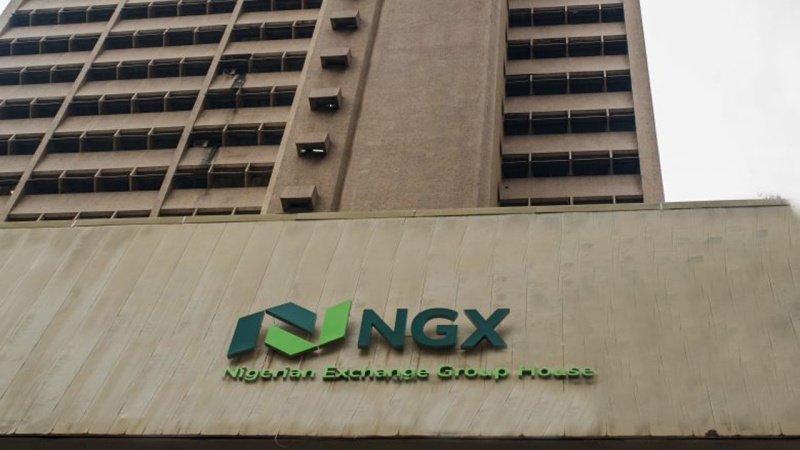
Nigeria’s trillion-naira stocks are multiplying and tightening their grip on the market. Twenty-five companies out of the 148 listed firms on the Nigerian Exchange Limited now account for N111.11 trillion in value, led by banks, telecoms, and cement giants.
Yet capital is not evenly spread. It clusters around companies with pricing power, export reach, regulated income streams, or balance sheets large enough to absorb shocks.
Banks form the market’s core. Nine lenders sit in the trillion-naira bracket, with a combined N18.8 trillion in market capitalisation, as of the close of trading on Friday, 20th February 2026.
At the top of the financial pile is Guaranty Trust Holding Company Plc at N4.28 trillion, followed by Zenith Bank Plc at N3.49 trillion. FBN Holdings Plc stands at N2.31 trillion, while United Bank for Africa Plc is valued at N2.12 trillion.
Close behind are Stanbic IBTC Holdings Plc at N2.05 trillion and Access Holdings Plc at N1.39 trillion. Ecobank Transnational Incorporated commands N1.07 trillion, Wema Bank Plc is priced at N1.08 trillion, and Fidelity Bank Plc has just re-entered the club at N1.01 trillion.
High interest rates have widened net interest margins. Treasury yields remain elevated. Recapitalisation plans, driven by tighter regulatory thresholds, have also drawn speculative flows, with investors betting that stronger capital buffers will support loan growth once rates ease. For foreign funds seeking liquidity, banks remain the easiest entry and exit points on the exchange.
Yet the single largest stock is not a lender.
At N16.4 trillion, MTN Nigeria Communications Plc is the most capitalised company on the bourse, reclaiming the top spot from BUA Foods Plc, now valued at N15.2 trillion.
The shift underscores investor preference for predictable cash flows. Telecoms operate with recurring revenue, rising data consumption, and room for tariff adjustments. In a volatile currency environment, scale and market dominance command a premium.
Airtel Africa Plc, valued at N8.53 trillion, reinforces that narrative. Its cross-border footprint and foreign-currency earnings provide an added buffer against naira swings, making it attractive to offshore investors.
Cement manufacturers form another heavyweight cluster. Dangote Cement Plc stands at N13.50 trillion, while BUA Cement Plc is worth N7.11 trillion. Lafarge Africa Plc adds N3.23 trillion.
Cement stocks often trade as a proxy for infrastructure spending and real asset exposure. Despite softer construction activity, pricing discipline and export capacity within West Africa have supported margins.
Investors also see them as inflation hedges, companies able to pass rising input costs to customers without significant demand destruction.
Energy and power names are gaining prominence. Seplat commands 5.46 trillion in valuation. Aradel Holdings Plc carries a market value of N4.75 trillion. In generation, Geregu Power Plc stands at N2.85 trillion, while Transcorp Power Plc is valued at N2.30 trillion.
These companies are increasingly viewed through a reform lens. Tariff adjustments in parts of the electricity market and moves toward cost-reflective pricing have improved revenue visibility.
In upstream energy, deregulation and market-driven pricing have strengthened earnings prospects. Investors are positioning early in sectors long constrained by policy distortions.
Consumer goods present a more selective picture. Inflation has squeezed household purchasing power, but scale separates winners from laggards.
International Breweries Plc is valued at N2.52 trillion, while Nigerian Breweries Plc stands behind at N2.48 trillion. Nestlé Nigeria Plc is valued at N2.30 trillion. Margin pressure persists, yet their brands and distribution networks preserve long-term appeal.
Agriculture-linked players have also drawn capital. Presco Plc at N2.7 trillion and Okomu Oil Palm Company Plc at N1.39 trillion benefit from global edible oil pricing and Nigeria’s push for import substitution. Hard-currency-linked commodity cycles offer an additional hedge in a weak naira environment.
Diversified and asset-heavy companies round out the trillion-naira cohort. Transcorp Hotels Plc is valued at N1.94 trillion, buoyed by renewed travel demand and asset revaluation narratives.
Meanwhile, conglomerate exposure through Transnational Corporation Plc reflects investor appetite for groups with power, hospitality, and energy stakes under one roof.
Taken together, the trillion-naira club highlights a concentrated market. A handful of large-cap names dominate liquidity and index weighting.
Smaller companies, though numerous, contribute far less to overall capitalisation. That imbalance magnifies the influence of sector leaders on benchmark performance.
It also shapes foreign participation. Global funds tracking frontier and emerging market indices typically allocate to the largest, most liquid stocks.
In Nigeria, that means telecoms, cement producers, and tier-one banks. As long as those counters hold firm, headline indices can rise even if breadth narrows beneath the surface.
The pattern reveals what investors are rewarding. Scale. Cash flow. Pricing leverage. Regulatory clarity. Export optionality. Companies meeting several of those criteria trade at premiums; those lacking them struggle for attention.
The composition may evolve as reforms deepen and rates eventually ease. Lower yields could compress bank margins while stimulating credit demand.
Infrastructure acceleration would benefit cement and industrial names. Stronger consumer spending would broaden gains across staples and breweries. For now, however, capital remains selective.
Nigeria’s equity market, now valued at N124 trillion, is no longer defined by the number of listed companies but by the weight of a few.
With N111.11 trillion concentrated in just 25 stocks and banks alone accounting for N18.8 trillion, leadership is clear. The trillion-naira club is expanding, but it is not democratic. (BusinessDay)