Updating your news feed...
NEWS EXPRESS is Nigeria’s leading online newspaper. Published by Africa’s international award-winning journalist, Mr. Isaac Umunna, NEWS EXPRESS is Nigeria’s first truly professional online daily newspaper. It is published from Lagos, Nigeria’s economic and media hub, and has a provision for occasional special print editions. Thanks to our vast network of sources and dedicated team of professional journalists and contributors spread across Nigeria and overseas, NEWS EXPRESS has become synonymous with newsbreaks and exclusive stories from around the world.



















Loading banners
Loading banners...

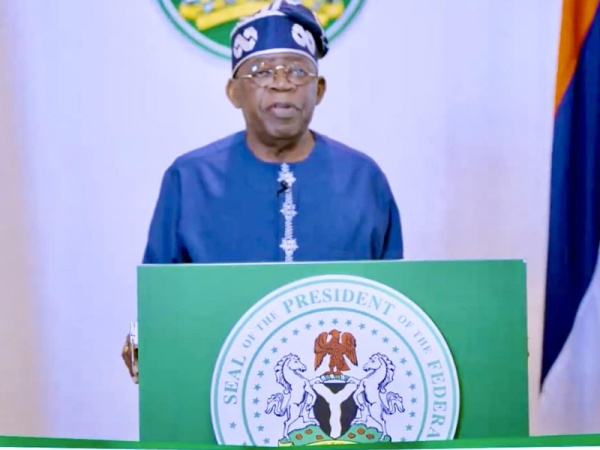
President Tinubu
By VIVIAN EMONI
Some business owners in the Federal Capital Territory (FCT) have called for government’s intervention by establishing policies that would ease businesses, while expressing concern over the prevailing economic hardship.
They spoke with the News Agency of Nigeria (NAN) on Sunday in Abuja.
The business owners said that small businesses now operate below capacity to minimise losses due to,rising costs, declining consumer purchasing power and unstable operating conditions.
Mrs Funke Adeyemi, a food vendor in Jikwoyi area of the FCT said transportation costs and high prices of food items had affected her daily sales.
Adeyemi said that adjusting portion sizes and sourcing from alternative suppliers were part of survival strategies.
She called on policymakers and relevant stakeholders to intervene by expanding the mass transit system to reduce transportation costs.
“My request is for the government to target subsidies or incentives for productive sectors rather than blanket subsidies,” she said.
Mrs Ada Okeke, a cloth retailer at Nyanya Market, said that profit margins had shrunk drastically in spite of steady customer traffic.
“People still come to price goods, but many cannot afford to buy. Prices of fabrics keep rising, and we struggle to remain in business.
“Transportation cost and fluctuating exchange rate have significantly affected supply chains, forcing traders to adjust prices frequently, sometimes at the risk of losing customers,’’ she said.
Okeke urged government to address inflation, improve power supply and strengthen policies that promote local production.
She said that consistent policies and reduced regulatory bottlenecks would boost investors’ confidence and help businesses to recover.
Mr Ibrahim Musa, a food vendor, described the current situation as a daily balancing act between sustaining operations and retaining loyal customers.
“Ingredients are more expensive now. If I increase prices too much, customers reduce. But if I do not, I make losses,’ ‘ he said.
Musa, who operates four different shops in Nyanya and Karu markets, said that he had adopted survival strategies such as reducing staff strength.
“I have to close down two of my shops and pay off some of my workers.
“I also have to cut overhead expenses and diversify income streams to stay afloat,” he said.
Mrs Funke Adewale, who runs a small bakery, said that she had to introduce smaller product sizes to maintain affordability.
“Customers want cheaper options, so we created smaller bread sizes. This has helped us maintain sales, even though profit is less,” she said.
Adewale said that strengthening local production and improving regulatory consistency could help businesses plan more effectively.
“When policies are predictable, businesses can make long-term decisions. Stability is critical for growth,” she said.
Mr Joseph Ojo, an electronics dealer, said that epileptic power supply forced him to rely heavily on generators.
He said that electricity supply, high fuel prices and limited access to affordable credit were major obstacles.
“Fuel prices alone take a large portion of my income. Without stable electricity, running a business becomes extremely difficult.
“In spite of the difficulties, I am strongly determined to remain in business. Honestly, I can not give up. This business feeds my family and supports other necessary expenses.
“We are struggling, but Nigerians are resilient. We will keep pushing forward,” he said.
Ojo called for targeted government support programmes, including grants and training initiatives to help Small and Medium Enterprises (SMEs) adapt to changing economic realities.
Dr Samuel Nwoye, an economic analyst called for structural reforms in fiscal and monetary policies and improved access to credit.
He said that a stable exchange rate was needed to ease pressure on businesses.
Nwoye emphasised the importance of supporting the SMEs, describing them as key drivers of employment and economic growth.
According to him, due to high fuel prices and inconsistent electricity, businesses are exploring alternatives to traditional, petrol-based power, such as Compressed Natural Gas (CNG).
“The alternatives may not even work well for some businesses because the centres are very few in the city, so it is not that easy to often see the CNG,” he said.
The expert suggested targeted subsidies, tax incentives and infrastructure improvements to enhance productivity.
He said that without urgent intervention, prolonged hardship could lead to increased business closures and unemployment.
He urged the government to improve transparency in forex allocation to reduce speculation.
Another economic expert, Dr Chinedu Amadi, said that small businesses, which form the backbone of Nigeria’s economy, were often the most vulnerable during periods of economic instability.
Amadi said that persistent inflation and high energy costs had created a tough environment for entrepreneurs.
He said that addressing economic hardship required coordinated policy interventions aimed at easing the burden on businesses.
“Many SMEs operate on thin margins. When operational costs increase sharply, their ability to survive depends on adaptability and access to support systems.
“While economic reforms may take time to yield results, supporting small businesses remains essential for job creation and economic recovery.
“Although the journey remains difficult, there is still hope. Policymakers should improve coordination between fiscal and monetary policies and support guidelines that will stabilise the exchange rate to reduce import costs,” he said.
He recommended improving access to low-interest loans, reducing multiple taxation and investing in infrastructure to reduce operating costs.(NAN)