ADAD
ADADUpdating your news feed...

NEWS EXPRESS is Nigeria’s leading online newspaper. Published by Africa’s international award-winning journalist, Mr. Isaac Umunna, NEWS EXPRESS is Nigeria’s first truly professional online daily newspaper. It is published from Lagos, Nigeria’s economic and media hub, and has a provision for occasional special print editions. Thanks to our vast network of sources and dedicated team of professional journalists and contributors spread across Nigeria and overseas, NEWS EXPRESS has become synonymous with newsbreaks and exclusive stories from around the world.









Loading banners
Loading banners...

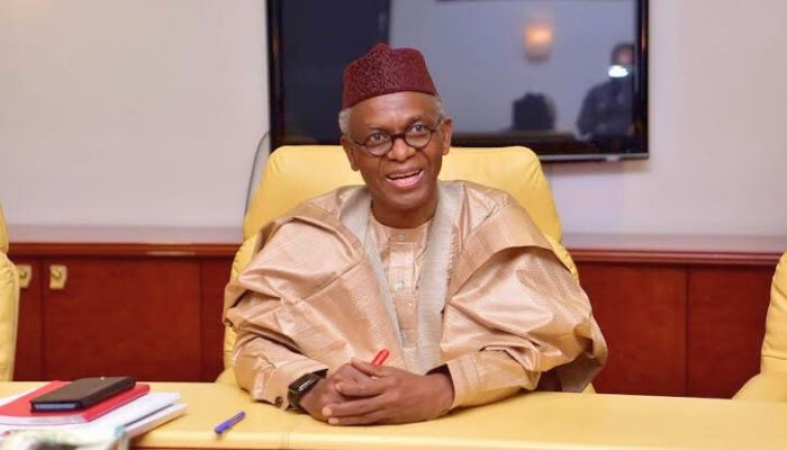
Nasir El-Rufai
Reactions continue to pour in across Nigeria after, Nasir El-Rufai, former governor of Kaduna State, claimed a telephone conversation allegedly involving the National Security Adviser, Nuhu Ribadu was intercepted and recorded, a statement that has triggered legal demands, political accusations and public debate over surveillance and accountability.
In a message circulated on his facebook account on the issue, Deji Adeyanju, Human rights lawyer, calls for a formal probe, arguing that any admission of unauthorized interception amounts to a serious offence under Nigerian law.
Adeyanju also asked security agencies to investigate El-Rufai’s alleged remarks concerning the disappearance of government critic Abubakar Idris Dadiyata, who was abducted in Kaduna in 2019 and has not been found six years later.
He further urged authorities to scrutinize claims linking the incident to former Kano State governor Abdullahi Ganduje, insisting the matter cannot remain in the realm of political rhetoric.
Civil society groups echoed similar concerns, warning that normalizing illegal surveillance — even as a political argument — could erode constitutional protections and public trust in state institutions.
However, supporters of the former governor defended his remarks, describing them as whistle-blowing against alleged abuse of power. They argued the controversy reflects deepening political rivalry rather than criminal conduct.
Opponents, however, said the claim raises disturbing questions about privacy, national security and electoral integrity. Some political commentators speculated that if such interception were possible, it could undermine confidence in democratic processes and state communications.
Online discourse has been especially heated, with social media users split between those demanding El-Rufai’s arrest and those accusing the government of intimidation.
In the same vein, Faroog Kperogi, a media scholar Farooq, suggested the statement may be calculated political messaging rather than a literal confession. He argued the allegation places authorities in a dilemma: prosecuting El-Rufai could appear to validate his claim, while ignoring it might fuel suspicion.
According to him, the narrative could also be aimed at shaping public sympathy ahead of possible anti-corruption questioning and unsettling political opponents psychologically.
The controversy follows reports that El-Rufai recently faced an attempted arrest at Abuja airport, an action his aides described as unlawful and politically motivated. The former governor has repeatedly accused federal authorities of targeting him, while officials have not publicly confirmed the details.
Meanwhile, Dadiyata’s disappearance has returned to public conversation, with activists renewing demands for answers and justice for the missing blogger.
Security experts warn the debate has expanded beyond personalities into a wider national conversation about surveillance powers, rule of law and political rivalry in Nigeria’s democracy.
With anti-graft agencies yet to comment officially on the new allegations, analysts say the coming days could determine whether the controversy remains political theatre or evolves into a legal battle.
For now, El-Rufai’s remarks have achieved one immediate effect: reigniting one of the country’s most polarising political debates and drawing attention back to unresolved questions of accountability, privacy and power. (Business Day)