ADAD
ADAD
Updating your news feed...
NEWS EXPRESS is Nigeria’s leading online newspaper. Published by Africa’s international award-winning journalist, Mr. Isaac Umunna, NEWS EXPRESS is Nigeria’s first truly professional online daily newspaper. It is published from Lagos, Nigeria’s economic and media hub, and has a provision for occasional special print editions. Thanks to our vast network of sources and dedicated team of professional journalists and contributors spread across Nigeria and overseas, NEWS EXPRESS has become synonymous with newsbreaks and exclusive stories from around the world.














Loading banners
Loading banners...

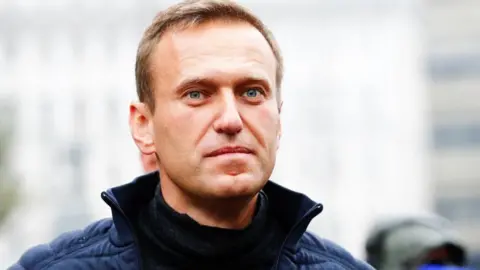
Russian opposition leader Alexei Navalny was killed using a poison developed from a dart frog toxin, the Foreign Office has said.
Two years on from the death of Navalny at a Siberian penal colony, Britain and its allies have blamed the Kremlin following analysis of material samples found on his body.
There is no innocent explanation for the toxin, called epibatidine, being found in samples taken from Navalny's body, the Foreign Office said.
Speaking from the Munich Security Conference, Foreign Secretary Yvette Cooper said: "Only the Russian government had the means, motive and opportunity to deploy this lethal toxin against Alexei Navalny during his imprisonment in Russia."
Cooper met with Navalny's widow Yulia Navalnaya at the conference this weekend.
"Russia saw Navalny as a threat," Cooper said at the event.
"By using this form of poison the Russian state demonstrated the despicable tools it has at its disposal and the overwhelming fear it has of political opposition", she added.
The UK has been joined by Sweden, France, the Netherlands and Germany in accusing Russia of the poisoning.
The Foreign Office said the UK has informed the Organisation on the Prohibition of Chemical Weapons of Russia's alleged breach of the Chemical Weapons Convention.
Navalny – an anti-corruption campaigner and Russia's most vociferous opposition leader - died suddenly in jail on 16 February 2024 at the age of 47.
In 2020 he was poisoned with a Novichok nerve agent. He underwent treatment in Germany, and was arrested at the airport upon his return to Russia.
Before Saturday's announcement, Navalny's wife Yulia Navalnaya had consistently argued that her husband was killed by poisoning while serving a prison sentence in an Arctic penal colony in 2024.
In September last year, Navalnaya said analysis of smuggled biological samples carried out by laboratories in two countries showed that her husband had been "murdered".
She did not provide details on the poison allegedly used, on the samples or on the analysis – but challenged the two laboratories to publish their results.
Reacting to the Foreign Office announcement, Navalnaya said: "I was certain from the first day that my husband had been poisoned, but now there is proof.
"I am grateful to the European states for the meticulous work they carried out over two years and for uncovering the truth," she added.
The Kremlin has not commented on the allegations.
Russian President Vladimir Putin, who studiously avoided naming Navalny while he was alive, briefly referred to him a month after his death by stating that a person passing was "always a sad event".
At the time of his death, Navalny had been in jail for three years on trumped-up charges and had recently been transferred to the Arctic Circle penal colony.
According to Russian accounts, the 47-year-old took a short walk at his Siberian penal colony, said he felt unwell, then collapsed and never regained consciousness.
Navalny's family later confirmed that the political activist died on 16 February. ((BBC)