Updating your news feed...
NEWS EXPRESS is Nigeria’s leading online newspaper. Published by Africa’s international award-winning journalist, Mr. Isaac Umunna, NEWS EXPRESS is Nigeria’s first truly professional online daily newspaper. It is published from Lagos, Nigeria’s economic and media hub, and has a provision for occasional special print editions. Thanks to our vast network of sources and dedicated team of professional journalists and contributors spread across Nigeria and overseas, NEWS EXPRESS has become synonymous with newsbreaks and exclusive stories from around the world.
















Loading banners
Loading banners...

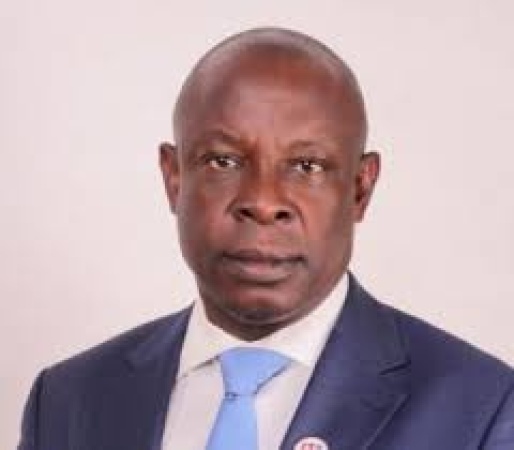
Labour Party 2023 House of Representatives Candidate, Dr Ezeh Emmanuel Ezeh
By CHARLES IWUOHA
Nigerians have renewed calls on the National Assembly to urgently enact a new Electoral Act that is technically sound, unambiguous and strong enough to curb manipulation and post-election disputes, as concerns mount over persistent loopholes in the nation’s electoral framework.
This call was made on Monday in a press statement signed by Dr. Ezeh Emmanuel Ezeh, Labour Party House of Representatives Candidate and second runner-up in the 2023 general elections, as well as a former Peoples Democratic Party (PDP) gubernatorial aspirant in Ebonyi State.
Ezeh said decades of poorly drafted electoral provisions have continued to weaken Nigeria’s democracy, stressing that vague language, weak cross-referencing and undefined terms in the current Electoral Act have created room for conflicting interpretations and selective enforcement.
According to him, these shortcomings have fueled endless electoral litigations, inconsistent application of the law by election management bodies and a steady erosion of public confidence in the electoral process.
“Our electoral laws have, for too long, been ambiguously drafted. They contain structural gaps, unclear definitions and weak internal linkages that encourage manipulation and breed disputes,” Ezeh stated. “Nigerians deserve an Electoral Act that is clear, precise and resistant to abuse.”
He emphasized that any new Electoral Act must be technically rigorous, unambiguous and manipulation-proof, identifying accurate cross-referencing and robust interpretation clauses as two critical areas requiring immediate attention.
The statement noted that provisions governing result collation and record-keeping must be properly harmonised to eliminate contradictions that often arise during elections. It added that interpretation clauses should clearly define key terms to prevent deliberate misrepresentation or misuse.
Ezeh particularly faulted the current law for failing to define crucial concepts such as “real-time upload to the IReV” and “electronic transmission of results,” warning that these omissions have resulted in loopholes, inconsistent practices and legal uncertainty.
Beyond technical drafting, the statement outlined key reforms Nigerians expect in the proposed legislation. These include clear and enforceable candidate qualification criteria and the mandatory electronic transmission of polling unit results (EC8A) to enhance transparency and credibility.
On result collation, Ezeh called for a simplified and streamlined process. He recommended a single central collation point for House of Assembly, House of Representatives and Senatorial elections, arguing that multiple collation layers increase opportunities for manipulation.
For gubernatorial elections, he proposed collation strictly at local government and state levels, while presidential election results should be collated only at state and national centres.
Addressing voter accreditation, the statement urged a shift from restrictive practices to identity verification, advocating the acceptance of alternative national identification documents such as international passports and the National Identification Number (NIN) alongside permanent voter cards.
Ezeh also called on organised labour and professional bodies, including the Nigeria Labour Congress (NLC), Trade Union Congress (TUC), Nigerian Bar Association (NBA), Manufacturers Association of Nigeria (MAN) and the Chamber Movement, to speak with one voice in pressuring the National Assembly to act decisively.
According to him, the moment presents a historic opportunity for lawmakers to reset Nigeria’s electoral system.
“The National Assembly must rise to the occasion and enact a new Electoral Act that truly reflects the will of the people, restores trust in elections and strengthens our democratic process,” the statement concluded.