Updating your news feed...
NEWS EXPRESS is Nigeria’s leading online newspaper. Published by Africa’s international award-winning journalist, Mr. Isaac Umunna, NEWS EXPRESS is Nigeria’s first truly professional online daily newspaper. It is published from Lagos, Nigeria’s economic and media hub, and has a provision for occasional special print editions. Thanks to our vast network of sources and dedicated team of professional journalists and contributors spread across Nigeria and overseas, NEWS EXPRESS has become synonymous with newsbreaks and exclusive stories from around the world.







Loading banners
Loading banners...

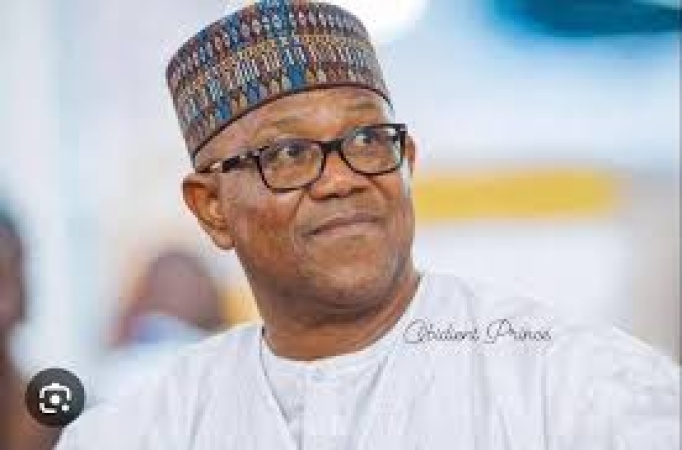
Mr Peter Obi
By BONIFACE AKARAH
As the Senate moves toward approving Nigeria’s 2026 national budget by March 17, concerns are mounting over what critics describe as a growing crisis of fiscal credibility, with the country effectively operating multiple overlapping budgets at once.
Former Anambra State Governor Peter Obi has warned that Nigeria’s budgeting process has lost coherence, transparency, and legal clarity, raising questions about which fiscal plan is actually being implemented.
“A country that cannot clearly state which budget it is running cannot claim to be governed responsibly,” Obi said in a recent statement.
President Bola Tinubu assumed office in May 2023 inheriting a legally enacted N21.83 trillion 2023 budget. Within months, his administration introduced a N2.17 trillion supplementary budget, a move Obi criticised at the time, arguing that it “expanded spending for public office holders while Nigerians were asked to endure painful economic reforms without adequate social protection.”
Instead of winding down the 2023 fiscal framework, the administration continued expanding expenditure. The 2024 budget rose to N35.06 trillion, followed by a N54.99 trillion allocation for 2025. Obi notes that “in less than three years, the administration has exercised appropriation authority over more than N114 trillion in public funds.”
Despite the scale of spending, budget execution remains weak. Obi stated that “less than 50 per cent of approved budgets have been implemented,” calling the situation “a collapse of budget credibility.” He added, “Appropriation without execution is not governance; it is deception.”
Until mid-2025, Nigeria effectively operated with three concurrent budgets, a situation
Obi described as “a fiscal anomaly unknown to serious economies.” According to him, “there was no clear legal or fiscal guidance on when one budget expired or another commenced.”
Further controversy followed the Federal Government’s decision to repeal and re-enact the 2024 and 2025 budgets, extending their implementation timelines without publishing revised documents. Obi said this amounted to “fiscal obscurity elevated to state policy,” noting that Nigerians were not informed of “the projects retained, the costs involved, or the priorities being funded.”
Transparency concerns have also intensified following the suspension of public treasury reporting on OpenTreasury.gov.ng, a platform inherited from the previous administration. Obi observed that “no budget implementation report was released in 2025, regardless of performance.” He warned that “no nation can operate successfully while deliberately dismantling accountability mechanisms.”
With the proposed 2026 budget still lacking critical details, Obi insists that Nigeria must urgently return to a clear January–December budget cycle, arguing that “orderly budgeting enhances planning, tracking, transparency, and economic stability.”
“No country grows by spending blindly,” Obi said. “Nigeria must choose discipline over recklessness, transparency over obscurity, and accountability over improvisation.”