Updating your news feed...
NEWS EXPRESS is Nigeria’s leading online newspaper. Published by Africa’s international award-winning journalist, Mr. Isaac Umunna, NEWS EXPRESS is Nigeria’s first truly professional online daily newspaper. It is published from Lagos, Nigeria’s economic and media hub, and has a provision for occasional special print editions. Thanks to our vast network of sources and dedicated team of professional journalists and contributors spread across Nigeria and overseas, NEWS EXPRESS has become synonymous with newsbreaks and exclusive stories from around the world.


























Loading banners
Loading banners...

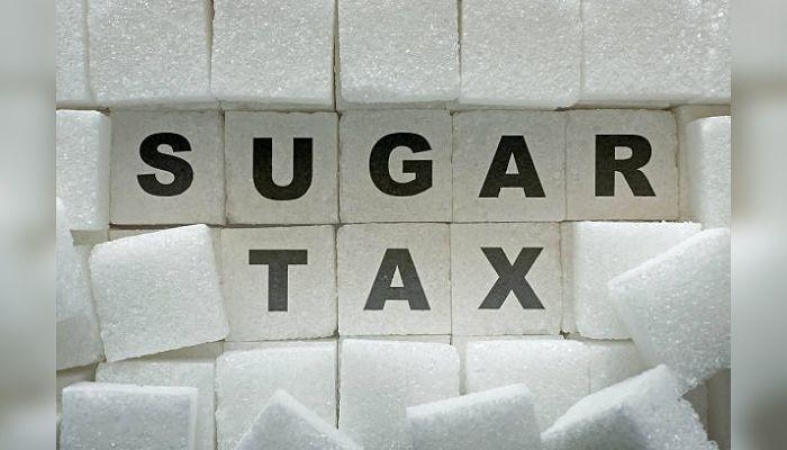
The Centre for the Promotion of Private Enterprise (CPPE) has warned that the proposed sugar tax poses a new threat to Nigerian manufacturers, who are already grappling with numerous challenges.
Muda Yusuf, chief executive officer of the CPPE, noted that while public health challenges such as diabetes and cardiovascular diseases undoubtedly warrant urgent attention, the proposal of a sugar-specific tax is misplaced, economically risky, and weakly supported by empirical evidence.
Yusuf, who stated this in a note titled ‘Sugar Tax: Detrimental to the Nigerian Manufacturing Sector,’ explained that advocacy for sugar taxation in Nigeria is largely driven by externally derived policy templates, particularly those associated with global health institutions.
Yusuf emphasized that the food and beverage sector remains the backbone of Nigeria’s manufacturing industry, noting that it supports millions of livelihoods across various sectors, including farming, processing, packaging, logistics, wholesale and retail trade, and hospitality.
He noted that any policy that weakens the food &beverage ecosystem would have a far-reaching consequence, including job losses, lower household incomes and reduced investment.
According to him, manufacturers in the non-alcoholic beverage subsector are already facing heavy fiscal and cost pressures.
“Manufacturers of non-alcoholic beverages are among the most heavily taxed and cost-pressured businesses in the Nigerian economy,” Yusuf said.
“Their fiscal pressures are further compounded by Nigeria’s challenging operating environment, including high energy costs, prohibitive logistics expenses, exchange-rate volatility, and elevated interest rates,” he explained.
“The cumulative effect has been rising production costs, shrinking margins, subdued investment appetite, and higher consumer prices,” he added.
Yusuf questioned the effectiveness of sugar taxes in addressing the root causes of non-communicable diseases in Nigeria.
He urged policymakers to prioritise evidence-based, inclusive, and development-friendly alternatives, including lifestyle and nutrition education, community-based health awareness programmes, promotion of physical activity and exercise, and encouragement of fruit and vegetable consumption, among others. (BusinessDay)