ADAD
ADAD
Updating your news feed...
NEWS EXPRESS is Nigeria’s leading online newspaper. Published by Africa’s international award-winning journalist, Mr. Isaac Umunna, NEWS EXPRESS is Nigeria’s first truly professional online daily newspaper. It is published from Lagos, Nigeria’s economic and media hub, and has a provision for occasional special print editions. Thanks to our vast network of sources and dedicated team of professional journalists and contributors spread across Nigeria and overseas, NEWS EXPRESS has become synonymous with newsbreaks and exclusive stories from around the world.


















Loading banners
Loading banners...

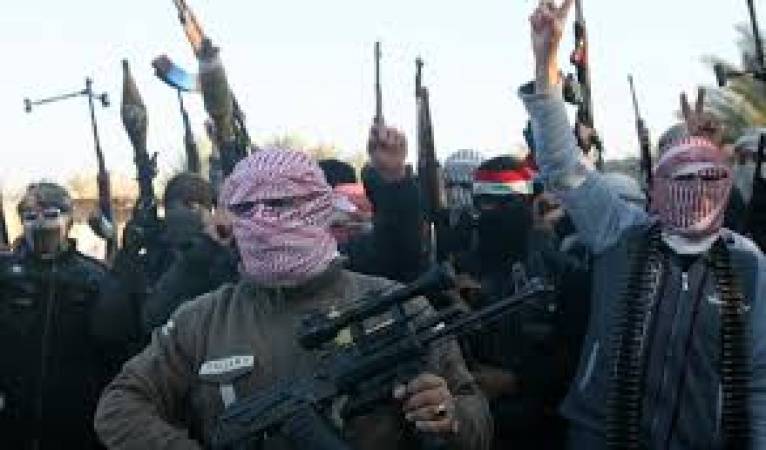
Terrorists
The collaborative Christmas Day airstrikes by United States and Nigerian forces were initially hailed as a decisive blow to the terror networks haunting Northwest Nigeria. While security experts highlight the dismantling of critical infrastructure and leadership nodes in the Bauni Forest, the reality on the ground paints a far grimmer picture. ODIMEGWU ONWUMERE examines that far from being defeated, terrorist cells have proved remarkably resilient, shifting their operations to neighboring states and launching retaliatory raids on vulnerable civilian populations.
The dawn of 2026 was supposed to mark a turning point for security in Northern Nigeria. On January 5, 2026, News Express Nigeria reported on the tactical successes of a joint US–Nigeria operation.
According to security expert Seyi Babaeko, Managing Director of Absolute Security and Advance Protocol Ltd., the Christmas Day airstrikes targeted deep-seated terrorist hubs in the Bauni Forest of Sokoto State.
Babaeko noted that the mission, powered by high-level intelligence and long-range precision, was designed to “dismantle operational nodes and weaken leadership structures.”
The optimism was palpable. Babaeko described the strikes as a “serious setback for militant capacity,” noting that communication lines were degraded and supply chains severed.
The psychological Impact was equally significant; for a moment, it seemed that no sanctuary was beyond the reach of justice.
However, as the smoke cleared from the 16 GPS-guided munitions deployed during the operation, a haunting question emerged: where did the survivors go?
The answer arrived with terrifying speed. While the News Agency of Nigeria (NAN) highlighted the tactical disruption of the “Lakurawa” and ISIS-linked cells, real-world data suggested a violent dispersal rather than a total defeat.
According to reports from Al Jazeera, the strikes on December 25–26, 2025, primarily targeted ISIS-affiliated groups, but the aftermath saw a defiant escalation of “bandit” activity in areas far removed from the strike zones.
Between December 25, 2025, and January 2, 2026, the statistics of violence became impossible to ignore. Punch Newspapers documented a chilling tally of at least 47 deaths and 35 abductions across a wider geographic arc including Kebbi, Zamfara, Nasarawa, and Plateau states.
This surge in violence appeared to be a direct “dare” to the international intervention. Terrorists, rather than retreating into the shadows, chose to strike back at soft targets—villages, markets, and travelers.
One of the most heart-wrenching episodes occurred just days after the Bauni Forest operation. As reported by The Times , a brutal raid on the Kasuwan Daji market in Niger State left between 30 and 42 people dead.
Eyewitness accounts provided to AP News described gunmen burning homes and kidnapping children, a tactic that suggests these groups are moving into new forest hideouts as they flee the heat in Sokoto.
This geographic shift is a known byproduct of aerial warfare without sufficient ground follow-up. While Babaeko argued that the strikes “forced some fighters to flee,” the reality is that they did not flee into oblivion; they fled into the homes of innocent civilians in neighboring states.
The Star noted that displacement has expanded the theater of war into Kaduna and Niger, stretching Nigerian forces even thinner despite the “precision” of the initial strikes.
The technical prowess of the Nigerian Air Force (NAF) was on display as they continued follow-up strikes in Zamfara, as detailed by Vanguard News . Yet, the persistent threat is underscored by a sobering warning from the federal government.
On January 2, 2026, as reported by Reuters, authorities urged residents to avoid “unexploded ordnance” and debris from the US-backed strikes.
This serves as a metaphor for the current state of the North: the debris of war—both literal and social—remains scattered and dangerous to the touch.
Even as ISWAP claimed a retaliatory mortar attack on a military camp in Yobe State, the resilient nature of these networks became clear.
The airstrikes were a ”catalyst,” as Babaeko put it, but perhaps not for the “decisive phase” everyone hoped for. Instead, they have catalyzed a new, more mobile form of terror where mobile cells operate across border areas with nothing to lose.
Villages have seen 42 of their neighbors buried in the same week after the airstrike as the world celebrated a “tactical victory.” The collaboration between the US and Nigeria is an undeniable milestone in intelligence sharing, but as the blood on the Kasuwan Daji market floor proves, technology cannot replace the need for community-led security and a permanent military presence on the ground.
As citizens look toward the remainder of 2026, the words of the security experts remain a cautious reminder: “Airstrikes alone cannot guarantee lasting peace.” For the families in Plateau and Kebbi, peace is still a distant dream, obscured by the dust of fleeing motorcycles and the lingering smell of cordite. The terrorists are not just on the move; they are still very much on the ground.
•Onwumere is Chairman, Advocacy Network On Religious And Cultural Coexistence (ANORACC).