Updating your news feed...
NEWS EXPRESS is Nigeria’s leading online newspaper. Published by Africa’s international award-winning journalist, Mr. Isaac Umunna, NEWS EXPRESS is Nigeria’s first truly professional online daily newspaper. It is published from Lagos, Nigeria’s economic and media hub, and has a provision for occasional special print editions. Thanks to our vast network of sources and dedicated team of professional journalists and contributors spread across Nigeria and overseas, NEWS EXPRESS has become synonymous with newsbreaks and exclusive stories from around the world.















Loading banners
Loading banners...

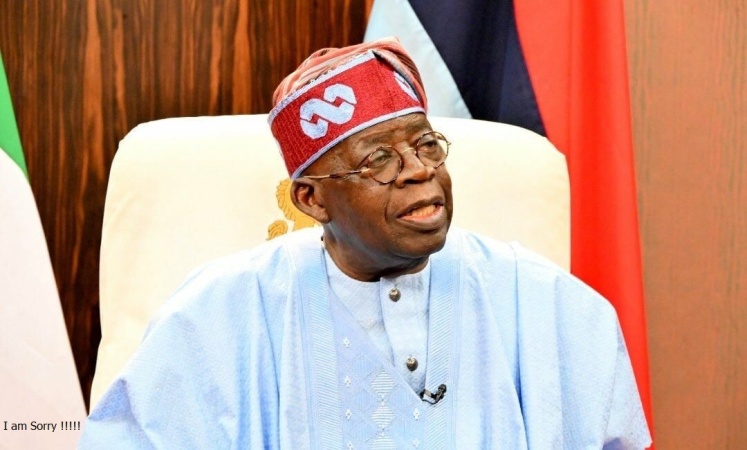
President Tinubu
By ABBA DUKAWA
Nigeria stands today at a painful and defining crossroads in its security journey. Across the nation, families live with growing fear as insecurity spreads—kidnappings, banditry, and terrorism have become harsh realities in too many communities. These threats do not respect state boundaries. Organized criminal networks move across states, leaving ordinary citizens feeling exposed and abandoned.
Nigerians are facing intertwined challenges. The anger is no longer whispered in private—it is now spoken openly with frustration and worry. Another pressing issue confronting Nigerians is the renewed debate over the creation of state police. When will the federal government strengthen the effectiveness of its security agencies? How much longer must communities endure this uncertainty?
At the same time, another urgent debate rises from the hearts of the people. In the face of this deepening crisis, should state governments be allowed to establish their own police forces to protect their citizens? Or will Nigeria continue to rely solely on a centralized system that many believe is struggling to respond quickly enough to local threats?
These are not just political questions. They are questions of safety, dignity, and the right of every Nigerian to live without fear. The nation is waiting hoping for bold decisions that will restore trust, strengthen security, and protect the future of its people. State police cannot be the answer to these pressing issues bedeviled federal security agencies.
Recently, the President appealed to the leadership of the National Assembly to consider constitutional amendments that would create a legal framework for state police, arguing that such reform is necessary to address Nigeria’s worsening security challenges. The fragmented policing structure could complicate efforts to combat crime effectively.
Reigniting the debate over state police comes as no surprise, given that he has long been seen as an advocate for the idea since his tenure as Governor of Lagos State. He supported the concept then and has continued to promote it as President. Many Nigerians, particularly in the South-West, have long called for state police as a means to address the country’s growing insecurity. Despite the constitutional considerations, discussions around state police continue to evoke strong emotions nationwide.
How will state police address security breaches committed by local militias or vigilante groups such as the OPC in the Southwestern states? What actions would state police take regarding the Amotekun group, which is openly endorsed by Southwest governors, if it were to commit serious violations of the rights of citizens, especially those from other parts of the country? How quickly have the proponents of state police chosen to erase from memory the horrific atrocities the OPC inflicted on the Northern community in Lagos in February 2002? The scars of that tragedy are still raw, yet some behave as though it never happened—as if the pain and the lives lost meant nothing. It is a bitter betrayal of justice and our collective conscience.
Reintroducing this issue at a time when the federal security apparatus is already strained shows a lack of sensitivity. Proponents overlook Section 214(1) clearly states there is only one police force for the federation the Nigeria Police Force and no other police force may be established for any part of the federation. The section does not permit the establishment of state police. Policing is on the Exclusive Legislative List, meaning only the federal government can create or control a police force.
Even today, the Nigeria Police Force, under the centralized command of the Inspector-General, faces accusations of harassment and intimidation to the weak and venerable citizens If such problems persist under federal control, imagine the risks of placing police authority under state governors, who already wield significant influence over state and local structures.
Implications For The State Police Structures In The Hand Of The State Governors
I must state clearly: I do not support the establishment of state police—at least not at this stage of Nigeria’s development. Our institutions remain fragile, and introducing such a system carries significant risks of abuse. History offers reasons for caution: the Native Authority police of the past were often linked to political repression and misuse of power.
Supporters argue that state police would bring law enforcement closer to local communities and improve response to crime. However, there are serious concerns rooted in Nigeria’s social realities.
Nigeria is a diverse nation with multiple ethnic and religious sentiments. If recruitment into state police forces becomes dominated by particular groups, minority communities may feel marginalized or threatened.
State police could deepen divisions and weaken public trust. State-controlled Police could also become instruments of political intimidation, especially during election periods, potentially targeting opposition figures, critics, and journalists.
Financial capacity is another major concern. Establishing and maintaining a professional police force requires substantial investment in training, equipment, salaries, welfare, and infrastructure. Many states already struggle to pay workers and provide essential services. How, then, can they adequately fund a state police? The likely outcome is poorly trained, under-equipped personnel—conditions that often foster corruption and inefficiency.
Even under federal oversight, Nigeria’s police system struggles with weak accountability and abuse of power. Transferring these weaknesses to state level without safeguards could have severe consequences.
A poorly structured state police could become loyal to governors rather than the Constitution, serving political instead of citizens interests. For these reasons, introducing state police even with the constitutional amendment could create more problems than it solves. Sustainable, accountability, and adherence to constitutional principles are critical and will likely be violated.
Nigeria must strengthen law enforcement while protecting citizens’ rights and preserving national unity. Mr. President, please reconsider no to state police. Nigerians want a strong, effective, and unified police force, not one that risks further dividing a system already struggling to meet its constitutional obligations.
•Dukawa can be reached at abbahydukawa@gmail.com