 ADAD
ADAD
Updating your news feed...
NEWS EXPRESS is Nigeria’s leading online newspaper. Published by Africa’s international award-winning journalist, Mr. Isaac Umunna, NEWS EXPRESS is Nigeria’s first truly professional online daily newspaper. It is published from Lagos, Nigeria’s economic and media hub, and has a provision for occasional special print editions. Thanks to our vast network of sources and dedicated team of professional journalists and contributors spread across Nigeria and overseas, NEWS EXPRESS has become synonymous with newsbreaks and exclusive stories from around the world.















Loading banners
Loading banners...

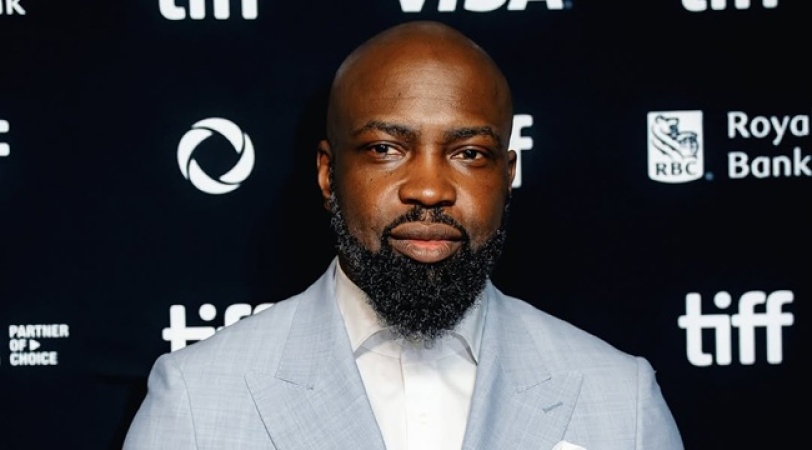
When Audu Maikori appeared on Channels Television’s Lunchtime Politics this week, the transition from music executive to aspiring legislator appeared complete. The lawyer and Chocolate City founder, who spent decades architecting Nigeria’s modern creative industry, has confirmed he is pivotting toward the House of Representatives for the 2027 elections. His message to the Zango Kataf/Jaba Federal Constituency is a rejection of the status quo: he argues that the era of “political palliatives” must end to make way for actual economic architecture.
Maikori’s entry into the race coincides with a period of significant “surgery” for Nigeria’s electoral framework. During the interview, he expressed firm support for the latest amendments to the Electoral Act 2026—specifically the clause barring dual membership of political parties ahead of primaries.
“It’s really important for us to begin to practise a politics of ideology,” Maikori insisted. “We see a lot of cross-cutting between parties because someone’s ambition hasn’t been realised on one platform. This provision will help to further secure and make party members stick to something that is ideological and not just selfish for immediate political interest.”
To bridge the historical disconnect between the legislature and the electorate, Maikori proposed a governance model based on transparency rather than patronage. He plans to move away from what he calls “politics of the inner chamber” by implementing quarterly town hall meetings and real-time digital dashboards. This would allow constituents to track project spending in a region—Southern Kaduna—that has often felt abandoned by the centre.
The core of his platform targets a shift from temporary relief to sustainable growth. Maikori was unsparing in his critique of the “handout” culture that traditionally defines election cycles, where bags of rice often substitute for policy.
Instead, he intends to leverage the natural strengths of his constituency.
“We are going to focus on ginger, maize, and yam agriculture because the average Southern Kaduna person is a farmer,” Maikori stated. “But access to markets, the right fertilizer, and the right technology to grow and scale agriculture is missing. I believe that with my relationships and experience, I can bring that to bear.”
Beyond agriculture, Maikori identified gender inclusion as a primary pillar of his legislative agenda, noting the severe underrepresentation of women in the current National Assembly.
“We need women to be empowered because they are the bedrock of society,” he argued. “They make the biggest population of SMEs. If you can empower them and give them the funding, mentorship, and access, trust me, we will see astronomical growth in that sector and definitely much more security.”
He illustrated the link between development and safety by citing a recent road project along the Zonkwa axis, describing how physical infrastructure can dismantle criminal “hot spots” that have historically ravaged Zango Kataf.
“These were roads that were so riddled with potholes that you would have to basically stop the car and crawl through. These were the hot spots for terrorists and robbers. The fact that these roads have been improved increases the economic power of the people and their access to markets.”
Maikori’s vision for the “creative economy”, a term he pointedly prefers over “entertainment”, is similarly data-driven. Despite the global explosion of Afrobeats, he noted that the sector’s contribution to Nigeria’s GDP remains significantly low, at approximately 0.33%. He believes the solution lies in a rigorous overhaul of the Intellectual Property (IP) regime.
“Intellectual property is closely linked to GDP growth, but in Nigeria, we have not been able to harness the IP regime,” he explained. “If I am blessed to be in the House, I will push for clearer policies. We need to push for centres of excellence and get multinationals making millions of dollars from our country to give a percentage back to grow the sector.”
The conversation took a sharp personal turn when addressing his history as an activist. Maikori, who famously won a legal battle against the former Kaduna administration following a controversial arrest, remains a staunch advocate for the rule of law. He revealed that the ₦40 million awarded to him in the Federal High Court, a judgment currently at the Supreme Court, will be repurposed for those trapped in the system.
“The proceeds from the money shall be put to the youth, journalists, and oppressed people who cannot afford representation in jail,” he revealed. “That’s what I learned in my four or five days in jail—there was a young boy there for three months who could not get out because he had no lawyer. That is the fund I am launching.”
As he eyes a seat in the Green Chamber, Maikori is betting that the people of Southern Kaduna are ready to trade immediate palliatives for a long-term economic roadmap. While he acknowledged that Governor Uba Sani has maintained a “no candidate” stance, Maikori appears confident that his record of building from “ground zero” will resonate. His strategy—summarised as Vision, Action, and Results—now faces the ultimate test: the ballot box. (Channels)



