
Updating your news feed...
NEWS EXPRESS is Nigeria’s leading online newspaper. Published by Africa’s international award-winning journalist, Mr. Isaac Umunna, NEWS EXPRESS is Nigeria’s first truly professional online daily newspaper. It is published from Lagos, Nigeria’s economic and media hub, and has a provision for occasional special print editions. Thanks to our vast network of sources and dedicated team of professional journalists and contributors spread across Nigeria and overseas, NEWS EXPRESS has become synonymous with newsbreaks and exclusive stories from around the world.





















Loading banners
Loading banners...

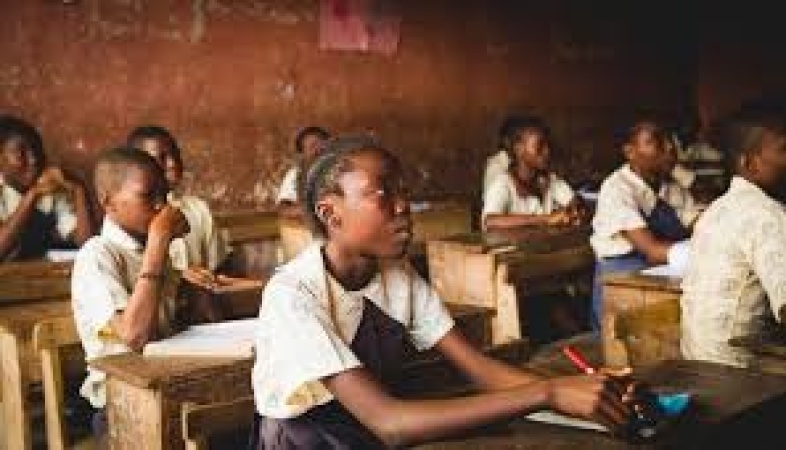
Students in a classroom
For many parents, the new year is more than just resolutions, it is a chance to reset their children’s educational journey. Across households, families are reassessing priorities, exploring new approaches and making deliberate choices to shape better their children’s education outcomes.
With the coming of new tax regime that may see schools hiking fees and possibility of rising cost of living, many parents who spoke with BusinessDay shared their plans on how to keep their children in school.
Gift Osikoya, a parent at Ilamoshe Estate, Oke-Afa, a suburb of Lagos, said with the likelihood of higher school fees and increased cost of living due to the new tax regime, her main focus is planning ahead and putting structures in place early.
“I’m reviewing my monthly expenses and cutting out non-essentials so that I can allocate more towards education. School fees will be treated as a top priority.
“Instead of waiting for the term to begin, I’m spreading the school fees across several months. Paying little by little reduces pressure,” she said.
Osikoya emphasised she would be exploring payment plans, education savings, and additional income sources, among others.
“If the school allows installment payments, I intend to take advantage of that to avoid a heavy one-time bill. I’m setting up a small weekly or monthly savings dedicated strictly to school fees, so that unexpected increases do not destabilise everything.
“I’m also looking at small side gigs and freelance opportunities to create an extra buffer that can support school expenses when needed,” she said.
Besides, she disclosed that if the increase becomes too high, she may evaluate alternative schools that still offer good quality at more sustainable costs.
“Overall, the plan is to stay ahead by preparing early, reducing financial shocks, and ensuring the children’s education continues without interruption,” she noted.
Christian Ibekwe, a medical doctor, said he intends to ensure his income increases by embracing side-hustles, because according to him, that is the only solution to ensuring his children are in school despite inflation caused by government policies such as the tax hike.
“My son is in his last year in Madonna University, and it will cost me N1.45million before he graduates. I am the only person shouldering the responsibility; so, I have to work extra hours to cope,” he said.
Kehinde Omojuyigbe-Efevoghor, an entrepreneur, sees rising costs, whether from taxes, inflation, or policy changes, as realities people have to plan for, not fear.
“For me, education remains a priority, but priorities must be managed with wisdom and structure.
“Rather than reacting to possible fee hikes, I focus on early planning, disciplined budgeting, and honest conversations. This includes reviewing school choices carefully, aligning education costs with long-term family goals, and being open to adjustments where necessary, without compromising quality or values,” she said.
Besides, Omojuyiegbe-Efevoghor emphasised her belief in teaching children financial awareness and responsibility, helping them understand that education is an investment that requires sacrifice, planning, and sometimes trade-offs.
“Ultimately, my approach is to stay informed, plan ahead, and make decisions from a place of clarity, not pressure.
“Every season requires its own strategy, and navigating education in times like this is no different,” she noted.
Babatope Ilesanmi, a parent from Ekiti State, said his plans just like many other parents are to reconsider school of enrollment to align with his financial realities.
“There may be reasons to change schools from grade A to grade B of private schools, and/or to public schools as the case may be,” he said.
However, Victor Usifo, a legal practitioner, said that ordinarily, tax should not be a reason to hike school fees because tax is generally based on income; the more income, the more tax.
“The new tax doesn’t anticipate any hike of any kind, but individuals may push for it. In our planning, we have to review our budget, cut unnecessary expenses, and prioritise education costs,” he said.
The new tax laws have a mixed impact on primary and secondary school owners, primarily by eliminating their previous automatic income tax exemption while introducing a VAT exemption for tuition and essential materials.
Key effects on school owners
The educational institutions registered as limited liability companies are now subject to CIT on their profits. The Finance Act 2021 deleted the word “educational” from the list of exempt entities under the Companies Income Tax Act (CITA), meaning profit derived from educational activities is now taxable, regardless of whether it is distributed to shareholders.
VAT exemptions and benefits
Tuition fees at nursery, primary, and secondary levels, along with essential educational materials and books, are now zero-rated for VAT.
This does not directly tax the school owner, but it makes education more affordable for parents and allows schools to recover input VAT on related purchases, which was previously not possible. (BusinessDay)




