Updating your news feed...
NEWS EXPRESS is Nigeria’s leading online newspaper. Published by Africa’s international award-winning journalist, Mr. Isaac Umunna, NEWS EXPRESS is Nigeria’s first truly professional online daily newspaper. It is published from Lagos, Nigeria’s economic and media hub, and has a provision for occasional special print editions. Thanks to our vast network of sources and dedicated team of professional journalists and contributors spread across Nigeria and overseas, NEWS EXPRESS has become synonymous with newsbreaks and exclusive stories from around the world.












Loading banners
Loading banners...

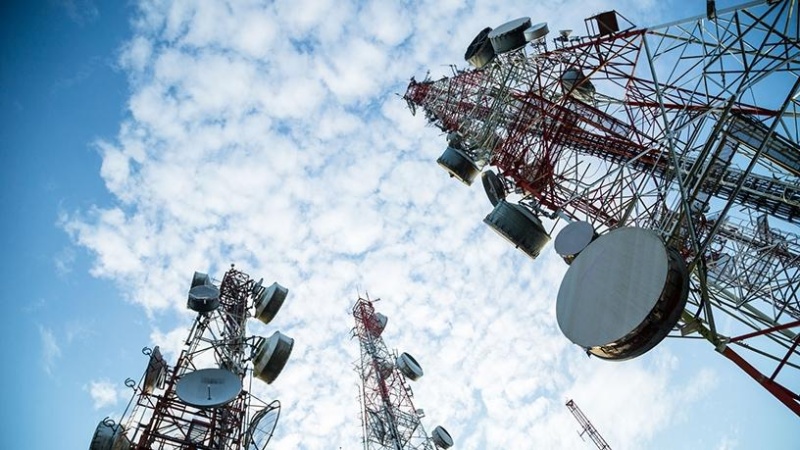
Nigerian telecom operators have started paying customers for poor network service, marking a rare moment of accountability in a sector long criticised for dropped calls, slow internet, and unreliable connections.
The move follows a directive from the Nigerian Communications Commission (NCC), which ordered operators to compensate users for failing to meet quality standards between November 2025 and January 2026.
This week, subscribers of Airtel Nigeria began receiving SMS notifications confirming airtime credits. The message informed customers that compensation had been applied and could be checked using a USSD code. In many cases, however, the amounts were modest, ranging from as low as N167 to about N295.
Subscribers of MTN Nigeria had started receiving similar credits earlier, with some reporting amounts as low as N20, while others received between N284 and over N600.
The message reads: “Dear customer, you have been credited with compensation airtime for service quality issues (Nov 2025 – Jan 2026). Dial *306# to check. Thank you.”
The NCC confirmed that the payments are not refunds but regulatory compensation tied to service quality failures. According to the commission, the new system measures performance at the local government level, allowing for more precise assessment of how badly each area was affected.
Aminu Maida NCC’s executive vice chairman confirmed that compensation has begun. He described it as regulatory payment for failing to meet quality standards, not a refund.
The amount each subscriber receives depends on their usage and the severity of network issues in their location.
Small payments, big questions
While the compensation policy has been welcomed as a step forward, it has also sparked debate among users. Many subscribers say the payments are too small compared to the frustration and losses caused by poor service.
For millions of Nigerians who rely on mobile networks for business, banking, education, and communication, network downtime often means lost income and missed opportunities.
The development has exposed a deeper issue, years of underinvestment and infrastructure gaps that continue to affect service delivery across the country.
Telcos ramp up spending
Even as they pay compensation, telecom operators are significantly increasing investments to fix network problems.
The NCC revealed that only about 300 new or upgraded telecom sites were deployed in 2025. In contrast, operators have committed to about 12,000 upgrades in 2026. Already, roughly 2,800 of these have been completed this year.
These upgrades include building new base stations, expanding capacity, and shifting from older 2G and 3G networks to faster 4G and early 5G technology.
One major operator alone is investing over $1 billion in 2026 to improve its network. The NCC has insisted that such investments must be additional spending, not taken from existing budgets. Independent auditors have also been engaged to verify compliance.
According to the regulator, the sector is now recovering from years of limited investment, and early improvements in data speed are beginning to appear, although challenges like network delays and congestion persist.
The EVC admitted that the sector is recovering from years of underinvestment, stating, “improvements in data speeds are starting to show, but challenges like latency remain. He said users must be patient because demand grows fast as service gets better.”
Fibre problem behind the crisis
Industry experts say mobile network expansion alone will not solve Nigeria’s connectivity problems. The bigger Issue lies in inadequate fibre infrastructure.
Nigeria currently has about 35,000 kilometres of fibre cable, but only about 16 percent of the population is connected to it. Broadband penetration stands at roughly 45 percent, mostly concentrated in urban areas.
Frequent fibre cuts have become a major cause of network outages. Industry data shows that about 60 percent of disruptions are linked to fibre damage during road construction. Out of an estimated 50,000 fibre cut incidents recorded annually, around 30,000 are caused by road works.
Stakeholders have called for stronger implementation of key policies such as the Critical National Information Infrastructure (CNII) framework and the Dig-Once Policy, which requires installation of fibre ducts during road construction.
Tony Emoekpere, president of the Association of Telecommunication Companies of Nigeria, said: “Nigeria’s challenge is not the absence of policies but poor execution. What Dig-Once offers is an opportunity to correct this.”
Telecom operators and infrastructure providers argue that poor policy execution, high right-of-way charges, and vandalism continue to slow progress.
Push for shared infrastructure
Industry leaders are also advocating for more collaboration among operators. Sharing infrastructure and jointly upgrading ageing fibre networks, some of which are over 15 years old, could help reduce costs and improve service quality.
There are also growing calls for better coordination between telecom companies and road construction agencies to prevent repeated damage to critical infrastructure.
Gbenga Olabiyi, CEO of Dimensions Data Limited, said the infrastructure is not delivering the service it should.
Segun Okuneye of ipNX Nigeria called for road contractors to install ducts during construction to avoid repeated digging.
Gbenga Adebayo, chairman of the Association of Licensed Telecom Operators of Nigeria, urged operators to share infrastructure and jointly upgrade old fibre networks that are now 15 to 20 years old.
Kenny Joda of FibreOne Broadband reported four fibre cuts in April alone and called for stronger enforcement of the CNII framework to protect infrastructure from vandalism and accidental damage.
What this means for Nigerians
The compensation rollout signals a shift in how Nigeria’s telecom sector is regulated. For the first time, operators are being directly penalised for poor service in a way that affects their bottom line and public image.
However, the real test lies ahead.
For consumers, small airtime credits are not enough. What they want is reliable service- clear calls, fast internet, and stable connections.
The NCC says achieving this will take time, especially as demand for data continues to rise sharply due to video streaming, social media, and digital services.
Still, the combination of enforced compensation, increased investment, and renewed focus on infrastructure offers some hope.
If properly implemented, these measures could mark the beginning of a long-awaited turnaround in Nigeria’s telecom sector, one where operators are not just expanding networks, but finally delivering the quality of service Nigerians have paid for over the years. (BusinessDay, excluding headline)