Updating your news feed...
NEWS EXPRESS is Nigeria’s leading online newspaper. Published by Africa’s international award-winning journalist, Mr. Isaac Umunna, NEWS EXPRESS is Nigeria’s first truly professional online daily newspaper. It is published from Lagos, Nigeria’s economic and media hub, and has a provision for occasional special print editions. Thanks to our vast network of sources and dedicated team of professional journalists and contributors spread across Nigeria and overseas, NEWS EXPRESS has become synonymous with newsbreaks and exclusive stories from around the world.




















Loading banners
Loading banners...

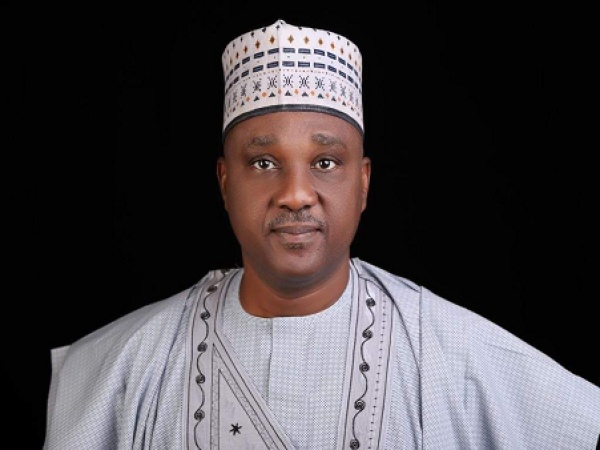
Reps Speaker Abbas
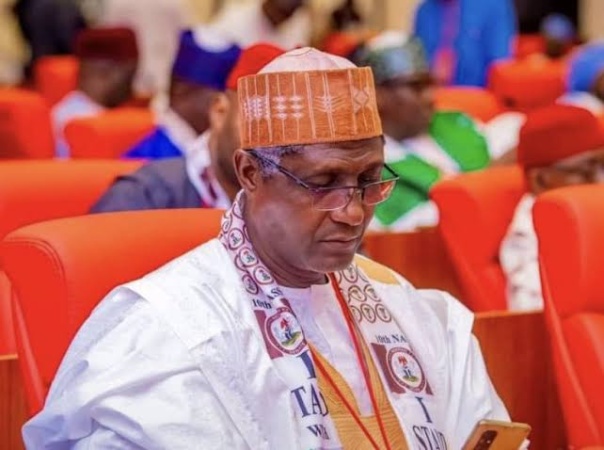
Speaker of the House of Representatives, Abbas Tajudeen, said on Monday that about half of small-scale businesses registered in the country fail within their first year of operation, largely because of poor access to formal credit, poor infrastructure, poor access to technology, and poor management skills.
The Speaker said small and medium-sized enterprises (SMEs) account for over 90% of businesses worldwide, contributing nearly 70% of employment in many developing economies.
He said while the Renewed Hope Agenda aims to propel Nigeria into a trillion-dollar economy in the next five years through the facility of small and medium-scale enterprises, adding that global economic reports already show that small and medium-sized enterprises (SMEs) account for over 90% of businesses worldwide, contributing nearly 70% of employment in many developing economies.
He said, “The PriceWaterhouseCoopers 2024 survey in Nigeria shows that SMSEs account for over 84% of businesses and contribute about 48 % to the National Gross Domestic Product (GDP), and make up 96.8% of the total number of registered businesses in Nigeria”.
The Speaker, who spoke at a Youth summit organised by his office, said “Nigeria’s entrepreneurs have never lacked ideas. They have never lacked courage. What they have lacked, too often, is a system designed to match their energy. A system where access, information, capital, and public policy move in the same direction.
“The truth is simple: potential does not translate into prosperity unless the environment is intentionally structured to support it. This Summit is our attempt to close that gap — deliberately, structurally, and with strong institutional backing from the Office of the Speaker.
“The Renewed Hope Agenda of President Bola Ahmed Tinubu places enterprise at the centre of national transformation. This is where the legislature must lead, by ensuring that the rules of the economy are coherent, modern, and aligned with the realities of a population that is young, innovative, and impatient for progress.
“First, we must shift from fragmentation to coordination. Too many support initiatives operate in isolation, each doing good work but rarely speaking to one another. Yet entrepreneurs do not live in silos — their challenges cut across finance, training, taxation, technology, logistics, and market access.
“The Enterprise Nexus Summit brings all these actors into one space because coordination is no longer optional; it is the most cost-effective form of reform. When institutions align, impact multiplies.
“We must shift from promise-driven support to data-driven impact. For decades, our national economic discourse has suffered from an overdose of optimism and an underdose of measurement.
“The Enterprise Grant being introduced here is a bold step, but it will be judged not by the size of the cheques, but by the number of viable businesses it helps stabilise and scale. Beneficiaries must not disappear after disbursement; they must be tracked, mentored, evaluated, and linked to opportunities within larger value chains. If we do this right, a small grant today becomes a job-creating enterprise tomorrow and a tax-paying employer soon after.
“Third, we must shift from talent in pockets to capability at scale. Knowledge becomes powerful only when it is transferred and applied. We cannot build a competitive economy on instincts and improvisation alone.”
The Speaker said the goal of the parliament is not to create a handful of star entrepreneurs; but to raise a generation of businesses that can compete anywhere because their foundations are sound, saying when capability becomes widespread, productivity becomes predictable.
He said further that a productive economy must work for those who have historically been left on the margins, saying if our enterprise agenda is not inclusive, then it is not strategic because a nation cannot rise on a narrow base; the base must be wide, diverse, and empowered.
He said, “The responsibility for building a productive economy does not rest on the government alone. But the government must set the tone through legislation that protects innovation, through oversight that encourages transparency, and through collaboration that respects the expertise of the private sector and development partners. Development finance institutions, universities, state governments, and global partners all have roles to play.
“In order to address these identifiable challenges, policy support is important. Governments must enact and implement reforms that incentivise financial institutions to lend to SMEs. However, policy support extends beyond access to credit. It encompasses regulatory environments that nurture rather than stifle growth.
“If our regulatory environment is burdened with complex licensing, high compliance costs, and opaque tax systems, we would only be stopping the growth of SMEs.
“Policy must also address access to markets and bring down barriers that impede local enterprises entry into the global supply chain and other international opportunities. Trade policies that prioritise local content requirements are necessary to integrate SMEs into the global value chain, as proven by the success of the Nigeria Local Content Act in the oil sector which mandated a percentage of contracts for indigenous firms.
“Similarly, public procurement policies favouring local production and suppliers, as have been approved by the Federal Executive Council, provide a stable revenue stream for SMEs and will no doubt enhance their growth. We also need policies to promote digital inclusion through lower broadband connectivity costs, e-commerce training, and AI adoption programmes for SMEs to boost local entrepreneurships development.
“According to the Nigeria Communications Commission (NCC) only 23% of rural Nigeria space has access to broadband connectivity, less than half the connectivity found in urban areas. This paltry access, and absence of high speed internet access, makes online payments difficult and connecting to urban markets even more so for rural communities”.
He said the House will advance legislative support for small and medium-scale enterprises (SMEs), saying, “some of these efforts focus on legislation, others on budget implementation, funding access, regulatory ease, innovation, and vocational support.
“For instance, the House Committee on Commerce has conducted multiple oversight visits to Small and Medium Scale Enterprises Development Agency of Nigeria (SMEDAN), which together with the Bank of Industry, have collaborated to disburse over N100 billion in SME grants/loans under schemes like Agribusiness Small and Medium Enterprises Investment Scheme (AGSMEIS), and the N75 billion MSME Intervention Fund launched in late 2024.
“Through its resolutions, the 10th House has called for faster implementation of the 2024 Budget’s N50 billion allocation for MSME clusters to enhance access to credit and market linkages for small-scale enterprises.
“The House is currently carrying out our legislative action on the Innovation and Entrepreneurship Support Bill, 2025, which proposes a national framework for innovation hubs, tax breaks for tech startups, and partnerships with the private sector for mentorship programmes. The bill, when passed, will build on the Nigeria Startup Act 2022 by focusing on non-digital SMEs.
“Another important step is the proposed Senate amendment to the Nigerian Export-Import Bank Act (NEXIM), 1991, which aims to increase NEXIM’s capitalization for SME export financing, including low-interest loans, dramatically.
“It targets small-scale exporters in agriculture and manufacturing with the potential to unlock about $1 billion in trade opportunities. The House will definitely vote to pass this legislation in concurrence with the Senate when the time comes.
“The House is also advancing legislative action on the Factoring and Invoice Discounting Bill, which aims to enable SMEs to convert receivables into immediate cash for working capital. Supported by stakeholders like CBN, Securities and Exchange Commission (SEC), and National Association of Chambers of Commerce, Industry, Mines and Agriculture (NACCIMA), the bill seeks to address liquidity challenges in trade finance to further SME expansion.
“It also seeks to regulate invoice financing for SMEs, allowing conversion of receivables to cash. The bill passed second reading in May 2025 and is slated for committee-stage report by December 2025, and potentially addresses liquidity gaps for thousands of MSMEs.
“The passage of the Nigeria Tax Act 2025 is expected to have the most significant impact on SMSEs in recent memory, expanding tax exemptions for businesses, particularly the zero % Companies Income Tax for small businesses with an annual gross turnover of less than N100 million, and allowing them to invest more of their earnings into their operations.
“It also exempts them from development levies, and provides relief from Withholding Tax obligations or charging VAT on their services. The new tax act not only eases fiscal burdens on small businesses, but streamlines compliance”.
“In order to improve technical education, and increase self-employment opportunities, the 10th House of Representatives has taken significant legislative steps to convert some existing institutions into specialized universities, passed multiple resolutions to support Vocational and Entrepreneurship Training, and is considering a bill to establish SME-focused vocational centres in all 774 local government areas of the country, with linkage to the National Directorate of Employment (NDE).
“This is in addition to the Southeast Institute for Vocational and Entrepreneurship Studies Bill, which seeks to promote skills training for youth-led small enterprises in agribusiness and crafts.
“Through the 2024 and 2025 Appropriation Acts, we have increased funding for SMEDAN and supported MSME Clinics, which by mid-2025 had disbursed N576 million to 237 small and medium-sized enterprises. In sum, we are constantly working to simplify business processes, improve access to finance, and foster an enabling environment that aligns with broader economic recovery plans, such as the Economic Recovery and Growth Plan (ERGP), which emphasizes SME industrialization and local content inclusion.
“Looking ahead, what does a strengthened local enterprise ecosystem look like? It is one where policy is proactive, not reactive. Policies, like the Nigeria First Policy of the Federal Government, which mandates all MDAs to give preference to local manufacturers and producers in the procurement needs, in order to improve local enterprise development and growth.
“Governments across our country should adopt policies that enable start-ups to flourish. Our financial institutions should help drive innovation through enhanced access to finance, and our corporations should adopt mentoring policies to develop SMEs.” (The Nation)