
Updating your news feed...
NEWS EXPRESS is Nigeria’s leading online newspaper. Published by Africa’s international award-winning journalist, Mr. Isaac Umunna, NEWS EXPRESS is Nigeria’s first truly professional online daily newspaper. It is published from Lagos, Nigeria’s economic and media hub, and has a provision for occasional special print editions. Thanks to our vast network of sources and dedicated team of professional journalists and contributors spread across Nigeria and overseas, NEWS EXPRESS has become synonymous with newsbreaks and exclusive stories from around the world.












Loading banners
Loading banners...

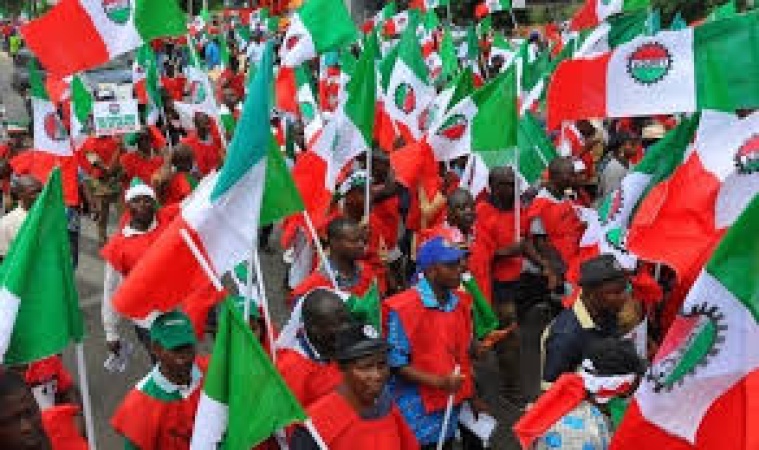
File photo of Labour members
Far from the speculations of a low turnout for the May Day celebration in some quarters, many Nigerian workers trooped out en masse last Thursday to mark this year?s edition of the International Workers? Day celebration.
From the Eagle?s Square Abuja, Tafawa Belewa Square Lagos, IBB Square Makurdi, Umuahia Township Stadium and to other venues across the country, there were visible excitement by the workers in marking the day despite deep pains.
As expected, the government, especially some governors, used the celebration platform to loud their achievements and ?supper? welfare packages for their workers.
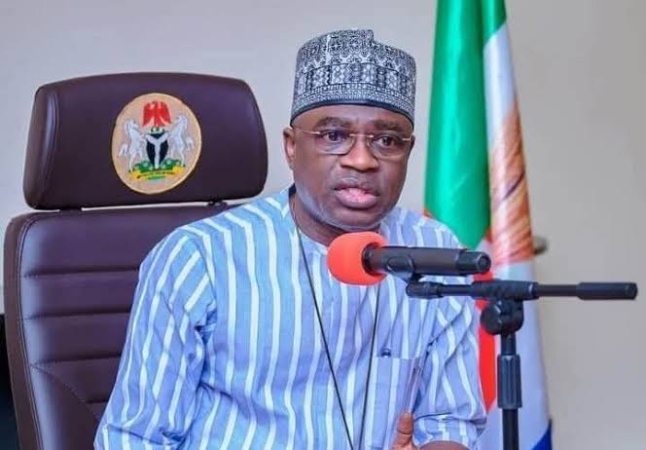
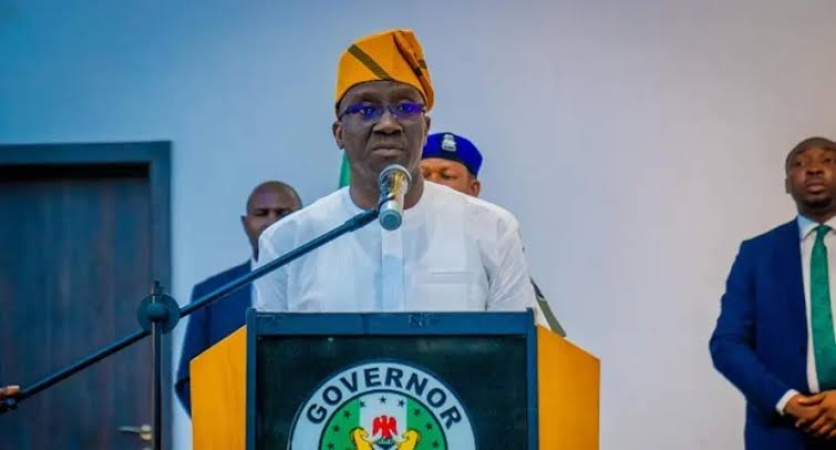
The likes of Babajide Sanwo-Olu of Lagos State, Hyacinth Alia of Benue State, Peter Mbah of Enugu State and a few other governors were proud to exceed the federal minimum wage benchmark in their respective states as well as President Bola Tinubu, who in his speech on Thursday, assured that his administration remained committed to prioritising the welfare of Nigerian workers.
Beyond the celebration and even more promises of welfare by the government, the average Nigerian worker is truly not excited as the looks portend.
After the colourful celebrations, they are back to their homes and offices to face the reality, as inflation eats up the N70,000 minimum wage.
While the minimum wage was raised last year from N30,000 to N70,000, about 130 percent increment, the high inflationary trend in the country, with the attendant cost-of-living crisis, make the new wage less-impactful to the average worker.
According to data from the National Bureau of Statistics, Nigeria?s headline inflation rate reached 24.23 percent in March 2025, marking a significant increase from 23.18 percent in February 2025, amid a high food inflation rate.
With the increasing inflation, monthly wage earners, particularly the civil and public servants face the reality of living on the edge as their ?increased? salaries can literally buy nothing.
?What can N70,000 buy today? You can?t send your children to good schools with it; you can?t get a decent accommodation and you can?t even buy the cheapest android phone with it,? Issah Madaki, a civil servant and Gwagwalada-Abuja resident, decried.
Sadly, workers? pains deepen as many states are yet to implement the new minimum wage, leaving them at the mercy of the harsh economy.
Lamenting the situation, Haruna Kankara, national president, Nigeria Union of Local Government Employees (NULGE), recently said that about 20 states are yet to implement the N70,000 new minimum wage for local government workers and primary school teachers.
The states, according to him, include: Yobe, Gombe, Zamfara, Kaduna, Imo, Ebonyi, Cross River, Federal Capital Territory, Abuja, Borno and 11 others.
Kankara decried the disparity in the implementation as some states that have commenced the payment, leave out local government workers and teachers, despite that all workers are facing the same economic hardship.
But in some of the states that have implemented the new minimum wage, the workers are sad that the state governments have also increased their taxes, some doubled and making the new wage less-impactful.
Seun Oyinlade, president, NULGE, Kwara State, expressed excitement over the payment of the N70,000 new minimum wage in the state since October 2024, but heavy taxation imposed by the government on the workers, according to him, has reduced the workers? take-home pay.
?The implementation of the N70,000 minimum wage for the workers in the state have been implemented for local government staff since October 2024 but the heavy taxes imposed by the state government have greatly affected the take home pay of our members,? Oyinlade decried.
Though on an appeal by the state branch of the Nigeria Labour Congress, the state government gave the workers three months? tax relief, which ended in December 2024, Oyinlade?s request or rather May Day gift from the state should have been an extension of the tax holiday instead of more welfare promises to excite the workers who are weighed down by the high-cost-living crisis.
For Amari Gabriel, chairman, NLC, Kogi State, the N65,000 monthly stipend for the Kogi State Traffic Management Authority (KOTRAMA) workers may not be enough, but it should be paid as the workers who were offered appointments since 2019 with no condition of service, are not being paid.
As the governors are beginning to pay the new minimum wage, the Kogi State NLC chairman called their attention to the outstanding backlog of gratuities for retirees, which has accumulated to over billions of naira in Kogi State alone.
According to him, that is welfare in action.
In the same vein, Fabian Nwigbo, chairperson, NLC, Enugu State Chapter, thinks that workers welfare is beyond rushing to pay the minimum wage, but also factoring in the consequential adjustments.
?We are so happy that Mbah gave Enugu workers minimum wage above the national minimum wage but a minimum wage without a consequential adjustment is not complete,? Nwigbo said.
However, following the signing of the Minimum Wage Act, 2024 into law by President Bola Tinubu on July 29, 2024, after months of negotiations with labour unions, some concerned citizens are worried that some states are yet to pay the new wage when federal allocations covering that increment have always been released since the Act became law.
?The federal government and notable stakeholders across the states should hold the governors who are yet to implement the new minimum wage accountable because they have been collecting federal allocations since the Act was signed into law in October,? Chijioke Umelahi, an Abuja-based lawyer said.
?What happened to that funds that should have been paid as the increment on workers salary since that October?
?We let go many things and that is why corruption is increasing.?
Alaghaide Idemuda, a Lagos lawyer, noted that no governor has an excuse for not paying the new minimum wage because they all got shares from the money saved from the oil subsidy removal.
?Considering the harsh economic realities of our time, delaying the implementation of the new minimum wage is simply impoverishing the impoverished because some top government officials spend more than the minimum wage on feeding their dogs monthly, yet drag to pay their suffering workers.
?Why impose continuous hardship on the downtrodden? Some of those governors should have been impeached in a sane world,? he said.
But the federal government and the governors think they deserve praise for their efforts and commitment so far at ensuring welfare for the workers.
The Benue State governor insisted that exceeding the federal benchmark by ?5,000 is a way of elevating the living standards of civil servants in the state and commitment to enhancing worker motivation and productivity.
He cited reforms in pension processes, ensuring that retirees from the state civil service receive their entitlements without delay, establishment of Benue Public Service Institute with over 40,000 workers trained in e-governance, modernised public service, and subsidized fertilizers for farmers as part of his ongoing welfare packages for workers.
But some concerned Benue indigenes, especially the Tiv people, the governor?s ethnic group, think that security is even better than the new minimum wage.
?It is not about the parade at the IBB Square for May Day and speeches, we want security above every other thing in Benue. The governor?s N75,000 cannot restore displaced families and subsidised fertilizers will make no impact as there are no farmers and farm lands to farm, because villages are continuously being sacked by the killers who displace our people and occupy our land,? an agreived telecom engineer from Benue State decried.
The engineer, who pleaded anonymity, noted that Benue people are farmers and do not need even N100,000 minimum wage if they have security to farm, process their farm produce and earn money from it.
On his part, Alex Otti, governor of Abia State, is excited to be among the first to pay the new minimum wage and also happy on the productivity witnessed in the state from the motivated workers.
The work ethics In Abia, according to Otti, has changed greatly in the last 23 months as the civil service system has changed from the poor treatment of workers to catering for their welfare in line with his campaign promises.
To compensate the workers for changing the work attitude of 9:am -5pm, the governor has introduced higher wage rates for employees in the critical development sectors like health, putting them on the same compensation bracket with their counterparts at the federal establishments.
Well, despite the implementation of the new minimum wage, the organised labour thinks that there are more to fight for as May Day is beyond the celebration.
Joe Ajaero, president, NLC, and Festus Osifo, president, Trade Union Congress (TUC), in their joint statement on behalf of the organised labour at this year?s May Day celebration, frowned at the alleged suppression of protests, and the erosion of the rights of workers by some agents, hence they urged Nigerian workers to demand justice and accountability from those in public office.
?The civic space, where Nigerians express their concerns and challenge injustices, is shrinking.
?If we fail to reclaim this space, the foundation of our democracy risks collapse,? they said.
With the celebrations over, workers are now facing the realities of the harsh economy as usual, which many think requires a fresh demand for a new minimum wage, as the N70,000 in the current inflationary trend, devalued Naira, high foreign exchange and high cost of food items and transportation, has little impact.
According to Olabode Ayeni, an economist, the government needs to tackle the soaring inflation rate, high foreign exchange and other negative pressures on the economy, in order to strengthen the Naira and offer workers respite, at least, affordable food items and cheaper transportation fares.
?Nigeria is an import-dependent economy and that means we need more foreign exchange to bring in goods into the country. The government needs to show commitment at reversing the trend with improved exports beyond crude oil.
?We are earning more from improved oil production quota now, but we need more exports from the non-oil sectors to address our international trade and payment deficits,? he said.
He thinks that the creative economy, improved diaspora remittances, reviving the manufacturing sector are some of the ways to improve forex earnings and boost Naira?s value.
Idemuda also thinks that the government should borrow less and manage what it has as the huge debt profile of the country is also a hinderance to economic recovery. (BusinessDay)




