
Updating your news feed...
NEWS EXPRESS is Nigeria’s leading online newspaper. Published by Africa’s international award-winning journalist, Mr. Isaac Umunna, NEWS EXPRESS is Nigeria’s first truly professional online daily newspaper. It is published from Lagos, Nigeria’s economic and media hub, and has a provision for occasional special print editions. Thanks to our vast network of sources and dedicated team of professional journalists and contributors spread across Nigeria and overseas, NEWS EXPRESS has become synonymous with newsbreaks and exclusive stories from around the world.




















.webp)
Loading banners
Loading banners...


President Buhari
Media Rights Agenda (MRA) has criticised the refusal of President Muhammadu Buhari to sign the Digital Rights and Freedom Bill into Law, describing his reasons as illogical and evidence of his Administration’s unwillingness to uphold and protect the freedom of expression and other human rights of Nigerians in the online environment.
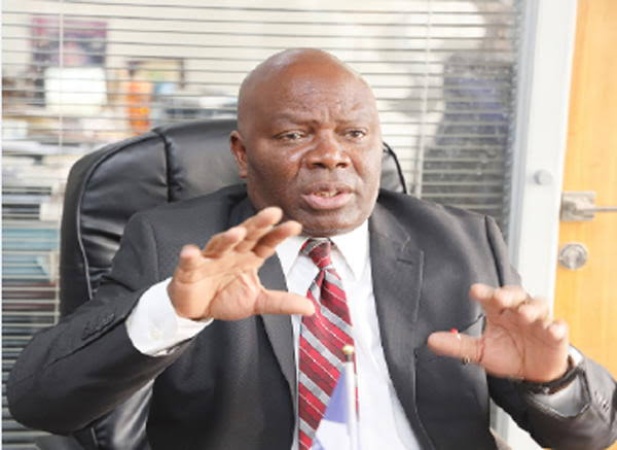
In a statement on Friday in Lagos, MRA’s Legal Officer, Ms Morisola Alaba, said the reason given by the President for his refusal to assent to the Bill, which was transmitted to him for signature by the National Assembly on February 5, 2019, was not only illogical but betrayed the fact that he had no legitimate reason for withholding assent.
President Buhari had stated that the Bill “covers too many technical subjects and fails to address any of them extensively”, listing such areas to include surveillance and digital protection, lawful interception of communication, digital protection and retention, among others, which he said “are currently the subject of various bills pending at National Assembly”. He argued that the scope of the Bill poses a “challenge of duplication and legislative conflict in the future.'"
Ms Alaba said: “The purpose of the Bill was never to address technical subjects in the area of digital rights and Internet freedom in any detailed or extensive manner, but to propose and affirm a human rights-based approach in dealing with these issues and to ensure that future laws and policies as well as administrative actions are consistent with this approach.”
She argued that “Given that no laws have been passed to guide the actions and activities of Government and other actors in these areas and in the light of the fact that there is no certainty about when such laws are likely to be passed, it makes no sense to refuse to assent to the Bill on the ground that it may duplicate or conflict with laws that are not yet in existence.”
According to her, “A more logical approach for a government that is genuinely desirous of upholding and protecting the digital rights and freedoms of its citizens would be to ensure that the spirit behind the proposed legislation and the principles recognized in it are consistent with the government’s policy stance and then ensuring that the provisions of future laws touching on the issues addressed in the Bill are properly aligned with its policy approach, even where such laws seek to address technical issues in a more detailed and extensive manner.”
Ms Alaba noted that the President was well aware of the fact that his position was untenable and likely to be very unpopular, which was why he waited until after the General Elections to decline assent and express his views on the matter when he knew that he had 30 days from February 5, 2019 to indicate whether he would assent to the Bill or withhold assent.
Besides, she argued, the Federal Government had ample opportunities during the legislative process to express its views on the provisions of the Bill and to ensure that the Administration’s concerns were adequately addressed by the lawmakers in the course of making the Law.
She said: “We are aware that several agencies of the Federal Government with specialized and technical competence and mandates in the areas covered by the Bill were involved in the legislative process and did not raise any objection to the passage of the Bill. Indeed, they signed off on the provisions of the Bill, which was why the National Assembly was comfortable enough to pass the Bill speedily.”
Criticising the attitude of the Presidency, Ms Alaba noted that “We consider it to be an unconscionable waste of the time of members of the National Assembly and huge public resources for the Presidency to stand by without engaging the legislative process or expressing the Administration’s position on such an important matter so its perspective can be properly taken into account, but to simply wait for the process to be concluded before vetoing the Bill. Whilst we concede that the President has the constitutional power to veto Bills, we do not believe that the power should be exercised in such a cynical and arrogant manner.”




