
Updating your news feed...
NEWS EXPRESS is Nigeria’s leading online newspaper. Published by Africa’s international award-winning journalist, Mr. Isaac Umunna, NEWS EXPRESS is Nigeria’s first truly professional online daily newspaper. It is published from Lagos, Nigeria’s economic and media hub, and has a provision for occasional special print editions. Thanks to our vast network of sources and dedicated team of professional journalists and contributors spread across Nigeria and overseas, NEWS EXPRESS has become synonymous with newsbreaks and exclusive stories from around the world.








Loading banners
Loading banners...

File photo of an NYSC-branded shirt
As part of efforts to reunite the country after the civil war, the then military administration of General Yakubu Gowon set up the National Youth Service Corps, NYSC, Scheme that makes it mandatory for graduates of tertiary institutions to serve the fatherland for a year.
Established on May 22, 1973, it requires Nigerian graduates under 30 years to participate in a 21-day orientation camp, followed by a year of service in a state other than their own.
In the 1973-1974 service year, 2,700 graduates were dispatched to the then 12 states of the federation, thereby starting a scheme that has since been dogged by a number of challenges. Among the challenges is poor accommodation for participants even in the Orientation Camp that should serve as their first place of abode when undergoing the scheme. After leaving the orientation camp, the corps members then face the high cost of renting an apartment in their place of primary assignment when their employers fail to provide them with one. With the stipend they receive, it is often a struggle to afford decent accommodation.
In many areas, especially urban centres, finding a place that is both affordable and suitable can be tough. This scarcity often forces corps members into less than ideal living situations. Unlike some jobs that provide housing or housing allowances, NYSC members usually have to figure it out on their own, which can be overwhelming, especially in a city.
There’s also the concern about safety and adequate living conditions. With limited options, many corps members end up in areas or accommodations that aren’t the safest or most comfortable. This can impact their overall well-being and focus during their service.
State of Orientation Camps
From the NYSC Orientation Camp in Ipaja, Lagos to the one in Obubra, Cross River State and other parts of the country, the story is the same. They are mostly overcrowded and dotted with run down facilities. In trying to beat the challenge of overcrowded camps, the scheme, many years ago, introduced onboarding participants in various batches within a service year. Initially, it was two batches in a year, but now runs three main batches in a year, which are further divided into two streams each, effectively creating six mobilization periods annually. Yet, poor accommodation of corps members has not abated. The 2,700 that were sent all over Nigeria in the 1973/1974 service year are not up to half of those coming to Lagos alone in a year now.
The development has made the current Director-General of the NYSC, Brigadier General Olakunle Oluseye Nafiu, to conclude that the scheme would not post participants to states with camps that are not fit for human habitation. To drive home his point, the scheme recently stopped corps members from going ahead with their orientation programme in Niger State because the camp is in bad shape.
Scheme needs urgent overhaul — Chairman, Governing Board
Assessing how far the scheme has met expectations, the Chairman of the Governing Board of the NYSC, Chief Hilliard Etta, called for urgent reforms of the scheme, saying it has failed to achieve its original objective of fostering national unity and cohesion.
Etta, a former Acting National Chairman of the All Progressives Congress, APC, who spoke with newsmen in Abuja, said the legal framework establishing the NYSC must be amended to reflect current national realities.
His words: “I believe that the legal framework of the scheme has to be amended and interrogate the essence for which it was established. The thought was to engender unity and cohesion in Nigeria. The question is, many years down the line, have we as a nation achieved the goal for which the scheme was established? The scheme should be used for national economic development. It is faulty now. What is the essence? What is the need? This scheme can be used to turn around the fortunes of Nigeria industrially. Today, our graduates are not employable; they have no skills”.
Etta also faulted state governments for neglecting their statutory responsibility to build and maintain habitable orientation camps for corps members, as provided for under the law establishing the scheme.
Corps member’s accommodation blues: A parent’s regret
When his daughter was posted to Abuja, the Federal Capital Territory, for her service year, Alade (other name withheld) expressed reservations about how to secure accommodation for her. The lady was not given accommodation at her place of primary assignment, PPA. But his wife gave the assurance that a male family friend, living in one of the suburbs of Abuja could be of assistance, at least to shelter her for some time before she would secure her own apartment.
“It turned out to be a big mistake that led to serious regrets. Few days after she got there, the host started harassing the girl sexually. When she could no longer bear it, she reported to her mother. The night she told me all that was going on, I could not sleep.
“We eventually rallied round to send N600,000 to her to get a room apartment for herself. How much are they giving her in her place of primary assignment? You can imagine the trauma the girl was exposed to. I restrained myself not to blame my wife for the situation, as I knew from the beginning that accommodation would be a very serious challenge in Abuja. If she was posted somewhere in the Southwest, surely we would have a better alternative to what she went through in Abuja,” he said.
No accommodation, we were told FG allowance is enough — Blessing
A corps member in Abeokuta, Ogun State, who gave her name simply as Blessing, said, “As a corps member, when I got posted to Abeokuta South, there was no provision for accommodation or stipend. The reason given was that the federal government was already paying a significant amount of money to support all corps members. Fortunately, I was able to secure a free apartment through a family friend who lives in Abeokuta.”
“Rent too high in Plateau”
Elizabeth Fadara (not real name), who is serving in the Jos South Local Government Area of Plateau State, shared her experience: “I was posted to Jos, Plateau State in 2025, Batch A, Stream 2. Upon leaving the orientation camp, it was very difficult to secure accommodation. It took the intervention of a fellow corps member, whom I met in camp. She allowed me to stay with her for four months while I searched for affordable accommodation to pay out of pocket (a room self-contained). Another issue I had was the proximity of my PPA to the house.
“As a result, I didn’t have many options as they were all very far from my PPA. I finally got a place that cost N300,000, which highlights the housing deficit in Jos. Electricity too has been a major problem, and we can’t pump water. I hope the authorities will do the needful regarding housing, because as a corps member, this isn’t fair in my opinion.”
The story is however different for another youth corps member, a medical graduate serving in Shendam Local Government Area, Suzanne Salami, (identity protected) who is also in Batch A, Stream 2. She said: “I serve in the Shendam Local Government Secretariat. When we came from camp, we were welcomed warmly with food and drinks. As a medical personnel, I was posted to a ward and given accommodation. There is running water and the accommodation given to us actually has electricity at night, which lasts for about six to eight hours.
Rhoda (who refused to give her surname) but serves in Jos North Local Government, had the challenge of accommodation as the one presented to her wasn’t good. She noted: “I didn’t accept the accommodation, which made it harder to get one. As I tried to get an apartment, I had to consider the cost of transportation to my Place of Primary Assignment.
“Although transportation is cheaper in Jos compared to other cities, accommodation is needed to match what I’m able to afford. I’m grateful to a fellow corps member who allowed me to stay with her for several months before I could get one for myself.”
Kaduna corps member appeals for accommodation support
Abubakar Usman, who hails from Gombe State and is serving in a Federal Government establishment in Kaduna South Local Government Area, lamented that no housing provision has been made available for corps members in his place of primary assignment which has forced many of them to independently search for accommodation in an already expensive housing market.
“It is unfortunate that we are not provided with accommodation here. Some corps members serving in private organisations are lucky to be given housing, and those who have relatives in Kaduna can stay with them. But for those of us who came from other states and do not know anyone here, the situation is very difficult.” He recounted his experience upon arrival in Kaduna after leaving the orientation camp when he had nowhere to stay and was compelled to look for an accomodation only to discover that even a modest self-contained apartment costs as much as N400,000.
“Usman stressed that the financial burden is heavy for many young graduates who are only beginning their journey into the workforce. He appealed to the Kaduna State Government and relevant authorities to consider providing accommodation support for corps members.
News Express Nigeria TV <newsexpressnigeria@gmail.com>
Sat, Sep 12, 2026 at 5:26 PM
To: Vera Oluaoha <verahallmarknewspaper@gmail.com>
Mother, sister cry for justice, battle trauma 5 years after Nnenna Onu's gruesome killing in Ebonyi
By OSWALD AGWU
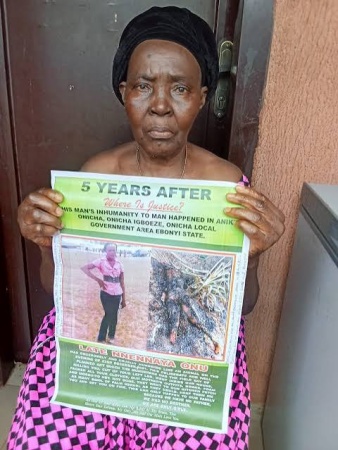
Five years after Miss Nnenna Onu, 35, was brutally murdered and set ablaze in her father's compound in Anike-Onicha, Onicha LGA of Ebonyi State, her aged mother and younger sister say they are still grappling with trauma and the absence of justice.
Nnenna was killed on December 23, 2021 by assailants suspected to be members of her extended paternal family. The case which saturated media space, sparked outrage and wide condemnation from rights groups and the public at the time.
Family sources allege the killing was connected to a dispute over inheritance.
According to the family, Nnenna, the elder of two daughters, only children of their mother, resisted attempts by some prominent members of their extended family to bury their father without the consent of the two daughters. The act, they claim, was aimed at dispossessing the two sisters of their right to their father's landed property on account of their gender.
Her resistance reportedly earned her multiple death threats, allegedly spearheaded by a paternal cousin.
In an interview with our reporter in Abakaliki recently, Nnenna's younger sister, Juliet Ogonnaya Onu, said the family has lived in fear and pain since the incident.
She commended the police for arresting and arraigning one of the suspects, Chidiebere Okoro Nwaokorie, on March 9, 2026, but lamented that other named suspects, including Uchechi Okoro Nwaokorie, remain at large while the pace of investigation has been slow.
Ogonnaya expressed disappointment over how the police handled another key suspect – her paternal cousin, Mr. David Okoronkwo Ukpa, popularly known as "ATS".
"Recently, the police called me and said they had in custody one of the accused persons I consider the prime suspect, Mr. David Okoronkwo Ukpa.
"When I went to the station and made my statement, they asked him a few questions. After he denied involvement, he was allowed to go. He now brags that nothing will happen. I expected the police to detain and thoroughly interrogate him," she said.
Ogonnaya alleged that days before the murder, Ukpa threatened Nnenna.
Beyond justice, Ogonnaya appealed to the state government and human rights groups to help the family secure their inheritance and guarantee their safety.
"My mother is aged and traumatized. She is staying with me now, but she is homeless in the real sense because she has no home in her husband's compound," she said.
"She fled for her life after the incident due to threats from Mr. Ukpa and his cohorts. But she cannot continue to live in exile at her age."
She urged authorities to prevail on the Police to rearrest and properly investigate Ukpa, and to compel him and his alleged cohorts to sign an undertaking never to harm her mother, herself or any member of her immediate family. She also called on the traditional ruler of the community, Eze Ferdinand Okoronkwo Nwujor, and family stakeholders to release her mother's share of the inheritance to enable her settle down in her husband's compound.
Meanwhile, as of the time of filing this report, efforts to get the reaction of the Ebonyi State Police Command on the status of the case and the release of the suspect, Ukpa, were unsuccessful.
However, the State Coordinator, Ebonyi State Gender-based Violence Taskforce, Barr. Faith-vin Nwanchor has condemned all acts geared towards robbing female children off inheritance rights, stressing that there are laws, including the Ebonyi State Violence Against Persons Prohibition law (VAPP) and Supreme court rulings opposed to the practice.
She commended the National Human Rights Commission, Ebonyi State Ministry of Justice, Human Rights and Conflict Resolution Centre, Ebonyi State Family Law Centre and other rights institutions and organisations which have been following the matter and urged them to join forces in renewed effort to secure justice for the family.
Nwanchor assured that the Taskforce will continue to contribute all within its powers to ensure justice is served in the matter.
•Late Nnenna’s traumatised mother is still waiting for justice five years after her murder
Uga sand excavation: 10 killed, buildings submerged as gullies turn Anambra community into danger zone
By BONIFACE AKARAH
At least 10 people have allegedly lost their lives in the past decade while dozens of buildings have reportedly been submerged in Umudimisii-Umuoru, Uga, Aguata Local Government Area of Anambra State, following what the International Society for Civil Liberties and Rule of Law (Intersociety) described as indiscriminate and unregulated sand excavation activities in the area.
In a statement signed by Emeka Umeagbalasi, Lead-Director, Intersociety Nigeria; Chidinma Evangeline Udegbunam, Head, Department of Campaign and Publicity; and Obianuju Joy Igboeli, Head, Department of Civil Liberties and Rule of Law, the organisation said the emerging gullies now posed a serious threat to the ancestral homes and properties of an estimated 22,000 sedentary, pastoral and diaspora indigenes of the area.
Intersociety said the environmental degradation had reached a critical stage, with the expanding gullies dangerously approaching the recently completed Obizi-Uga Water Scheme Road in Umudimisii-Umuoru.
“This is to bring the attention of your public office to environmental dangers associated with the above underlined issue and urgent need for your office to look into it, comprehensively resolve it and save the affected area with estimated sedentary, pastoral and diaspora population of 22,000 indigenes and their ancestral homes, inheritances and heritages from being swept off by emerging and menacing gullies and other forms of ecological disaster,” the organisation said.
According to Intersociety, the sand excavation activities had altered the natural topography of the area and contributed to the emergence and expansion of gullies, despite resistance from community leaders and stakeholders.
The organisation said the issue had become so contentious that stopping the excavation was reportedly made an election campaign issue during the recent election of new leaders of the Umudimisii Development Union.
“By our recent findings, incursions into the site by some private persons started in the years gone by; resulting in indiscriminate and unregulated sand excavation activities using an army of youth group and alleged Government links. These have further resulted to serious environmental degradation and defacing of the natural topography of the area,” Intersociety stated.
The group said the Umudimisii Quarter subsequently resolved to stop further excavation at the site in an effort to reclaim the affected area from further erosion and environmental damage.
It said the decision was communicated to the traditional ruler of Uga, HRH Igwe Chidi S. Ezenwugo, the President-General of the Uga Improvement Union and the Chairman of the Umuoru-Uga Village Union, after which the excavation activities were stopped.
Intersociety, however, said the environmental consequences had already become severe, alleging that at least 10 lives had been lost over a period of 10 years through submerged homes and buildings, as well as disputes connected to ownership of the excavation site.
“The human death tolls had arisen from submerges, building collapses and bloody interpersonal disputes or rivalries over ownership of the sand excavation site, among others,” the organisation said.
It further warned that thousands of other residents remained at risk, while the advancing gullies were threatening the road network serving the community.
According to the group, heavy-duty trucks evacuating sand and stones from the site had also damaged linked community roads and placed additional pressure on the Nkwo-Obizi Road and St. James-Ugwunwocha-Obizi Roads recently completed by the Anambra State Government.
Intersociety said the newly constructed roads were facing possible damage from the continued movement of heavy trucks and were themselves dangerously close to the emerging gullies.
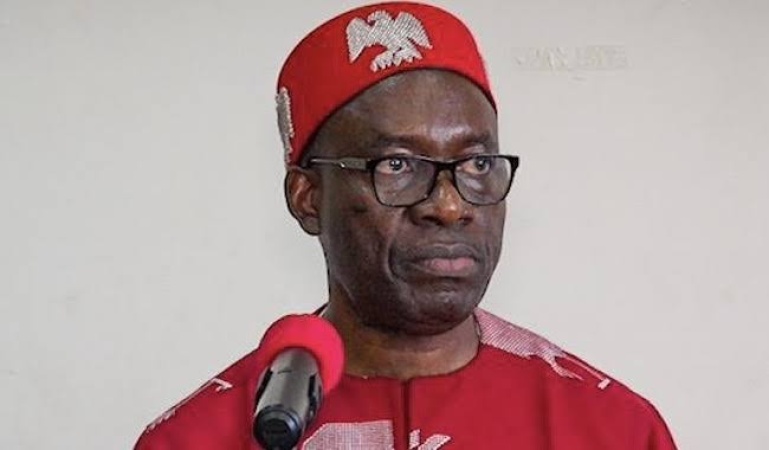
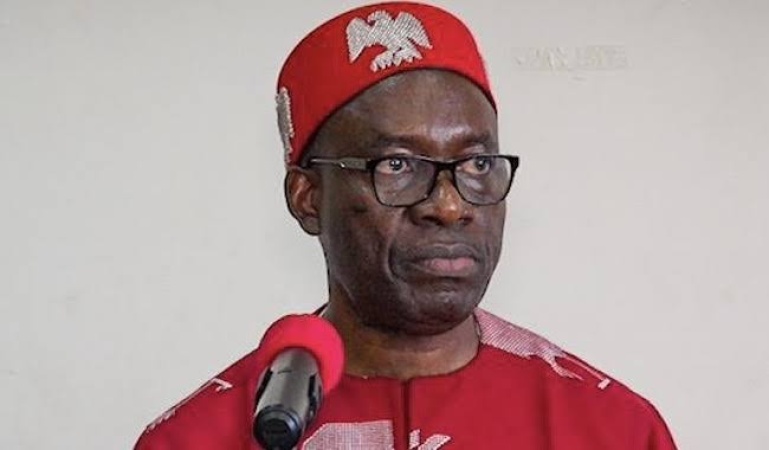
The organisation urged the Anambra State Government under the watch of Prof. Chukwuma Charles Soludo, and other relevant authorities to conduct an immediate on-the-spot assessment of the area and establish the full extent of the environmental damage.
“Conduct on-the-spot assessment of the site for your first-hand information and findings,” Intersociety demanded.
It also called for a comprehensive investigation into the sand excavation activities and the identities of individuals and groups allegedly involved.
The group urged authorities to prosecute anyone found culpable of unlawful activities and to prevent the area from developing into a centre of youth militancy, banditry or clan-based conflict.
The appeal comes amid previous concerns from residents of Uga that sand excavation was worsening gully erosion and threatening homes and roads in the community.
•Governor Soludo
OPINION
Benue blocked Peter Obi's humanitarian convoy: Is Enugu trying to block his political messages?
By VITUS OZOKE, PhD
There is regulation. There is overregulation. There is political desperation masquerading as regulation. And then there is whatever the Enugu State Structures for Signage and Advertisement Agency (ENSSAA) has just announced.
ENSSAA has reminded Ndi Enugu that pasting or displaying posters is prohibited throughout Enugu State – not merely on government buildings, bridges, electricity poles, road medians, and other public infrastructure, but, astonishingly, on private property and private spaces as well.
And just in case anyone thinks this is a harmless bureaucratic advisory, the government has attached a threat of a fine of up to N50 million. Fifty million naira. For a poster. Welcome to Enugu State, where apparently Tomorrow Is Here, but your constitutional freedoms may have been left somewhere in yesterday.
Let me state what should be obvious. A responsible government has every legitimate reason to protect public infrastructure from indiscriminate poster-pasting. Nobody has a constitutional right to plaster Peter Obi's face – or Peter Mbah's, Bola Tinubu's, or anyone else's – on traffic signs, bridges, electricity poles, government buildings, and public monuments. The government may regulate billboards. It may protect road setbacks. It may prevent environmental defacement. It may prescribe reasonable rules governing commercial outdoor advertising. That is governance.
But when government moves from protecting public property to telling a private citizen what political message they may display on their own property, we enter a profoundly different constitutional territory.
If I own my house in Enugu and decide to put a Peter Obi poster on my gate, in my window, or on a wall that belongs to me, whose permission must I seek to express my political preference? Peter Mbah's? ENSSAA's? Francis Aninwike's? Since when has displaying one's preferred candidate on one's own property become equivalent to defacing government infrastructure?
The Nigerian Constitution guarantees freedom of expression, including the freedom to hold opinions and to receive and impart ideas and information. Political expression lies at the heart of that freedom. Yes, constitutional rights are subject to lawful and reasonably justifiable restrictions. But that is precisely why the government should be required to explain the necessity and proportionality of something as sweeping as an outright prohibition extending into private property. This is not merely a question about posters. It is a question about power.
And why now?
The timing makes the announcement even more deserving of scrutiny. Enugu is approaching local government elections. The 2027 political season is gaining momentum. Governor Peter Mbah is now an APC member. Opposition political organizations are mobilizing. Peter Obi remains an enormously consequential political figure in the Southeast. So, Ndi Enugu are entitled to ask a simple question: Who exactly is this poster ban designed to protect Enugu from?
Funeral posters? Church crusade posters? WAEC lesson posters? Private-school admission posters? Traditional marriage announcements? New yam festival posters? A mechanic advertising his workshop? A young woman advertising her catering business? Or Peter Obi? If ENSSAA means what it says – that this is an outright ban on all posters on both public and private property – then let us see equal enforcement.
Let ENSSAA send its enforcement officers into every village in Enugu State. Let them remove every funeral poster from private compounds. Let them prosecute every church that advertises a crusade. Let them sanction every school that displays an admissions poster. Let them pursue every cultural association that announces an event. Let them investigate every business that displays promotional posters. And, of course, let them impose their threatened N50 million penalties.
If that sounds absurd, perhaps it is because the breadth of the announced policy itself invites absurd questions. But if those posters remain untouched while political posters suddenly become objects of extraordinary governmental interest, the public will be entitled to draw its own conclusions about what this exercise is really about.
But ENSSAA somehow made an already extraordinary directive even more extraordinary. It warned printers. Think about that. A printing press receives an order for 10,000 campaign posters. The printer prints them. That is what printers do. How exactly is the printer supposed to know where those posters will be displayed?
Must printers now interrogate customers? "Excuse me, sir. Before I print your Peter Obi posters, please swear an affidavit stating the geographic coordinates of every wall where each poster will eventually be placed."
Suppose the posters are printed in Enugu but transported to Anambra State. Suppose they are printed in Lagos and brought into Enugu. Suppose they are printed in Abuja. Will ENSSAA dispatch enforcement officers to Ikeja to arrest the printer? Of course not. Enugu State's regulatory jurisdiction does not magically extend across Nigeria merely because something printed elsewhere eventually enters Enugu.
More fundamentally, printing a poster and unlawfully placing one are two distinct acts. If the alleged offense is unauthorized display, liability should ordinarily attach to what the law actually prohibits and what can be legally proved – not merely because somebody operated the machine that produced the paper.
How is a printer supposed to know a customer's future intentions? How will ENSSAA establish a printer's knowledge or participation? What evidentiary standard will ENSSAA apply? Apparently, in the Republic of ENSSAA, the printing press must now double as an intelligence agency. This is what happens when regulation outruns reason.
But there is an even bigger elephant on the bus. A spectacular hypocrisy lies at the heart of the matter. Governor Peter Mbah's image has appeared prominently on Enugu State mass-transit buses, accompanied by the inscription: "Experience Enugu, Tomorrow Is Here!" These are not Peter Mbah's privately purchased campaign buses. They are public transportation assets acquired for Enugu State – with Enugu public money.
Here is the question ENSSAA should answer: If displaying political personalities and promotional messages across Enugu is such a grave threat to the state's aesthetic integrity, why is the sitting governor's face allowed to appear on publicly provided buses? If the government insists that "Tomorrow Is Here" is merely an administrative slogan rather than campaign branding, citizens are still entitled to ask why publicly funded assets require the governor's portrait at all.
A public bus does not need Peter Mbah's face to run. A government project does not become more governmental because the governor's photograph is attached to it. Public resources belong to Ndi Enugu, not to the temporary occupant of the Lion Building.
This is precisely why the optics of this poster directive are so troubling. Imagine the absurdity: Peter Mbah's portrait on a government bus: acceptable. Peter Mbah's slogan on public assets: acceptable. A citizen voluntarily putting Peter Obi's photograph on his own private wall: potentially ?50 million?
Someone needs to explain the democratic principle behind that distinction. And please do not tell us about aesthetics. Democracy is not improved aesthetically by making only the incumbent's face ubiquitous. Government must not become the incumbent governor's free advertising agency.
Democratic governments must respect a fundamental distinction: the state is not the ruling party, and the ruling party is not the state. Peter Mbah is the governor today. Someone else will be the governor tomorrow. That is democracy.
The machinery of Enugu State must therefore never be deployed in ways that make it appear that governmental regulation is being used to advantage the incumbent and his party while constraining opponents' political visibility.
This matters especially because ENSSAA had already announced a ?150 million advertising permit for political parties and candidates for the 2026/2027 election cycle – a policy that opposition parties have reportedly challenged in court. And now we have this renewed ?50 million threat over posters.
At some point, regulation can become so financially burdensome and so expansive that citizens are entitled to ask whether the objective remains environmental order or whether environmental regulation has become an instrument for restricting political participation.
If Peter Obi is your problem, say so.
Perhaps Peter Obi has nothing whatsoever to do with this. Fine. Then the Mbah administration and ENSSAA should have no difficulty demonstrating that through transparent, politically neutral, and consistent enforcement. Apply the same rules precisely to APC materials. Apply them to Governor Mbah. Apply them to churches. Apply them to funeral announcements. Apply them to businesses. Apply them to schools. Apply them to cultural organizations. Apply them to every poster, every politician, and every political party without distinction. And publish the enforcement records.
Until then, citizens are perfectly entitled to ask why such an extraordinarily broad restriction is being emphasized just as another political season approaches. Democracy does not mean the government may monopolize the visual landscape while citizens are priced out, regulated, or frightened out of expressing their political preferences.
An important principle here transcends Peter Obi, Peter Mbah, the APC, the NDC, or the 2027 election. A government powerful enough to decide which political poster you may display on your private property is exercising a power that every citizen should scrutinize – including those who presently support that government.
Political power changes hands. Today's restriction on the candidate you dislike becomes tomorrow's restriction on the candidate you support. That is why constitutional freedoms should not depend on who occupies Government House.
Regulate billboards. Protect bridges. Protect utility poles. Protect government buildings. Prevent indiscriminate defacement. Punish people who vandalize property that does not belong to them. Keep Enugu clean. These are legitimate governmental objectives. But the government should tread carefully before turning environmental regulation into a permission slip for private political expression.
If a citizen owns a property and voluntarily wishes to display a lawful political message there, the burden should be on the government to demonstrate the constitutional justification for interfering with that expression. Threatening N50 million makes that burden of justification even more serious.
Ndi Enugu deserve an explanation. Why should Peter Mbah's face travel freely around Enugu on a publicly provided bus, while another citizen must fear punishment for displaying Peter Obi – or any other candidate – on private property? That question is bigger than either man. It is the difference between regulating a city and regulating political thought.
ENSSAA should understand that difference before Tomorrow Is Here becomes a warning rather than a slogan.
•Dr. Vitus Ozoke is a lawyer, human rights activist, and public affairs analyst based in the United States. He writes on politics, governance, and the moral costs of leadership failure in Africa.
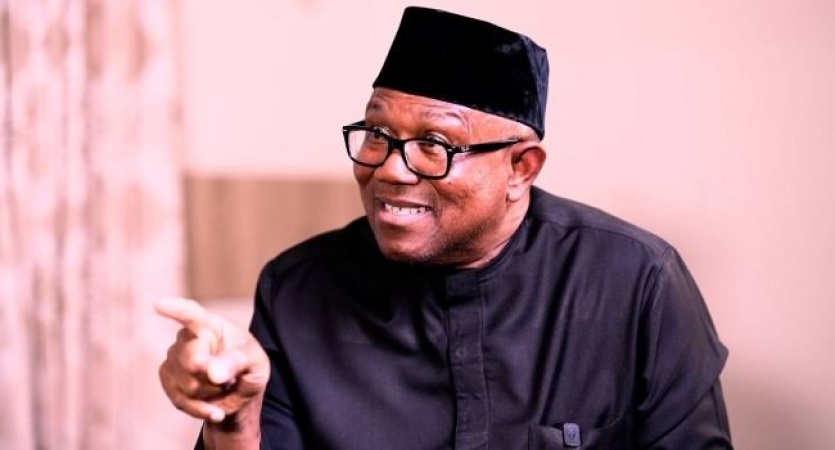
PHOTO CAPTION: •NDC Presidential Candidate Peter Obi
26 months after judgement, governors continue to strangle LGs, fuelling insecurity
•NULGE: No local govt currently receives allocation directly from federation account
•State control of funds weakens service delivery, CSO declares
•RULAAC: Councils should be allowed to control their accounts, statutory allocations
Twenty-six months after the Supreme Court affirmed financial autonomy for Nigeria’s 774 local government councils, governors are still holding councils in a stranglehold, with labour government workers and civil society groups warning that continued state control of funds meant for the third-tier of government was undermining grassroots development and fuelling insecurity.
Despite the landmark judgment, stakeholders say genuine autonomy remains largely elusive, with no local government currently receiving its allocation directly from the Federation Account, while governors continue to wield significant influence over council finances, leadership and elections.
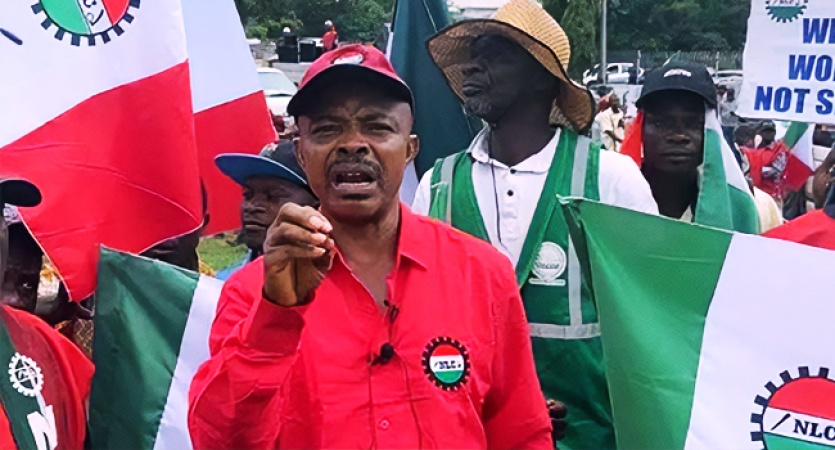
Speaking with THISDAY, the President-General of the Nigeria Union of Local Government Employees (NULGE) and National Treasurer of the Nigeria Labour Congress (NLC), Aliyu Haruna Kankara, described the situation as unfortunate, while also revealing that no local government currently receives funds directly from the Federation Account.
“It’s very unfortunate that after Supreme Court judgment we are still unable to direct for the implementation of the local government autonomy.
“As I’m speaking to you now, no local government in Nigeria is receiving funds directly from the Federation Account. And as you know, a Supreme Court pronouncement is a law. So that means 26 months after, the federal government is still violating the law by not implementing the judgment.
“It is very unfortunate, but here we are. That’s why we have been calling on the federal government to implement the judgment. We expect a democratically elected government that has respect for the rule of law, and that’s why we are still calling on the government to do that.”
The Supreme Court had in July 2024 ruled in favour of financial autonomy for local governments, in a case instituted by the Federal Government against the 36 state governors.
The judgment was widely hailed as a major constitutional intervention aimed at strengthening the third tier of government and ending what critics described as the longstanding practice of state governments controlling funds allocated to local councils.
However, Kankara said the implementation gap remained a major concern.
He disclosed that NULGE had written to relevant federal authorities to draw their attention to the need to enforce the judgment.
He added: “Yes, we have written to the Minister of Justice. We have written to the Minister of Finance to draw their attention to the fact that this has become a law. It’s no longer about somebody who wants to grant local government autonomy or not. Now it’s a matter of law. So, we have written to them. We are still expecting to hear from them.”
Kankara, however, acknowledged that there had been some progress on the political aspect of local government administration, noting that caretaker committees were no longer operating in the states, following the federal government’s earlier decision to withhold allocations from states without elected councils.
“However, you could remember some time back, the prior government decided to withhold allocation in any state that was having caretaker committees administering local government. So, at that time, most of the states that were having caretaker committees, they decided to rush and conduct local government elections. At the moment, we don’t have caretaker committees at the local government,” he said.
He stressed that the Supreme Court judgment was primarily concerned with financial autonomy, while administrative and political autonomy would require further constitutional changes.
“You see, the Supreme Court judgment, it’s more on financial autonomy. As a union based in the local government, we have been campaigning for financial, administrative and political autonomy to local government councils.
“We are yet to get political autonomy and administrative autonomy because it requires constitutional amendment.
“But thank God the Supreme Court had passed judgment on financial autonomy, and they have also done so much to ensure they protect the political leadership at the local government level by ensuring that the provision of Section 7 of the Constitution must always be respected. That is ensuring a democratically elected council at the local government at all times.
“My standpoint is that we need full autonomy. When I say full autonomy, I mean financial autonomy, administrative autonomy and political autonomy. And if we really want our local government system to work efficiently and effectively, we have to grant them full autonomy.
“Without full autonomy, there is no way the local government system can function effectively. We, as people that are working at the local government level, know very well that it is only full autonomy that can make our local government system work very well.”
Also speaking, the Executive Director, Citizens Center for Integrated Development and Social Rights, Dr. Emeka Ononamadu, described the situation as a serious governance failure, arguing that Nigerians were being deprived of the benefits that should accrue from resources allocated to local governments.
“First is that Nigerians are being cruelly cheated and robbed, just completely,” Ononamadu said.
He cited the example of a local government which he said received an average of N500 million monthly but had little to show for the huge resources reportedly accruing to it.
“I know a local government where community members are challenging the government accounts for over 10 months that has come to that. A local government that gets an average of N500 million monthly, a local government that gets about N500 million monthly, you know that he gets about N6 billion.
“And that local government has stayed there for two years, but you cannot see a single project of just N115 million in that local government.
“And this is something that is replicated across the 774 local government areas.”
Ononamadu said the autonomy question went beyond finances, identifying three critical areas that needed to be addressed.
“One is the fiscal autonomy they require. The second is the administrative autonomy which they require. The third is the political autonomy. They need to conduct their elections and set themselves free. But it is not happening anywhere,” he said. ReadPolitical News
He argued that excessive state control over local governments had weakened the councils and contributed to poor service delivery.
“Ninety per cent of the local government agencies are in the pocket of the government that is moving that space, and that is why it appears that governors are even more powerful than the President of the Republic,” he said.
Ononamadu further alleged that local governments had been unable to undertake significant projects independently because of the level of state influence over their finances.
“During our campaign, we did a research and discovered that you cannot find a single project of more than N100 million in any local government across the country being sponsored by the local government itself.
“Rather, what you will see is local government having some criminal partnership which they say through which the governor siphons them, and then a little either white elephant project or overpriced project and projects that don’t mean anything to the people.”
He maintained that stronger local government autonomy could also help address insecurity.
“Every local government now has the capacity to fund their local government police effectively and stop this corruption and stop this insecurity.
“We have said it that if you allow local government to use their money, insecurity will disappear from Nigeria overnight. It will, because there is no local government now that is formed based on what they receive monthly.”
Asked whether he had evidence that allocations were being returned to governors after reaching local government accounts, Ononamadu said forensic audits would reveal the movement of funds.
“It goes to the local government, but they go and pack the money and send it in dollars and send back to governors. And that is why the dollar is still where it is,” he alleged further.
“That is why the primary health centres are not working. That is why basic education is not working,” he said.
He called for a forensic examination of local government finances, arguing that such an exercise would expose financial irregularities.
“If you do a forensic audit, all the governors will go to prison,” he alleged.
He also advocated stronger political and administrative autonomy, alongside fiscal independence.
“The local government autonomy that has to do with their political autonomy should be handed over to them. Two, the local government administrative autonomy should be handed over to them. The governors have no business.
“And number three, I talked about fiscal autonomy. The fiscal autonomy should be that the local government should not be forced to go into audit matters, to go into alliance with the governors on how to spend local government money.”
Ononamadu insisted that local government autonomy was central to addressing Nigeria’s development challenges.
“If any politician wants this country to be free from the present adversity, to be free from the present insecurity, to be free from the present abject poverty, it is simply to ensure that the local government autonomy takes place,” he said.
For the Executive Director, New Ethics for Empowerment and Development Initiatives (NEEDIN), Kano, Peter Hassan Tijani, the lack of clear information on how local government allocations are currently being disbursed was itself a major problem.
Tijani said civil society organisations had not done enough to follow up on the Supreme Court judgment and demand answers from government authorities.
“For me, it’s an issue of concern because according to the rulings of the Supreme Court, by now we should have gotten reasonable improvements, but actually nothing is happening.”
He said civil society needed to intensify citizens’ engagement to ensure that financial and administrative autonomy translated into tangible development.
We really have not taken up this matter at our various states to ask questions, to demand for their actions in ensuring that this accountability framework or the autonomy is effective.
“Because we fought for it. It’s something that we have been saying over the years, that local governments need their autonomy. And now they have gotten it and yet nothing is really happening.”
He also identified the continued influence of governors over local government elections as a major obstacle.
“Another challenge that we have is the control of governors, especially when it comes to elections, local government elections. It is the governors that control it.
“So, to some level, again, they have control over local government chairmen and administrators of local government. When you say a local government is autonomous financially, but then there is no mechanism outside the influence of the governor that brings them into power, it begs the question how truly autonomous they are.”
Tijani said civil society organisations were themselves uncertain about whether local government funds were now being paid directly into council accounts.
“I think that is where, for us in civil society, we are lost in this. Because we really have not followed up to know if this money is really getting to these people. We don’t know if the local government have their separate account now or is it going to that joint account, state government joint account.
“So, this, I think, that we are not really aware. And to some extent we have heard from, we are not sure of this information, that some state government will return the money to the local government. That in other way round, they will return the money to the state government. So we are not very sure of all of these things.”
He therefore called for stronger collaboration between the media and civil society to establish the facts and hold government accountable.
Similarly, the Executive Director, Rule of Law and Accountability Advocacy Centre (RULAAC), Okechukwu Nwanguma, said genuine local government autonomy remained largely elusive 26 months after the Supreme Court judgment.
According to him, the judgment was intended to end state control over local government funds and the replacement of elected councils with caretaker arrangements, but the gap between the ruling and realities on the ground remained troubling.
Nwanguma questioned whether councils were receiving their statutory allocations directly and whether elected chairmen were exercising genuine financial and administrative independence.
He also warned that the conduct of local government elections by state-controlled electoral structures could undermine political autonomy.
“Merely replacing a caretaker chairman with someone bearing the title of ‘elected chairman’ does not necessarily amount to democratic local government.
“When chairmen emerge through political structures substantially controlled by governors and ruling parties, they remain beholden to the political benefactors who facilitated their emergence. You cannot build genuine local government autonomy on political dependency.”
Nwanguma argued that autonomy should not be limited to financial independence, insisting that electoral, political, administrative and institutional autonomy were equally important.
Financial autonomy is essential, but it is only one component of genuine local government autonomy. There must also be electoral autonomy, political autonomy, administrative autonomy and institutional accountability. Otherwise, we could merely replace one form of control with another.”
He called for a comprehensive, publicly accessible, state-by-state audit of the implementation of the Supreme Court judgment.
“Nigerians deserve answers to straightforward questions: Are allocations going directly to local governments? Which councils control their own accounts? Which state governments continue to exercise control over council funds?” he asked.
He further demanded clarification on the measures taken by the Attorney-General of the Federation, Accountant-General of the Federation and other relevant institutions to enforce the judgment.
“A Supreme Court judgment cannot be treated as an advisory opinion,” Nwanguma said.
Ultimately, he argued that genuine autonomy must combine independence with accountability.
“It means citizens genuinely choosing their local government representatives through credible elections. It means elected chairmen deriving their legitimacy from voters rather than political godfathers.
“It means councils exercising lawful control over their statutory resources without governors determining what they receive or how they spend it. And it means those councils being fully accountable to the citizens for every naira they receive and spend.”
He said the central question 26 months after the judgment was no longer whether Nigeria recognised local government autonomy in principle, but whether the country was prepared to enforce it consistently. (THISDAY)
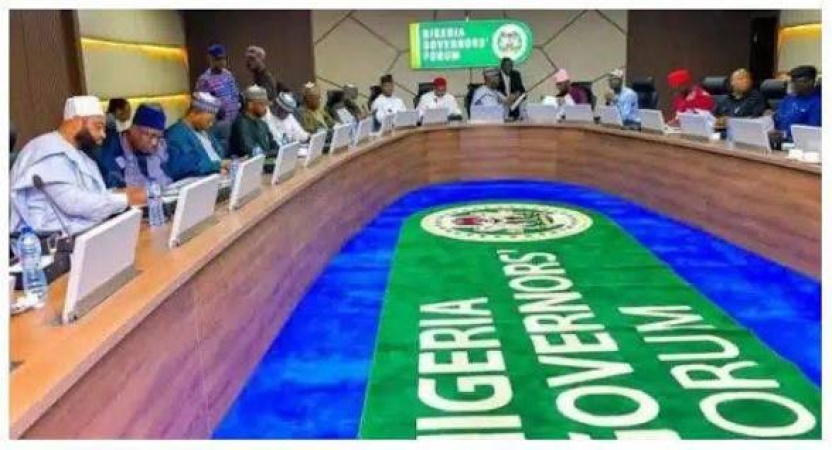
•File photo of NGF meeting
ADC state chairmen demand INEC compliance with court judgments
By MOROMOKE AKANJI
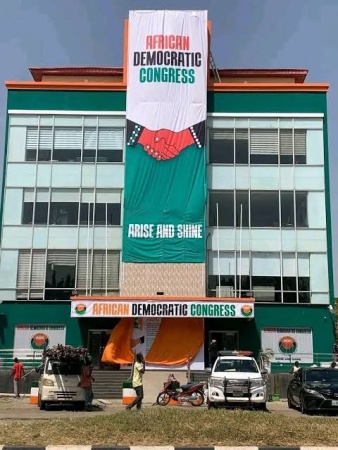
The African Democratic Congress (ADC) State Chairmen’s Forum has urged the Independent National Electoral Commission (INEC) to comply with subsisting court judgments on the party’s leadership dispute.
Mr Ogga Temitope, Chairman of the forum, gave the warning in a statement on Friday, saying non-compliance could create legal uncertainties for the party and its candidates ahead of the 2027 general elections.
Temitope said democracy could not thrive where court judgments were obeyed selectively or only when convenient.
He said the dispute followed a Federal High Court judgment delivered in Abuja on April 29, by Justice Joyce Abdulmalik.
According to him, the court nullified the congresses and convention that produced the David Mark-led caretaker leadership of the party.
He said the court held that the processes leading to the emergence of the leadership did not comply with provisions of the ADC Constitution and the Electoral Act 2026.
Temitope also said the Court of Appeal, Abuja, in a two-to-one judgment delivered on July 13, upheld the Federal High Court decision.
He argued that the appellate court’s decision meant that INEC should not recognise the Mark-led faction as the legitimate leadership of the ADC.
Temitope warned that the development could expose ADC candidates to what he described as a “nullity trap” if their nominations were later challenged on the grounds that they emanated from an invalidated leadership structure.
He said winning an election might not be sufficient if the nomination process was subsequently challenged before an election tribunal.
The ADC chieftain also cautioned stakeholders against relying solely on stays of execution, saying such orders suspended enforcement pending further legal proceedings but did not automatically overturn a judgment.
He urged the Mark-led faction to engage with the court-recognised leadership, pursue reconciliation and regularise the party’s internal processes ahead of campaigns and candidate selection for the 2027 elections.
Temitope also referred to previous instances in which INEC had faced contempt proceedings over alleged non-compliance with court orders.
He warned that continued non-compliance could attract sanctions and have consequences for the party and its candidates.
He called on INEC and all factions within the ADC to respect the rule of law and ensure that the party entered the 2027 electoral cycle with a legally recognised and properly constituted leadership.
Temitope said the ADC had an opportunity to make significant gains in 2027 but could only achieve a sustainable victory if its internal processes were legally sound.
He expressed hope that the leadership dispute would be resolved in the interest of the party and the wider democratic process at the next court proceedings scheduled for Sept. 29. (NAN)
*PLS USE ADC OFFICE SIGN
From wheelchair to healthcare provider: Air Force Officer defies odds
After an accident changed the course of his life, retired Nigerian Air Force officer and laboratory scientist, Flight Lieutenant Philip Dauda Midala, refused to abandon a healthcare vision conceived in 2006. Today, that vision has become a diagnostic centre in Kuje, Abuja, with plans to expand into dental and eye care.
For Flight Lieutenant Philip Dauda Midala, the wheelchair he now uses is only one part of a much larger story. The retired Nigerian Air Force officer and trained laboratory scientist has spent years adapting to life after an accident. But rather than allow the physical consequences to end his professional ambitions, he has turned his experience and training into a healthcare initiative for residents of Kuje and surrounding communities in Abuja.
That initiative is Phil-Med Diagnostic Centre, a facility established to provide laboratory investigations closer to people who might otherwise have to travel into the Abuja city centre for diagnostic services. The idea, however, predates both the accident and the facility.
Midala said he conceived the concept of a community-based diagnostic centre in 2006, while he was still serving in the Nigerian Air Force. At the time, it existed only as an idea because there was no building, no laboratory equipment and no established centre to operate. What he had was an understanding of the importance of laboratory science to medical care and a desire to make diagnostic services more accessible to ordinary members of the community. Almost two decades later, the idea has become a physical facility.
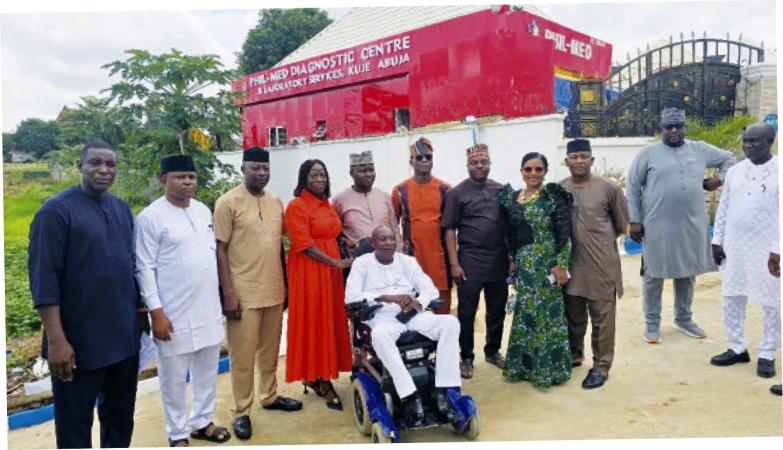
At its inauguration of the facility in Kuje, Abuja, former military colleagues, medical professionals, family members and community leaders gathered to celebrate the opening, and also reflect on the journey that brought Midala to that point.
Chief of Air Staff, Air Marshal Sunday Kelvin Aneke, who was represented at the event, by Air Vice Marshal A.A. Martins, described Midala’s achievement as an example of what could be accomplished despite physical challenges. “You have shown that there’s ability in disability,” Martins told him.
Martins said he had known Midala during his years in the Nigerian Air Force, and recalled that the retired officer had always demonstrated a tendency to think ahead of peers. “Midala was already discussing the possibility of establishing a diagnostic facility as far back as 2006. That vision continued after the car accident and eventually survived the transition from military service to civilian life. The journey was also complicated by problems over the premises where Midala initially operated,” he said.
Martins recalled that a disagreement with a former landlord also contributed in forcing Midala to leave his former location. “For several months, the dispute created uncertainty, but the setback ultimately pushed Midala towards developing a more permanent facility. Rather than abandoning the project, he found another location and continued building,” Martins added.
For Martins, the experience demonstrated that setbacks can sometimes create opportunities for a different and potentially better outcome. But the new centre was not the only contribution Midala made to his immediate environment. The Air Chief representative also highlighted his involvement in improving the road leading to the facility.
The road, he said, had suffered from erosion and neglect despite the presence of substantial buildings in the surrounding area. “Midala contributed significantly to fixing part of the road, providing a practical intervention that benefited not only his facility but other residents and visitors.”
Martins used the example to make a broader point about community responsibility, insisting that development should not be left entirely to government. “Individuals with the capacity, knowledge or resources should look around their communities and identify areas where they can contribute,” he admonished.
Former Minister of State for Health, Dr. Idi Hong, who is a relative of Midala, in his submissions at the event, explained that the importance of a laboratory goes beyond the building housing it. “Reliable diagnostic results are critical to effective patient management,” he submitted.
“A doctor may examine a patient and develop a clinical picture of the illness, but laboratory investigations provide additional evidence that can help confirm or refine the diagnosis.”
He compared the process to using Google Maps. “A doctor may know the general direction of a patient’s problem, but an accurate laboratory result helps the physician pinpoint the condition.
“Undoubtedly, a wrong result could send the doctor in the wrong direction, just as an inaccurate map could take a traveller to the wrong destination,” he said.
He therefore stressed that patients should pay attention not only to the appearance or location of a diagnostic centre but also to the quality and reliability of the services it provides.
He maintained that standardisation, qualified personnel, appropriate equipment and accurate reporting are essential to laboratory practice, and also expressed c




