ADAD

Updating your news feed...
NEWS EXPRESS is Nigeria’s leading online newspaper. Published by Africa’s international award-winning journalist, Mr. Isaac Umunna, NEWS EXPRESS is Nigeria’s first truly professional online daily newspaper. It is published from Lagos, Nigeria’s economic and media hub, and has a provision for occasional special print editions. Thanks to our vast network of sources and dedicated team of professional journalists and contributors spread across Nigeria and overseas, NEWS EXPRESS has become synonymous with newsbreaks and exclusive stories from around the world.



















Loading banners
Loading banners...

President Bola Ahmed Tinubu
The prolonged absence of the governing councils and boards of federal agencies, parastatals, and federal tertiary hospitals is creating regulatory uncertainty, weakening oversight, and potentially affecting professional licensing, accreditation of training programmes, workers’ welfare, disciplinary proceedings, institutional accountability, and ultimately, patient safety, NKECHI ONYEDIKA-UGOEZE and IJEOMA NWANOSIKE report.
Concerns are mounting over the Federal Government’s failure to reconstitute and inaugurate the governing councils and boards of federal agencies, parastatals, and federal tertiary hospitals under the Federal Ministry of Health and Social Welfare more than three years after President Bola Ahmed Tinubu assumed office.
In the last 39 months, virtually all health-sector agencies, regulatory bodies, and federal tertiary hospitals have operated without governing councils and boards, in contravention of the Acts of Parliament that established them, raising significant institutional and statutory concerns across the healthcare sector.
While the administration has since reconstituted governing councils in other sectors like higher education and selectively appointed chairpersons for a handful of specific health parastatals and regulatory bodies without board members, the widespread absence of boards across the broader spectrum of federal tertiary hospitals remains a critical issue.
The councils are empowered, under their respective enabling laws, to perform functions including accreditation of training programmes and facilities, professional registration and licensing, and disciplinary oversight.
Their non-existence, therefore, raises serious questions about the legal basis for decisions made during periods when the substantive councils and boards were not in place.
In the Nigerian healthcare ecosystem, these governing councils are distinct in having a broader, systemic mandate that extends beyond simple administrative management. They act as strategic links between national health policies, profession-specific standards, and public consumer protection.
Acts of Parliament establishing each agency stipulate the appointment of governing boards to work with the management team in the agencies’ operations.
The governing councils and boards create an internal governance mechanism through which management decisions, expenditure, employment, procurement, and institutional performance can be scrutinised; where such mechanisms are weak or absent, the risk of unchecked decision-making increases.
Besides, the governing councils and boards of federal health agencies and tertiary hospitals in Nigeria provide institutional oversight, strategic direction, and policy implementation to ensure accountability and high standards of care.
Therefore, the absence of the boards has operational and performance implications for the agencies, especially considering the legal burdens strictly imposed on them.
Such burdens include ensuring the effectiveness of general administration, formulation, consideration and approval of strategic plans, policies, annual budgets and accounts, appointments, promotions and discipline of senior management employees and general oversight of the agencies.
Among such agencies and parastatals under the Federal Ministry of Health and Social Welfare are the National Agency for Food and Drug Administration and Control (NAFDAC), the National Primary Health Care Development Agency (NPHCDA), the Nigeria Centre for Disease Control and Prevention (NCDC), the National Health Insurance Authority (NHIA), the National Agency for the Control of AIDS (NACA), the Nigerian Institute of Medical Research (NIMR), the National Institute for Pharmaceutical Research and Development (NIPRD), and the National Blood Service Commission (NBSC).
Others are the Medical and Dental Council of Nigeria (MDCN), Medical Laboratory Science Council of Nigeria (MLSCN), the Pharmacy Council of Nigeria (PCN), the Nursing and Midwifery Council of Nigeria (NMCN), the Physiotherapy and Medical Rehabilitation Board, the Radiographers Registration and Regulations Board, and the Health and Medical Records Registration Board.
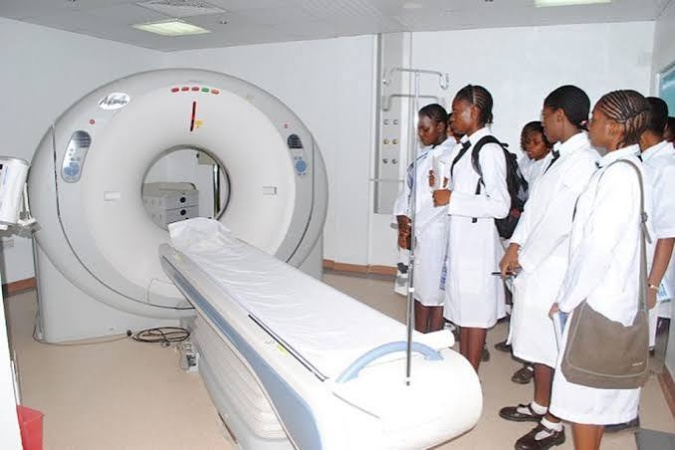
Also included are all federal teaching hospitals and federal medical centres (FMCs) that offer secondary and tertiary clinical services, as well as the National Orthopaedic Hospitals and Federal Neuropsychiatric Hospitals across all geopolitical zones.
On February 14, 2024, the Federal Government, in a statement released by the then spokesperson of the President, Ajuri Ngilare, announced the appointment of chairpersons of boards of some agencies in the health sector without board members.
They include NAFDAC, MDCN, PCN, MLSCN, and the National Blood Service Commission (NBSC),
Apart from the Governing Council of the NHIA, which was inaugurated in July 2025, the NMCN governing board, inaugurated in June 2026, and the MDCN governing council, inaugurated in August 2026, the governing councils and boards of other agencies are yet to be reconstituted.
After a cursory look at the state of things, stakeholders described the situation as an anomaly and a breach of the law, stressing that non-functional boards give room for abuse, corruption and irresponsibility, arguing that the chairpersons of the governing boards and councils are appointed with the complementary members and inaugurated by relevant ministries at the behest of the president.
They also maintained that running parastatals without active boards removes essential checks and balances, creating high risks for financial mismanagement and abuse of office by chief executives.
In an interview with The Guardian, the President of the Medical Laboratory Science Council of Nigeria (AMLSCN), Casmir Ifeanyi, described the absence of boards and councils for regulatory bodies and tertiary health institutions as very worrisome and called on President Bola Ahmed Tinubu to reconstitute them without further delay.
Ifeanyi stated that the health sector has continued to operate without regulation, due process, requisite oversight, and in a manner at variance with the laws over the past three years.
While observing that laws establishing Nigeria’s professional regulatory councils were not designed to allow the institutions to operate indefinitely without their governing bodies, Ifeanyi argued that in the absence of governing boards, chief executives could effectively become “sole administrators,” a situation he said was not contemplated by the laws establishing the institutions.
The AMLSCN president alleged that where boards are absent, ministers and senior officials may inadvertently become involved in decisions that enabling laws reserve for independent statutory councils, noting that ministers, who already have important supervisory responsibilities, do not necessarily have the authority to assume the statutory functions of regulatory councils.
Ifeanyi explained that the professional regulatory councils play crucial roles in determining who may practise regulated health professions and under what standards.
“Decisions about whether a doctor, pharmacist, medical laboratory scientist, or other regulated professional should be licensed, disciplined, or permitted to continue practising can have profound consequences for both the practitioner and the public.”
Ifeanyi pointed out that the councils are empowered, under their respective enabling laws, to perform functions including accreditation of training programmes and facilities, professional registration and licensing, and disciplinary oversight.
He therefore questioned the legal basis for decisions made during periods when the substantive councils were not in place.
“Students have been enlisted to study these programmes,” he argued. “Who approved their indexing and enlistment? People have studied, graduated and obtained results. Who approved their results?”
The AMLSCN president warned that practitioners licensed during the period could potentially face questions over the legal authority under which their licences were issued, arguing that the absence of properly constituted councils could expose such decisions to legal challenges.
The AMLSCN President noted that if a health professional is accused of negligence, malpractice or other professional misconduct, regulatory laws generally provide mechanisms for investigation and disciplinary proceedings.
Ifeanyi argued that the absence of properly constituted councils raises questions about who has the authority to initiate and conclude such processes.
He said: “If there is a case of negligence or malpractice and somebody is maimed or killed, who will constitute the panel that will look into such acts of misconduct?”
On the appointment of chairpersons of some of the agencies without board or council members, Ifeanyi said, “This is contrary to the law; the chairpersons of the governing boards and councils are appointed with the complementary members and inaugurated by relevant ministries at the behest of the President. Since the pronouncement of eight professional regulatory bodies in the health sector, they have remained comatose because the board cannot function with only the chairman; it is against the law.
Also speaking with The Guardian, a former president of the Pharmaceutical Society of Nigeria (PSN), Olumide Akintayo made a similar argument, using the Pharmacy Council as an example.
According to him, the council’s responsibilities broadly cover professional practice, training and disciplinary conduct. He argued that without a properly constituted council, disciplinary processes could be compromised, leaving practitioners who violate professional rules without effective consequence management.
Akintayo noted that this could have wider implications in a sector already struggling with concerns over counterfeit and substandard medicines, unethical practices and weak enforcement.
Akintayo stated that universities, colleges and schools offering regulated health programmes require accreditation and regulatory oversight to ensure that their curriculum, staffing, infrastructure and other requirements meet established standards.
He observed that if the statutory bodies responsible for granting or renewing such approvals are not functioning in their proper form, uncertainty could emerge over the status of training programmes and the qualifications produced under them.
The former PSN president argued that “hospital boards are important instruments of governance, accountability and institutional oversight; they provide layers of checks and balances between the chief executive of a hospital and the wider government structure.”
He warned that without such oversight, excessive authority could become concentrated in the hands of chief medical directors, medical directors or other senior administrators.
In linking the absence of boards to concerns about financial accountability and alleged abuses in some federal health institutions, he alleged that some public-sector health facilities had witnessed questionable procurement practices and other financial irregularities.
Akintayo also alleged that some public-sector medical personnel operate private interests alongside their public responsibilities and that public procurement processes had been abused in certain institutions.
Nigeria already faces enormous challenges in healthcare financing, infrastructure, workforce retention, medical migration and patient access. Allowing uncertainty to persist over institutions responsible for professional standards and hospital governance risks adding another layer to an already fragile system.
The Secretary-General of the International Federation of Fertility Societies and the President of the Academy of Medicine Specialities of Nigeria, Prof. Oladapo Ashiru, argued that while excessive bureaucracy can be problematic, governance through acting officials and ministerial oversight can be even more damaging to the health system.
Speaking with The Guardian, he said that the value of a governing board lies partly in its ability to separate governance from day-to-day management and to provide an independent layer of scrutiny that management cannot objectively provide for itself.
According to him, without that separation, the distinction between those managing an institution and those overseeing its performance becomes blurred, creating an environment in which managerial decisions may receive insufficient independent scrutiny and accountability becomes more difficult to establish.
He explained that in situations where institutional checks are weak, decisions involving drugs, medical consumables, construction and specialised appointments may face delays or become vulnerable to abuse. He also noted that disciplinary processes can be affected where statutory bodies or tribunals cannot function as intended.
Ashiru concluded that the issue is not whether hospitals need governance, but whether that governance is properly structured, adding that when that structure disappears, the resulting vacuum can manifest as something far more costly than bureaucracy: delayed decisions, weakened oversight, frustrated health workers, and institutions struggling to function at full capacity. (The Guardian)